


Why does my baby keep spitting up? Watching milk come back up after almost every feed can feel worrying, but it’s usually just a normal part of your little one’s early development. Because your baby’s tummy is still so tiny, spit-up happens often. Knowing why it occurs and simple ways to ease it can make feeding time less stressful and more comfortable for both of you.
Table of Contents
What is GER in babies?

Gastroesophageal reflux (GER) in babies refers to the backward flow of stomach contents into the esophagus, which is the tube connecting the mouth and stomach.
This happens because the lower esophageal sphincter (LES), a muscle that acts as a valve between the esophagus and stomach, is still immature and may not close tightly enough to keep stomach contents down. As a result, milk or formula can travel back up, leading to spitting up.
How common is GER in babies?
Spitting up is very common in infants, especially in the first few months, but the peak varies depending on the type:
- Physiological Gastroesophageal Reflux (GER): Typically peaks around three to four months of age. It is a normal digestive tract phenomenon caused by an immature lower esophageal sphincter.
- Symptomatic Gastroesophageal Reflux Disease (GERD): Peaks earlier, around one month old. It causes more discomfort and may require medical attention.
Both GER and GERD usually decrease significantly over time. Most cases resolve on their own, making extensive pharmacological treatment unnecessary. 1
In preterm babies, spit-up and colic may appear later than in full-term babies, because their digestive systems mature differently.
What Are The Symptoms Of GER In Babies?
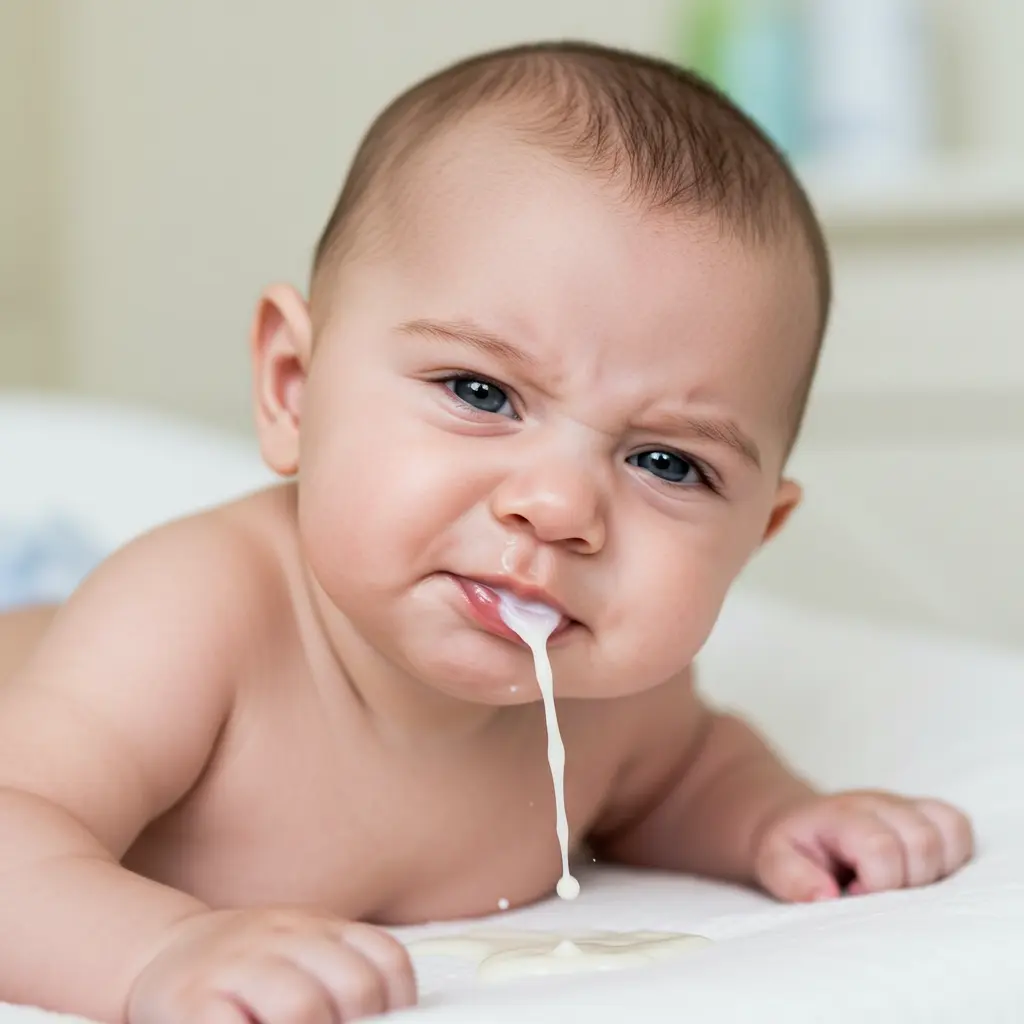
Gastroesophageal reflux (GER) in babies can manifest through a variety of symptoms such as:2
- Frequent spitting up or regurgitation after feeding
- Milk coming back up into the mouth (sometimes with burping)
- Wet burps or small vomits
- Hiccups
- Milk coming up through the nose 3
- The spit-up can sometimes seem like a large amount, and does not always happen directly after feeding.
Why Does My Baby Keep Spitting Up?
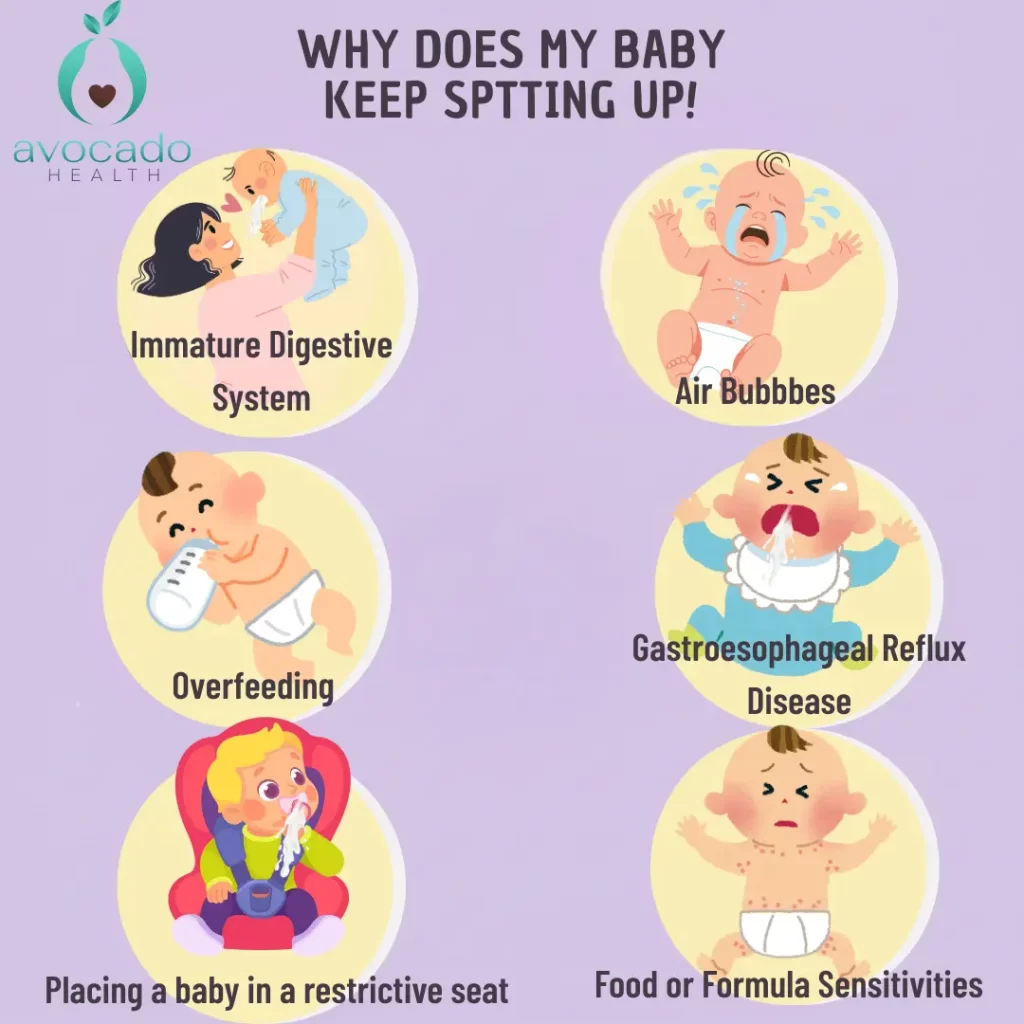
Here are some possible reasons why your baby may be spitting up:
Immature Digestive System:
The lower esophageal sphincter is still developing, making it easier for food to flow back up into the esophagus.
Overfeeding:
Babies may spit up if they are overfed. Their stomachs are small and can only hold a limited amount of milk, so overfeeding can put pressure on the baby’s stomach and cause spitting up.
Air Bubbles:
Babies may swallow air while feeding, which can cause pressure in the baby’s stomach and lead to spitting up.
Gastroesophageal Reflux Disease (GERD):
GERD is a condition where stomach contents flow back up into the esophagus, causing pain, discomfort, feeding refusal, and sometimes poor weight gain.
Positioning:
Placing a baby in a restrictive position, like in a car seat or bouncy chair, right after eating, can increase pressure on the stomach and worsen reflux.
Other Factors:
Formula sensitivities, fast-flowing bottle nipples, a strong letdown in breastfed babies, burping inadequately, the nursing mother’s diet, motion sickness, or a stomach bug could all lead to spitting up. 4
Some studies found that mothers with babies who have reflux are more likely to wean their babies earlier from breastfeeding.
How Much Spit Up Is Normal For A Newborn
It’s natural to wonder if your baby is spitting up too much. Understanding what’s typical can help ease your worries. Here are some key things to know:
Spitting up is common: About half of all babies spit up in the first three months. 5
Amount: It can be difficult to estimate how much your baby is spitting up at one time. The more important question is whether your baby is growing well or not.
Frequency: For some babies, spit up can happen with every feed.
Impact: Spit-up usually does not affect your baby’s growth or health.
Contents: Mostly breast milk or formula, which is easy to digest and harmless when spit up. 1
Exclusive breastfeeding during the first 6 months can lower the risk of digestive issues like excessive spitting up.
How to tell if spit up is from overfeeding?

Overfeeding is a common reason babies spit up. When their tiny stomachs get too full, the extra pressure can push milk back up.
Signs that your baby’s spit-up may be due to overfeeding include:
- Baby seems to feed rapidly.
- Gulping down milk and swallowing air, can contribute to too much milk intake and air bubbles filling the stomach.
- Spit-up occurring soon after feeding.
- Spitting up after active play or when the baby leans forward slightly.
- Large volumes of baby’s spit coming up.
- Baby appearing uncomfortable or fussy during or after nursing.
- Rapid weight gain.
Feeding methods and overfeeding risk:
- Bottle feeding can sometimes increase the risk if the flow rate is too fast or if the baby is encouraged to finish larger volumes than needed.
- Breastfeeding usually allows better regulation, especially if feeding from just one breast at a time and allowing the baby to finish before switching sides.
Spitting up due to overfeeding can be treated by feeding your baby smaller volumes of formula at a time.
Management tips for spit-up caused by overfeeding:
- Feed smaller amounts more frequently.
- Keep the baby in an upright position during and after feeding, with their head slightly elevated.
- Gently pat or rub the baby’s back to release trapped air.
- Avoid vigorous play or jostling right after feeding.
- Use feeding equipment designed to reduce air intake, such as bottles with venting systems.
- Keep the baby upright for at least 30 minutes after feedings to help reduce spitting up.
Burping can actually increase the number of spitting-up episodes. Gentle back pats on a full stomach may push milk up along with swallowed air. If a baby does not burp after a few gentle attempts, it is fine to stop.
How do I know if my baby has reflux or just spitting up?
Distinguishing between simple spitting up and gastroesophageal reflux disease (GERD) in babies can be challenging, as both involve milk or stomach contents coming back up into the esophagus and mouth. However, there are key differences that can help you distinguish between the two.
| Normal Spitting Up | Reflux / GERD |
|---|---|
| Normal in newborn babies and young infants due to an immature lower esophageal sphincter. | Occurs when stomach contents—including acid—travel backward more frequently or forcefully, irritating the esophagus. |
| Tends to be a gentle, effortless flow of milk or formula shortly after feeding. | Babies may show signs of discomfort such as fussiness, arching their back, crying during or after feedings, or refusing to eat. |
| Does not cause distress or discomfort to the baby. | May be associated with poor weight gain. |
| Babies are generally happy, feeding well, gaining weight, and have no other symptoms. | Sometimes linked to respiratory symptoms like coughing or wheezing. |
Red flags include:
- Forceful vomiting (As opposed to gentle spit-up, forceful vomiting may indicate an underlying issue and should not be ignored)
- Bright green (bilious) spit up
- Decreased wet diapers
- Fussiness, back arching, or refusing to feed
Remember, many babies experience some degree of reflux, which often improves as the digestive system matures, typically by 12 months.
How Can I get My Baby To Stop Spitting Up

“You can take steps to help reduce spit-up, but some amount of spit-up is normal. Even if you are taking all of these precautions, your baby may continue to spit up,” explained Dr. Hayley.
Tips to Reduce Spit-Up:
- Feed your baby smaller, more frequent meals to help reduce spitting.
- Burp your baby frequently during and after feedings.
- Avoid overfeeding.
- Use a bottle with an appropriate flow rate.
- After feeding, gently turn your baby’s head to the side or keep it slightly elevated to reduce spitting.
- Consider using a baby carrier, sling, infant swing, or bouncy seat to keep your baby upright. Make sure that these do not put extra pressure on the baby’s tummy, as this can increase spit-up. 6
Do not elevate the head of the crib unless specifically instructed by a medical professional.
Wedges, pillows, or positioners create an unsafe sleeping environment, increasing the risk of suffocation.
By following these measures, you can help reduce the frequency and volume of spit-up, making feeding times more comfortable and safer for your newborn.
Can Newborns Choke On Curdled Milk?
Newborns spitting up curdled milk can be a worrying sight for parents, but it’s important to understand that choking on curdled milk is very unlikely in healthy infants.
“Many new parents confuse coughing and gagging, which are normal reflexes, with actual choking. Coughing is an important reflex that we all have. This keeps food from entering the windpipe and sends it back down our esophagus. Choking is when the windpipe becomes blocked, leading to difficulty breathing,” explained Dr. Hayley.
The anatomy of a newborn is designed to prevent choking during spitting up.
Firstly, babies have a larger epiglottis relative to adults, which acts as a protective flap covering the windpipe during swallowing and preventing stomach contents from entering the airway.
This means that even if curdled milk travels backward and comes up through the esophagus, it is unlikely to enter the lungs.
Secondly, the swallowing and gag reflexes in newborns are well-developed to protect the airway. When spit-up occurs, babies often turn their heads slightly to the side, which helps the milk flow out safely rather than blocking the airway. 7
Why is Back Sleeping Safe And Important For Babies Who Spit Up?
It’s important to always place your baby on their back to sleep. This position reduces s the risk of sudden infant death syndrome (SIDS) and helps ease the pressure on your baby’s abdomen, making spit-up less likely.
Key points about back sleeping and spitting up:
- Babies lying on their backs are not more likely to choke on spit-up.
- A protective flap called the epiglottis, located above the larynx, prevents stomach contents from entering the airway.
- In newborns, the epiglottis is larger, providing extra protection.
This position ensures safety and comfort for your baby during sleep and after feeding.
When Should I Worry About Baby Spit Up?
While spitting up is common and often harmless in babies, there are certain signs and symptoms that may indicate a need for medical evaluation. You should consider contacting your baby’s health care provider if you notice any of the following related to your baby’s spit-up:
- Forceful or projectile vomiting: If your baby vomits with significant force, shooting the milk or formula out of their mouth and across the room, this could be a sign of pyloric stenosis, a condition where the valve from the stomach to the intestines is narrowed. This usually presents around one month of life and requires surgery.
- Poor weight gain or weight loss: If your baby is not gaining weight as expected or is losing weight, frequent spitting up could be interfering with their nutrition.
- Refusal to feed or difficulty feeding: If your baby seems uncomfortable, cries excessively during or after feedings, or refuses to eat, it may indicate underlying discomfort or a digestive issue.
- Blood or green bile in spit-up: The presence of blood or bile-colored fluid in your baby’s spit-up is unusual and warrants prompt medical attention. If spit-up contains blood or looks like coffee grounds, it should be evaluated immediately by your baby’s provider.
- Changes in stool, including the presence of blood.
- A decrease in the number of wet diapers.
- Persistent coughing, choking, or breathing difficulties: These symptoms, alongside spitting up may suggest aspiration or other respiratory concerns.
- Excessive spitting up beyond 12 months: Most babies stop spitting up by their first birthday. Continued frequent spit-up after this age should be evaluated.
In many cases, these symptoms may be related to gastroesophageal reflux disease (GERD) or other medical conditions that require treatment. Your baby’s doctor may:
- Recommend diagnostic tests.
- Suggest dietary changes, such as adjusting the nursing mother’s diet, switching formula, or thickening formula.
- Rarely prescribe medicine to treat reflux.
Early intervention can help ensure your baby’s comfort, proper nutrition, and growth.
Need More Support?
If you need more support after reading this article, Avocado Health offers 24/7 Parent Coaching through text, so you have expert advice whenever you need it, right in your pocket.
Conclusion
Spitting up is normal, and most babies outgrow it by their first birthday. Look for signs of discomfort or unusual symptoms, but remember: smaller feeds, gentle burping, and keeping your little one upright after feeds can make feeding easier, safer, and less stressful for both of you.
Frequently Asked Questions
-
Should you feed baby again if they spit up a lot?
If your baby spits up a lot, it can be concerning, but it doesn’t always mean you should stop feeding or delay the next feeding. Watch for your baby’s cues. If they appear hungry, try offering a small amount of formula or breastmilk.
In many cases, spitting up is normal for young infants with immature digestive systems.
If your baby seems comfortable, is gaining weight well, and is otherwise healthy, you can usually continue feeding as usual.
However, it may help to feed smaller amounts more frequently to avoid overfilling your baby’s stomach, which can reduce the chance of spitting up.
-
Baby spitting up curdled milk is good or bad?
When your baby spits up curdled milk, it can look concerning, but it’s usually harmless. Here’s what you need to know:
What is curdled milk?
Curdled milk appears as clumps or chunks in spit-up, caused by milk proteins coagulating in the acidic environment of the baby’s stomach.
Is it normal?
Yes, especially in young infants with developing digestive systems. It often means the stomach is breaking down milk properly.
When to worry?
Consult your baby’s health care provider if your baby frequently spits up large amounts of curdled milk or shows signs of discomfort, poor feeding, or poor weight gain. These may signal issues like gastroesophageal reflux disease (GERD) or milk protein intolerance.
Burping tip: Sit the baby upright and let them lean over slightly while burping to help expel air.
To help reduce spit-up of curdled milk:
Ensure your baby is not swallowing too much air during feeding, as this can increase stomach pressure and contribute to spit-up. -
Why is my baby spitting up curdled milk from the nose?
It can be alarming to see your baby spit up curdled milk from their nose, but this is often normal.
When babies spit up, some of this curdled milk may come out through the nose because the nasal passages and throat are connected, and the spit-up can travel up and out through the nostrils. -
Why is my baby throwing up curdled milk and clear liquid?
Mucus in spit-up may come from the baby’s nasal passages or throat. Babies often have some mucus in their airways, especially if they have a mild cold, which can increase mucus production.
When babies spit up, this mucus can mix with the curdled milk and be visible in the spit-up. -
Why is my baby spitting up curdled milk with mucus?
Mucus in spit-up may come from the baby’s nasal passages or throat. Babies often have some mucus in their airways, especially if they have a mild cold, which can increase mucus production.
When babies spit up, this mucus can mix with the curdled milk and be visible in the spit-up.
Sources:
- Exclusive breastfeeding during the first 6 months can lower the risk of digestive issues like colic and excessive spit-up.
- Gastroesophageal Reflux Disease
- Is It Colic or Is It Gastroesophageal Reflux?
- Association Between Infant Feeding Modes and Gastroesophageal Reflux: A Repeated Measurement Analysis of the Infant Feeding Practices Study II
- Natural history of gastroesophageal reflux in infancy: new data from a prospective cohort
- Helping Babies Sleep Safely
- Airway protective and abdominal expulsive mechanisms in infantile regurgitation