
Baby wake windows are the short, age-appropriate periods an infant can stay awake between naps. They range from 30–60 minutes for newborns to 4-6 hours for toddlers. Wake windows prevent babies’ overtiredness and improve their sleep quality. They start when the baby wakes up and end when the baby falls back asleep, with duration increasing as the baby grows. Learn how wake windows change as your baby grows, how to spot sleep signals, and how to adjust them for a calmer, more predictable nighttime sleep.
Table of Contents
What are Wake Windows and What Counts (and What Doesn’t)?

Baby’s wake windows are the specific periods of time a child can comfortably stay awake between sleep cycles, and these durations vary by age and individual cues. During these times, babies can comfortably stay awake without becoming overtired or fussy. Wake windows are also a great time to bond with your infant by holding and talking to them.
Is feeding included in the wake window?
Yes, feeding is part of the wake window, whether it’s breastfeeding or bottle feeding. It counts as time your baby is awake and engaged, so it should be factored into the overall duration of their wake period.
What Can Wake Windows Do for Your Baby’s Sleep?
These spans are essential for gauging how many naps your infant should have in a day and are key to shaping both their healthy sleep habits and daily rhythm.
Think of typical wake windows as benchmarks for syncing with your little one’s biological clock, which is crucial for understanding baby sleep and can help your baby sleep more smoothly and stay asleep for longer stretches.
Many parents transition from using wake windows to a “by-the-clock” schedule once their child reaches 6–12 months.
Do Pre-Sleep Moments Count in Wake Windows?
No, pre-sleep moments don’t count as part of your baby’s wake window. While babies usually take 5-20 minutes to fall asleep, that time is considered rest rather than active awake time—especially if they’re in a calm, quiet environment.

So, the moments right before they drift off or when they’re waking up are just their brain’s way of winding down, not part of their active wake time.
How do you know when your baby is ready for longer wake windows?
As your baby grows, their ability to stay awake comfortably between sleep periods naturally increases. However, recognizing when your baby is ready for longer wake windows involves more than just age—it requires careful observation of their individual sleep cues and behaviors.
Here are some key indicators that your little one’s wake windows may be ready to be stretched:
- Consistent Resistance to Sleep: If your baby frequently resists naps or bedtime, it might mean their current wake window is too short, and they aren’t tired enough when it’s time to sleep.
- Short or Interrupted Naps: Taking very short naps or waking up frequently during naps can signal that your baby’s wake window is too short or too long, disrupting their ability to settle.
- Increased Alertness and Energy: If your baby seems wide awake and playful at the usual sleep times, they may be ready to stay awake longer.
- Signs of Overtiredness: Conversely, if your baby becomes fussy, irritable, or shows late tiredness cues like clenched fists or inconsolable crying, it could mean the wake window has been stretched too far.
- Improved Night Sleep: A baby who starts sleeping for longer stretches at night may be ready for longer periods of awake time during the day.
When adjusting wake windows, it’s important to do so gradually. Extending awake time by 10 to 15 minutes every few days allows your baby to adapt without becoming overtired. Always pair these adjustments with close attention to your baby’s sleepy cues to find the optimal balance.
Wake windows vary depending on the baby’s age and individual sleep needs. As wake windows lengthen, the number of naps a baby needs typically decreases.
By fine-tuning these age-appropriate wake windows, you’ll be contributing positively to your child’s mental acuity and emotional health.1
Determining accurate wake windows necessitates close observation of individual signs that vary from baby to baby.
Wake Windows by Age
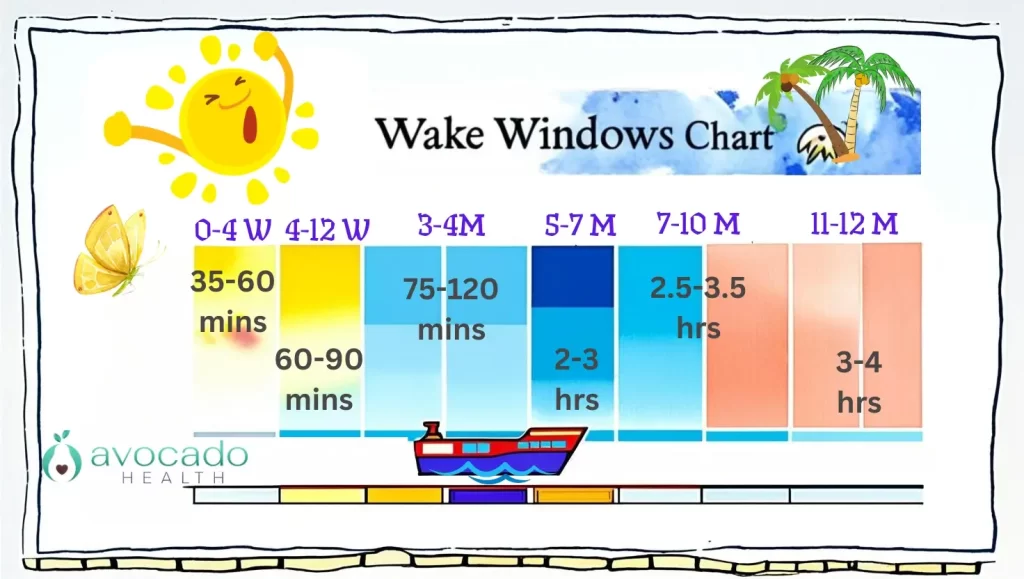
According to the American Academy of Sleep Medicine and the National Sleep Foundation, how much sleep babies need varies by age, and meeting these needs is crucial for healthy development. 2
If a wake window is too long, the baby’s body releases cortisol and adrenaline, making it harder for the baby to settle down.
If a wake window is too long, the baby’s body releases cortisol and adrenaline, making it harder for the baby to settle down.
Newborns (0-2 months)wake windows
Newborn babies have unique sleep needs, characterized by short but recurring periods of wakefulness known as newborn wake windows. These newborn wake windows, or newborn wake periods, typically last from 30 to 90 minutes. During this time, newborns may show signs of tiredness.
Newborns usually need 3 to 5 naps a day. Adequate daytime sleep during these periods is essential for:
- Swift growth and development
- Supporting healthy sleep routines
- Overall well-being
Starting a consistent routine early is like laying down the tracks for smooth sleep ahead. It sets the stage for healthier sleep habits that will grow with your baby, making the journey to better sleep a whole lot smoother.
Infants (3-6 months)
When your baby reaches the age of 3 to 6 months, you’ll start observing substantial alterations in how they sleep.
The first wake window, which begins right after your baby wakes up from a long night of sleep, is typically shorter and sets the tone for the rest of the day. As each wake window begins, it marks the start of your baby’s period of wakefulness after sleep or a nap.
By 4 months, babies can usually stay awake for 1.5 to 2.5 hours. These wake windows grant additional opportunities for play and interaction that are crucial to their growth.
- Around this age, your baby’s internal clock (circadian rhythm) develops, influencing sleep patterns.3
- This helps regulate when they feel sleepy or alert.
During these wake windows, engage your baby with stimulating activities to support development and prepare them for nap time.
- Watch for sleepy cues early to help your little one settle down easily.
- Missed cues can make winding down harder.
For babies around 6–9 months, many sleep experts use the ‘2‑3‑4’ schedule, about 2 hours awake before the first nap, 3 hours before the second nap, and 4 hours before bedtime as a practical way to space two naps across the day.
This pattern aligns with research showing that older infants tend to have two daytime naps, separated by progressively longer wake periods, as sleep consolidates and circadian rhythms mature.4
Older Babies (7-12 months)
Babies between the ages of 7 to 12 months experience wake windows lasting from two and a half to four hours.
By 12 months, most babies can stay awake for 3 to 4 hours at a time.
These longer wake windows support physical and mental development by allowing ample time for active play and exploration.
Near one year, many babies shift to a routine with two naps per day.
Some older babies may transition to just one nap daily “Fewer naps” as their wake windows lengthen further.
Signs Your Baby is Ready for Sleep

Studies show that Identifying your baby’s sleep cues is essential for finding the right wake window and ensuring they receive adequate rest.
Observing these cues helps you determine the optimal timing—known as the right wake—for naps, rather than relying solely on fixed schedules. A well-rested baby means a happier, calmer day for everyone! 5
When your baby’s tired, the signs are written all over their face—literally!
Key signs a wake window is closing include:
- Yawning
- Rubbing eyes
- Blinking more often
- Staring into space
- Fussing
- Newborn-specific sign: turning away from you or toys
Late signs of overtiredness:
- Clenched fists,
- Inconsolable crying
Keep an eye out for these cues to keep nap time on track!
How to Adjust Wake Windows

Tweaking wake windows can be somewhat experimental, but it’s a worthwhile endeavor. Adjusting wake windows should be based on your baby’s individual sleep needs and cues, as every child’s sleep patterns are unique.
- Signs your baby may need schedule changes:
- Reluctance to sleep at regular intervals
- Excess energy toward the end of a wake window
- Fussiness or taking longer to fall asleep
- Lying awake before sleep or trouble settling
- How to stretch wake windows:
- Add 10-15 minutes gradually before nap or bedtime
- Pay close attention to your baby’s cues
- Adjust as your baby grows; wake windows tend to increase with age
- Encourage independent sleep:
- Help your baby fall asleep on their own
- Support healthy sleep habits and smoother transitions
- Avoid overtiredness:
- Too long wake windows can trigger stress hormones (cortisol, adrenaline)
- Overtired babies may fight sleep or take shorter naps
By tuning into your baby’s signals and adjusting awake times accordingly, you can create a smoother, more peaceful sleep routine for them.
Activities During Wake Windows

Wake window activities are essential for your baby’s development and optimal brain development.
Studies suggest that both sufficient sleep and rich waking experiences support early brain development.
As your baby grows, wake window activities can become more enriching. For newborns, tummy time is important, but you can also read books to your baby, which is a beneficial activity for their development.
As they get older, you can introduce playing with toys, taking your baby for walks, and simple games like peekaboo. These activities not only aid in development but also help your baby settle down for sleep.
Let’s explore some activity examples that cater specifically to various milestones in your baby’s life stages.
For Newborns
Participating in mild exercises facilitates both the physical growth and mental advancement of infants during their newborn wake windows.

- Tummy time
Is a straightforward activity, not only fortifies your infant’s neck and shoulder muscles, but also offers sensory stimulation which is pivotal for their development. Engaging your baby with various textures, noises, and visuals through sensory play, promotes the maturation of their sensory abilities.
- Face-to-face time
Is all about connecting with your baby through eye contact, smiles, and just being present together. It’s a simple yet powerful way to build that special bond.
Around 6 to 8 weeks, your little one may start giving you their own adorable “social smile” in return. It’s the perfect moment to slow down, smile at them, and share those sweet moments together. Taking just a few minutes each day to engage in this fun, interactive time can do wonders for your baby’s development—and create memories you’ll cherish!
Such calming activities can lead newborns to a state of tranquility that primes them for better sleep, thereby improving the quality of their rest.
- Age-appropriate toys
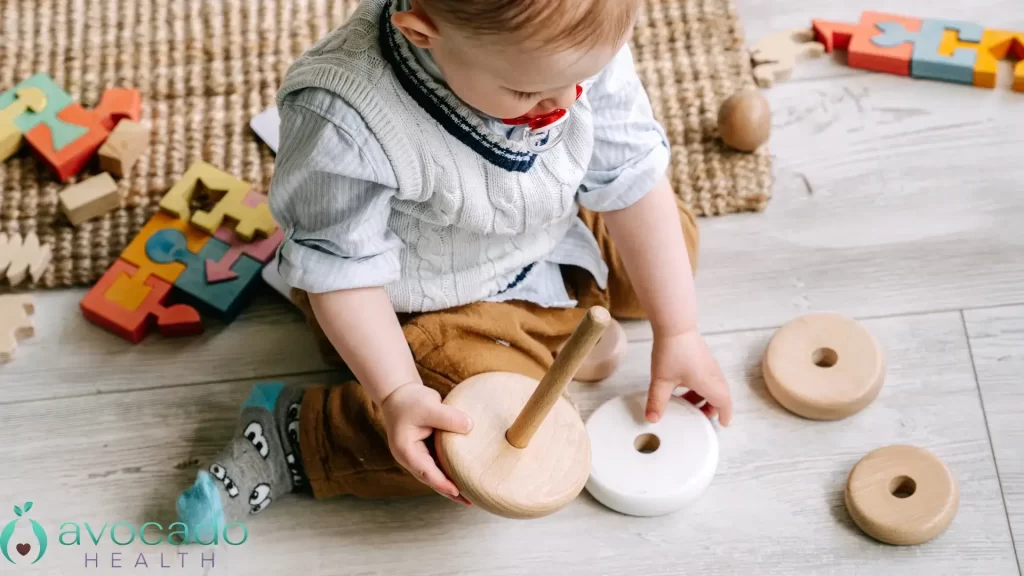
Babies love to explore by touching and grasping things. In their first month, soft toys like stuffed animals, fabric balls, and small rattles are perfect. Since babies don’t fully see colors until about 16 weeks, toys with bold colors and high contrast patterns will capture their attention and help with their early development.
- Singing & Making sounds

Singing to your newborn is more than just fun—it’s a wonderful way to bond and support their development. Whether it’s a lullaby or a simple tune, singing helps build vocabulary, rhythm, and even early speech skills.
For Infants 3-6 months

During those precious awake moments between 3 and 6 months, babies thrive on interactive play:
- Enjoying fun, bonding games like peekaboo that spark laughterilities, making the most out of each wake window by ensuring it is both beneficial and pleasurable.
- Exploring vibrant, colorful toys that capture their attention
- Mastering new skills, like rolling over, one little step at a time
For Older Babies 7-12 months
For infants between 7 and 12 months, active play and exploration are game-changers. As they crawl, cruise around, and explore bigger toys, they burn off energy, which helps them wind down for a good nap. Here are some engaging activities that will support your baby’s development during this exciting stage:
Mirror Peekaboo

Get your little one excited about their reflection by playing peekaboo in front of a mirror. Hide and reveal objects while asking, “Where’s the toy?” This activity teaches object permanence and helps them discover the magic of reflection.
Encourage Movement with Toys

Place a favorite toy just out of reach to motivate your child to stretch, crawl, or even scoot toward it. This simple activity boosts strength, coordination, and helps develop gross motor skills.
Stacking Blocks

Introduce colorful, soft stacking blocks. Watch as your little one explores, stacking and knocking over the blocks, improving fine motor skills and learning about spatial relationships.
Pretend Play with Stuffed Animals

Engage your child with stuffed animals or dolls for simple pretend play. Create little conversations with the toys to spark imagination and social development.
Engaging in dynamic activities helps reduce the chances of your baby becoming overly tired and supports the development of better sleep patterns. 6
Establishing a Nap Routine

Establishing a regular nap schedule is vital for your baby’s health and sleep improvement. Creating a nap routine helps manage your baby’s sleep schedule and promotes faster, longer sleep.
Key Points:
- Set nap times aligned with your baby’s natural sleep rhythms.
- Watch for signs of tiredness and start naptime rituals promptly to prevent overtiredness.
- As your baby grows, wake windows lengthen and naps naturally decrease.
Nap Routine Tips:
When drowsiness signals appear, prepare your infant for a nap immediately.
- Mirror the bedtime routine during naps, including:
- Feeding your baby
- Changing to a fresh diaper
- A brief soothing activity before sleep
- Consistency helps babies learn to fall asleep independently.
- When drowsiness signals appear, prepare your infant for a nap immediately.
The Role of Feeding in Wake Windows

Including regular feedings during your baby’s wake windows—typically every 2 to 3.5 hours—is critical for maintaining proper energy levels and supporting healthy sleep. Ensuring your baby gets enough calories during awake time can reduce the need for nighttime feedings.
Feeding Tips During Wake Windows:
- Timing feedings well helps support consistent sleep patterns and overall health.
- Feed your baby regularly within their wake periods.
- Minimize distractions during feeding to promote better intake.
Why Is Your Baby Taking So Long to Fall Asleep?

If your little one is struggling to fall asleep, it might be because their wake window is off. Here’s why:
- Too much awake time: Leads to an overtired baby who finds it harder to settle down.
- Not enough awake time: Leaves them under-tired and not ready for sleep.
- Other factors: Sleep regressions and sleep disorders can also affect how long it takes for your baby to fall asleep.
Some Helpful Tips:
- Monitor for signs of overtiredness or under-tiredness to find the right balance.
- Pay attention to your baby’s alertness and sleepy cues.
- Adjust their wake windows accordingly to help them fall asleep faster and stay asleep longer.
Some children may need more sleep than others, and if your baby consistently struggles with sleep, a step by step plan may be needed to address persistent sleep issues.
To maintain a calm approach toward naptime, keep these tips in mind:
- Avoid packing too many activities into each day to prevent overstimulation.
- Remember that sleep requirements shift as your baby grows; adjust your practices accordingly.
- A cheerful, refreshed baby upon waking usually indicates an effective sleeping pattern.
When to Seek Professional Help
If you worried about your baby’s sleep patterns , it may be time to seek professional help. Consider the following:
- Sleep Disorders: Conditions like restless legs syndrome, obstructive sleep apnea, and night terrors require evaluation by a healthcare provider.
- Underlying Issues: These sleep problems could indicate deeper health concerns that need specialist attention.
- Separation Anxiety: Commonly emerging around 9 to 12 months, this can disrupt sleep and may require extra parental reassurance.
Parenting questions can’t wait. Text Avocado Health for trusted, expert parent coaching whenever you need it.
Conclusion
Master your baby’s wake windows with patience and observation. Understand their changing needs by age, recognize sleep cues, and maintain consistent routines. Every baby is unique, so stay flexible and attentive to their behavior to ensure they get the restful sleep essential for healthy growth and development.
Frequently Asked Questions
When should you stop using wake windows?
You won’t completely stop using wake windows. Around 4 to 6 months, you can shift to a more flexible schedule as your baby’s sleep patterns stabilize. When your baby transitions to one nap between 12 and 18 months, focus more on sleep cues and a consistent routine.
Why is my baby suddenly having shorter wake windows?
Suddenly shorter baby wake windows are common and often temporary, usually caused by growth spurts, teething, illness, or developmental leaps. While babies generally need longer windows as they grow, they may need shorter ones to catch up on sleep if they are overtired or recovering from a regression.
How to extend baby morning wake time?
To get your baby to wake up later, ensure their room is pitch black with blackout curtains, keep the last nap short (30-45 mins), adjust bedtime earlier (often 6-7 PM), delay the first morning feed, and maintain consistent wake windows, all while using white noise to block disruptive sounds and waiting a bit before rushing in, preventing overtiredness and reinforcing later sleep.
Sources:
- Infant sleep and its relation with cognition and growth
- Recommended Amount of Sleep for Pediatric Populations
- Impact of different recommendations on adequacy rate for sleep duration in children
- Longitudinal Study of Sleep Behavior in Normal Infants during the First Year of Life
- Promoting and Protecting Infant Sleep
- A Systematic Review of the Relationships Between Physical Activity and Sleep in Early Childhood