



Contact naps are one of the sweetest parts of early parenting. Snuggling close while your baby drifts off to sleep feels so natural, yet with so much advice about independent sleep, it’s easy to feel torn. Together, we’ll look at why contact naps matter, the benefits they bring, and how to keep contact naps safe by adhering to expert-recommended sleep guidelines while finding what works best for you and your little one.
Table of Contents
What is a Contact Nap?
A contact nap occurs when a baby or toddler sleeps while physically touching their parent or caregiver. This can involve the baby sleeping on the parent’s chest, in their arms, or snuggled beside them. During a contact nap, the caregiver remains awake to ensure the baby’s safety and to keep contact napping safe.
It’s distinct from co-sleeping, which refers to the shared sleeping surface, as contact napping can and should occur while the parent is awake. Unlike co-sleeping, where a caregiver might inadvertently fall asleep, potentially leading to dangerous situations for the sleeping baby, contact napping ensures the baby is safe as the caregiver remains awake and alert through the entirety of the child’s nap.
Why Babies Crave Contact Naps?

Babies are born with an innate drive to seek proximity to their caregivers. This isn’t just a matter of comfort; it’s a biological imperative. Skin-to-skin care plays a crucial role in providing physiological stability for newborns. 1
Newborns, in particular, need warmth, regulation, and security. They’ve been in the womb for 9 months, and they get used to hearing their mother’s heartbeat as a source of comfort. In those first weeks after birth, known as the fourth trimester, this need for closeness is especially strong as they adjust to life outside the womb.

Contact napping doesn’t just promote physiological stability; it also cultivates a vital sense of safety, laying the groundwork for healthy psychosocial development in your little one.
Babies thrive when their need for closeness and security is met through contact naps.
Contact Naps: A Biological Norm, Not a “Bad Habit”

Babies are wired for closeness. It’s how they’ve evolved to survive. While some babies may naturally prefer contact naps, this preference isn’t a sign of being “spoiled.” It’s a normal, healthy behavior rooted in their biology.
The idea that contact naps are a “bad habit” is a modern construct, not a reflection of a baby’s inherent needs.
According to the American Academy of Pediatrics, contact naps are only safe if the caregiver is awake and alert.
Do Contact Naps Spoil Newborns?
Separating Fact from Fiction
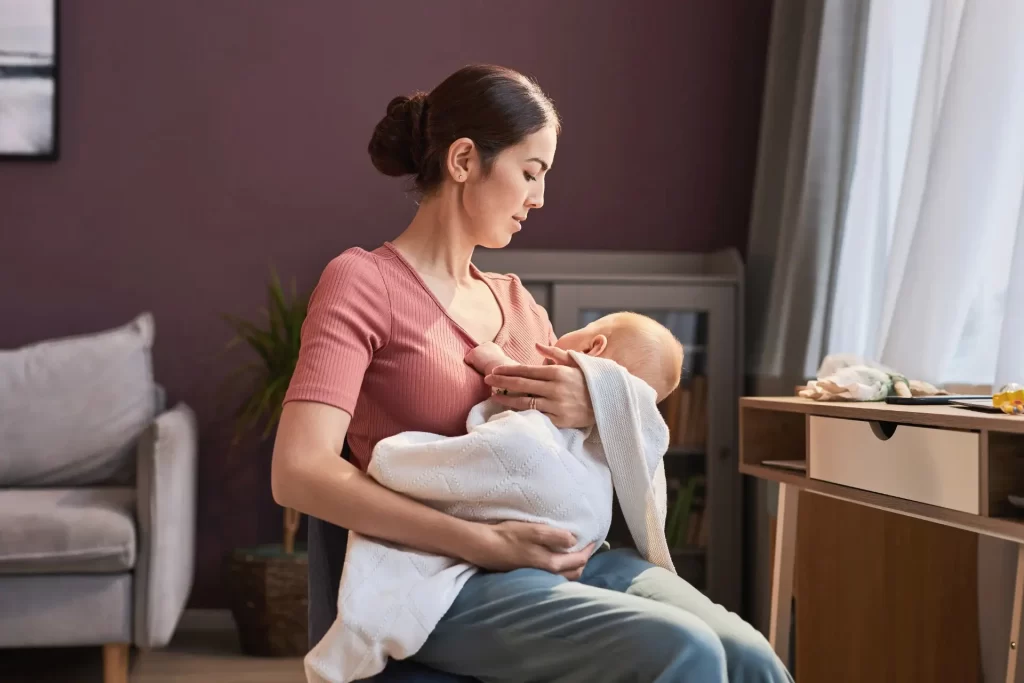
Absolutely not. Contact naps are a healthy and nurturing sleep habit, especially for newborns. They provide comfort, regulate temperature, and promote bonding. Far from spoiling a baby, contact naps meet their fundamental needs for closeness and security.
However, it is crucial for parents to remain awake and alert during contact naps, as falling asleep while holding the baby can lead to dangerous situations such as falls or unsafe sleeping positions.
Benefits of Contact Naps
Contact naps often provide a calming effect that helps babies fall asleep quicker and enter deep sleep phases sooner than when placed alone in a crib. The gentle rise and fall of the caregiver’s chest, the sound of their heartbeat, and the warmth of physical closeness all contribute to this soothing environment, promoting restful sleep for your baby.
Here’s why contact naps can be such a gift for both you and your baby.
For Babies
Contact naps can lead to more consolidated sleep, less crying, and better overall physiological regulation. Here’s how:
- Mimics the womb: Your heartbeat, warmth, and breathing mimic the familiar, comforting sensation of the womb, giving your baby that same sense of security and often leading to longer, deeper sleep. 2
- Reduced startle reflex: Being held snugly can help calm your baby’s startle reflex (Moro reflex), which might otherwise jolt them awake. 3
- Brain development: The sensory input from skin-to-skin contact—touch, smell, sound, and warmth—helps stimulate healthy neural pathways in your baby’s developing brain.
- Lowered stress levels: Being held lowers cortisol (the stress hormone) in babies, helping them relax and making sleep easier.
- Immediate comfort: Contact naps meet your baby’s need for comfort and reassurance right away, which can help reduce fussiness and crying.
For Parents
Parents also benefit from contact naps, both emotionally and physically.
Strengthens responsiveness: Spending this time together helps you tune into your baby’s needs and sleep cycles, making you more responsive and confident in your parenting.
Promotes bonding: Contact naps create a special closeness that deepens your connection with your baby.
Increases milk supply: The skin-to-skin contact encourages the release of hormones that support breastfeeding.
Reduces anxiety and depression: Some studies suggest that contact napping can lower maternal depression and anxiety.
Increases relaxation: The release of oxytocin (the “love hormone”) helps lower your blood pressure and heart rate, leaving you calmer and more at ease.
Better sleep for parents: Some parents even find they sleep better with their baby close by during contact naps.
“‘As a new parent, getting restful sleep is essential,’ explains Cory Todd, Child Life Specialist. ‘Many parents report that they are able to rest more easily at night because they’ve had the chance to enjoy the closeness of a contact nap during the day.’”
Involved caregivers play a crucial role in providing safe and nurturing contact naps by staying attentive, supporting infant safety, and fostering a positive bonding environment.
Can Contact Naps be helpful during transitions?
While there’s limited research specifically on contact naps during transitions, studies on stress in infants show that close physical contact with a caregiver can buffer the effects of stress and promote emotional regulation. 4 This suggests that contact naps can be a valuable tool during periods of change or challenge for babies, especially when facing a big transition such as moving from contact naps to independent sleep.
How Contact Naps Help Milk Supply?
Skin-to-skin contact, especially during contact naps, can significantly boost milk supply. This is because it stimulates the release of prolactin and oxytocin, hormones crucial for milk production and let-down.
Additionally, the release of these hormones during contact naps aids in falling asleep, helping babies to associate sleep with comfort and security.
To see why this matters so much, let’s break down the main hormones at play and how contact naps naturally support them.
Prolactin:
The milk making hormone. Physical contact tells the pituitary gland to increase prolactin production, the hormone that makes milk.
Since prolactin levels are higher at night, frequent feeds during daytime contact naps are especially effective at telling your body to make more milk. 5
Oxytocin:
The let-down reflex. The sensory stimulation of skin-to-skin contact, including the feel and smell of your baby, releases oxytocin which causes the milk ducts to contract and push milk towards the nipple. Without enough oxytocin, much of the breast milk can be left in the ducts.
This surge of oxytocin also makes you feel calm and relaxed, creating a positive feedback loop. 6
Reduced stress and cortisol. High levels of the stress hormone cortisol can inhibit oxytocin release and the let-down reflex which is essential for milk production.
Contact napping, by making you and your baby relax and lower cortisol levels, removes a big barrier to milk flow. 7
What are the negatives of contact naps?
While contact naps can offer numerous benefits, they also have significant drawbacks and risks to consider for both the baby and the caregiver.
Potential risks to the baby
- Suffocation and SIDS: The most serious risk is accidental suffocation or Sudden Infant Death Syndrome (SIDS), which can occur if the caregiver accidentally falls asleep with the baby on a soft surface like a couch, recliner, or adult bed.
The American Academy of Pediatrics (AAP) recommends that babies be placed alone and on their back in a crib or bassinet without any additional blankets, pillows, toys, or other items for all unsupervised sleep. 8
A 2024 study published in the AAP journal Pediatrics revealed that 28.2% of US mothers reported falling asleep while feeding their infant, with over 80% reporting this was unplanned.
- Overheating: A baby can overheat when held in close body contact for extended periods, especially if they are overdressed or covered with a blanket. Overheating is a known risk factor for SIDS.
- Unsafe position: Babies may slip into an unsafe position during contact naps, especially if the caregiver becomes drowsy or falls asleep. This can increase the risk of suffocation, airway obstruction, or falls.
“‘Cory Todd, Child Life Specialist, recommends putting the baby down in a crib or bassinet, or having another caregiver nearby who can take over the contact nap if the parent starts to feel sleepy.’”
- Limited self-soothing skills: Babies who exclusively rely on contact to fall asleep may have fewer opportunities to develop independent self-soothing skills, which are important for longer, consolidated sleep as they mature.
Disadvantages for the parent
- The “nap trap”: A common complaint is being “nap trapped,” where the caregiver is confined and unable to move for an extended period. This can restrict mobility and prevent them from attending to other tasks, children, or personal needs.
- Physical strain: Holding a baby for long periods can lead to physical discomfort and strain, such as back, neck, and arm pain.
- Mental and emotional strain: The constant demands of contact napping can leave parents feeling overwhelmed, exhausted, and isolated. The feeling of being trapped can also contribute to mental strain and burnout.
- Dependency issues: Exclusive contact napping can create a strong sleep association where the baby will only sleep while being held. This can make the eventual transition to crib sleeping more difficult and require intentional intervention.
- Difficulty for other caregivers: If a baby is accustomed to contact naps with a primary caregiver, it can be challenging for other family members to get the baby to nap without being held.
- Fragmented sleep: While some babies may nap for more extended periods, others may experience fragmented naps unless they are being held. This can extend to nighttime sleep, where the baby may wake frequently and only resettle with contact.
The transition from contact to crib
- Delayed independence: The longer a baby relies on contact napping, the more challenging the transition to independent sleep can become.
- More effort to transition: While it’s possible for all babies to transition eventually, those with a long history of contact naps may require more time and patience to adjust to sleeping alone.
Contact naps are an excellent way to bond, but they can also bring some challenges. For many parents, the sweet spot is combining contact naps with crib naps, allowing both the baby and the parent to get the best of both worlds.
Contact Nap Positions: Finding the Right Fit
There are various comfortable and safe positions for contact napping. For newborns, the chest-to-chest position is often preferred. As babies grow, side-lying positions or cradle holds can be used. The key is to ensure the baby’s airway is open and they are supported.
It is also important to transition babies to a designated sleep space, like a crib, to encourage good sleep habits and ensure a safe sleeping environment.
Contact Nap Positions for Newborns: Special Considerations
Newborns need a little extra care because their bodies are still developing. When you are contact napping, make sure to support their head and neck, keep their nose and mouth clear, and stay awake and alert in an environment that will not make you too drowsy.
Here are a few safe and comforting contact nap positions you can try with your newborn:
Chest-to-chest position:
This is the safest contact nap position, preventing airway blockage. Known as “kangaroo care,” it is excellent for skin-to-skin contact, especially when your baby is placed directly against your bare chest.
This direct contact with your bare chest enhances bonding and helps regulate your baby’s temperature and heart rate. 9
- Lay your baby belly-down on your chest to hear your heartbeat—an incredibly soothing sound.
- Keep baby’s face uncovered and turned to the side, not pressed against your body.
- Sit at a semi-upright angle (30 to 45 degrees) to reduce risk of positional asphyxia. A common technique for preventing accidental sleep while contact napping includes remaining in an upright position.
Reclined cradle:
You can also hold your baby in a semi-reclined, side position. This way, you still get that precious skin-to-skin contact while supporting your baby’s head and neck.
Keep your little one’s head visible and slightly elevated so their chin is not tucked into their chest, which makes breathing easier.
Babywearing:
If you would like a hands-free option, babywearing can be a wonderful way to contact nap. Just make sure you are fully awake and following safety guidelines. A good rule of thumb for safe babywearing is:
- Tight: Your baby should feel snug and secure against your chest.
- In view at all times: You should always be able to see your baby’s face.
- Close enough to kiss: Your baby’s head should sit high enough that you can easily kiss them.
- Chin off chest: Their chin should not be pressed into their chest, to keep the airway open.
- Support back: Your baby’s back should be well supported in a natural, comfortable position.
“‘Keep your baby’s legs in an “M‑shape” or froggy position in the carrier, with the knees higher than the bottom,’ explains Cory Todd, Child Life Specialist. ‘This alignment keeps the legs properly supported and promotes healthy hip development.’”
Contact Naps at 2 Months
At two months, babies are still adjusting to life outside the womb. Contact naps can provide comfort and help regulate their sleep patterns. Continue to prioritize safe sleep practices.
It is also important to balance contact naps with cot naps in a crib to help babies learn to sleep independently.
Contact Naps at 3 Months
By three months, some babies may begin to show signs of more consolidated sleep, longer periods when babies string sleep cycles together. While contact naps can still be beneficial, you might start gently introducing short periods of independent sleep in the crib.
As babies develop better sleep skills, they can start to fall asleep independently, which can help them transfer these skills to naptime as well.
Contact Naps at 4 Months
The four-month sleep regression can disrupt sleep patterns. Contact naps can be a valuable tool during this period, offering comfort and helping babies navigate this developmental leap.
Contact Naps for Toddlers
Even toddlers can benefit from contact naps, especially when they are feeling sick, going through transitions, or simply need extra comfort. They provide a sense of security and connection.
Contact Naps When Baby is Sick: Soothing a Feverish Little One

When a baby is sick, contact naps can be particularly soothing. The warmth and closeness can help regulate their temperature and provide comfort when they’re feeling unwell.
Establishing a Bedtime Routine: Integrating Contact Naps

Establishing a bedtime routine around the same time of the day is crucial for fostering healthy sleep habits, and integrating contact naps can be a wonderful way to promote bonding and relaxation. Here are some tips to help you create a soothing bedtime routine that includes contact naps:
Start with a Calming Pre-Sleep Routine:
Begin with a warm bath or a gentle massage to help your baby relax and unwind. This can act as a cue for your baby, indicating that it’s time to relax and get ready for sleep.
Embrace Skin-to-Skin Contact:
Use skin-to-skin contact to help your baby fall asleep. This close contact can promote deep sleep and relaxation, making it easier for your baby to drift off.
Create a Sleep-Conducive Environment:

Keep the room dark, quiet, and at a comfortable temperature. This helps create an environment that is conducive to sleep.
Use White Noise:
Consider using white noise to block out any background noise that might disturb your baby’s sleep.
Think of white noise as a magical sleep bridge. Introduce it during contact naps, creating a cozy soundscape your baby will come to associate with sleep. Then, when you transition to the crib, keep a soothing soundtrack playing.
It’s like a little piece of home, reminding them of the comforting sounds of the womb and helping them drift off to dreamland wherever they are.
Swaddle or Use a Sleep Sack:

A sleep sack or swaddle can help your baby feel secure and comfortable, mimicking the snugness of the womb. “‘It is important to choose a sleep sack and pajamas that help regulate your baby’s temperature and prevent overheating,’ said Cory Todd, CLS.”
Consistency is Key:
Establish a consistent bedtime routine that includes contact naps. This helps your baby know what to expect and can make the transition to sleep smoother.
Feeding Adjustments: Timing is Everything:
After the newborn haze (around two weeks or so), try to be mindful of when your baby is truly done feeding. Once their sucking pattern changes from those strong, purposeful sucks and swallows to a more gentle, shallow suck, it’s often a cue that they’re finished and ready for some downtime (in their crib, ideally!).
Those little dozes at the breast or bottle can sometimes lead to mini-naps that actually interfere with building up the sleep pressure needed for a good, long nap.
The Gentle Wake-Up: A Little Nudge Towards Independence:
This one might sound a little crazy at first, but hear me out! After your little one falls asleep in your arms during a contact nap, gently and carefully place them in their crib.
Then, give those tiny toes a very gentle tickle – just enough to rouse them slightly. It might seem counterintuitive, but often, they’ll just drift right back to sleep. And those few seconds of drowsy waking can actually be a tiny but significant step towards learning to self-soothe outside of your arms. It’s like a gentle introduction to independent sleep.
The Transition from Contact Napping to Crib: A Gradual Process

Transitioning from contact naps to crib naps is a gradual process. There’s no one-size-fits-all approach. Start by offering short periods of crib time, gradually increasing the duration as your baby adjusts.
Creating a designated sleep space, like a crib, helps babies associate it with comfort and security, encouraging good sleep habits.
When to Stop Contact Napping?
No one says you have to stop contact napping. It’s up to you and your baby. Some babies naturally stop contact napping as they grow, others will continue to do so for longer.
Many parents find this shift happens between 6-9 months when babies start sleeping more independently in their cribs. Just follow your baby’s cues and do what feels right for you both.
“‘Your child’s need for contact naps may ebb and flow over time. You may find that they seek out contact naps more during developmental milestones, nighttime sleep regressions, or when they’re not feeling well,’ said Cory Todd, CLS.”
If you are unsure about when or how to stop contact napping, you can seek guidance from a sleep consultant or parent coach for expert advice tailored to your situation.
In conclusion, contact naps are a normal and healthy part of infant sleep. They provide a wealth of benefits for both babies and parents, fostering connection, promoting milk supply, and offering comfort and security.
Looking for more parenting tips? Explore our Parent Resources for expert-backed advice and helpful insights!
Frequently Asked Questions
When do babies outgrow contact naps?
Babies usually start to outgrow contact naps between 4 and 12 months, though this varies depending on each child’s development, mobility, and self-soothing abilities.
To encourage independent napping:
1- Place your baby in their own safe sleep space, such as a crib
2- Lay them down when they are drowsy but still awake
How long do babies contact nap?
The duration of contact naps can vary widely depending on the baby’s age, temperament, and individual sleep needs.
In the early stages, newborns often take shorter naps lasting anywhere from 20 to 45 minutes, as their sleep cycles are still developing and they require frequent feeding and comfort.
As babies grow, many babies begin to enjoy longer contact naps, sometimes lasting up to 2 hours, especially when they feel secure and comforted in close proximity to their caregiver.
However, it’s important to note that contact naps can sometimes be shorter than crib naps, as the baby might be more easily roused by movement or changes in position. This can lead to fragmented sleep if contact naps are the only sleep opportunity.
Sources:
- physiological stability for newborns https://www.sciencedirect.com/science/article/pii/S2589004221006891
- Bonding and Attachment with Baby in the Womb or in the Neonatal Intensive Care Unit: The Critical Role of Early Emotional Connections https://www.sciencedirect.com/science/article/pii/S0899588523001016#:~:text=Nature%20has%20given%20every%20newborn%20the%20biological%20instinctive%20need%20for%20contact%20with%20its%20mother.
- The Grasp Reflex and Moro Reflex in Infants: Hierarchy of Primitive Reflex Responses https://pmc.ncbi.nlm.nih.gov/articles/PMC3384944/#:~:text=3.2.-,1.,1%2C%2071%E2%80%9375%5D.
- Stress during transition from home to public childcare https://www.researchgate.net/publication/360791312_Stress_during_transition_from_home_to_public_childcare
- Mothers are more sensitive to infant cues after breastfeeding compared to bottle-feeding with human milk https://www.sciencedirect.com/science/article/abs/pii/S0018506X21001264#:~:text=From%20a%20physiological%20perspective%2C%20there,et%20al.%2C%201985).
- Longer skin-to-skin contact after birth enhances breastfeeding quality and duration: A cohort study https://onlinelibrary.wiley.com/doi/10.1111/apa.17388#:~:text=potential%20confounding%20variables.-,Results,support%20effective%20and%20prolonged%20breastfeeding.
- Maternal psychological distress and lactation and breastfeeding outcomes: A narrative review https://pmc.ncbi.nlm.nih.gov/articles/PMC8960332/#:~:text=Among%20the%20studies%20examined%2C%20methods,of%20oxytocin%20on%20the%20mother.
- Mothers Falling Asleep During Infant Feeding https://publications.aap.org/pediatrics/article-abstract/154/6/e2024066072/199817/Mothers-Falling-Asleep-During-Infant-Feeding?redirectedFrom=fulltext
- The effect of kangaroo mother care or skin-to-skin contact on infant vital signs: A systematic review and meta-analysis https://www.sciencedirect.com/science/article/abs/pii/S0266613823001742#:~:text=This%20study%20found%20that%20KMC,have%20a%20greater%20impact%20on