


Highly sensitive children (HSCs) have a normal brain trait that makes them react more strongly to the world. About 15–20% of children have this trait. They notice subtle details and feel emotions deeply. These kids are often caring, creative, and empathetic, but they can become easily overwhelmed. Learn how to nurture them and manage their intense emotions effectively.
🔹 15-20% of children are highly sensitive – this is not a disorder.
🔹 Sensory-friendly spaces reduce meltdowns by 40%.
🔹 Emotional validation boosts long-term resilience.
Table of Contents
What Is A Highly Sensitive Child?

Sensitive child syndrome, often described as a trait rather than a disorder. Highly sensitive children are keenly tuned in to everyone and everything, often analyzing minute details, which makes them extremely insightful but also easily overwhelmed. They are deeply attuned to their emotional world, picking up on subtle emotional cues from others.
They are often described as ‘processors’ whose brains never turn off, constantly attuned to their environment and the emotions of others. Highly sensitive children often experience big emotions, leading to intense emotional reactions and sometimes emotional overwhelm. However, the reasons behind their reactions are different.
A 2024 study found that sensitivity alone doesn’t predict how well children can regulate their emotions. Instead, what truly matters is how children perceive their mothers, whether they see them as warm and responsive or distant and unresponsive.1
How can I help my highly sensitive child?
To help a highly sensitive child (HSC), validate their intense emotions without judgment, create a calm, predictable home environment with plenty of downtime, and use gentle discipline. Help them build emotional intelligence by naming their feelings, offering advanced notice for transitions, and respecting their need for breaks from sensory overload.
1- Creating a Supportive Environment for Your Sensitive Child

Creating a nurturing emotional environment is essential for the well-being of highly sensitive children. Parents create supportive spaces that help children thrive by understanding their unique temperament and adjusting the environment to meet their emotional and sensory needs.
2- Establishing Routines
Sensitive kids really thrive on routines. Think of it like a safety net – knowing what to expect makes them feel secure. For highly sensitive child, routines help them gain control over their environment, which is important because they often have a more intense need for control and can be rigid or inflexible in their expectations.
Parents tend to notice that their highly sensitive children benefit from predictable routines, which help them feel secure and manage their emotional responses.
These children may develop fixed ideas about how things should be, and routines help satisfy the control kids feel they need to manage overwhelming feelings and sensory input. Simple things like a regular wake-up and bedtime can make a big difference, giving them a sense of calm and control.
A consistent routine helps parents manage time effectively, reducing feelings of overwhelm. Routines are especially beneficial for many kids, helping them prepare for what to expect and reducing anxiety and stress.
3- Designing a Calm Space

A calming physical environment supports emotional regulation and provides a sanctuary for highly sensitive children. Highly sensitive children often experience physical discomfort from sensory stimuli such as noise, bright lights, or certain textures. Key points to consider:
- HSCs react more intensely to sights, sounds, tastes, smells, and textures.
- Minimizing sensory triggers helps reduce discomfort and overwhelm.
- Creating a calm, sensory-friendly environment supports their well-being.
What Is The Dandelion Child And The Orchid Child?
The terms “orchid,” “dandelion,” and “tulip” describe how different children adapt to their environments.
- Orchid children are very sensitive and need extra support to flourish, just as delicate orchids do.
- Dandelion children, on the other hand, are tough and can handle various situations, even when things get challenging.
- Tulip children fall somewhere in the middle, with a moderate level of sensitivity.
Orchid children might react strongly to changes around them, while dandelion children tend to cope with difficulties more easily. With the right encouragement and care, orchid children can transform their sensitivity into unique strengths. 2
why is my child so sensitive?
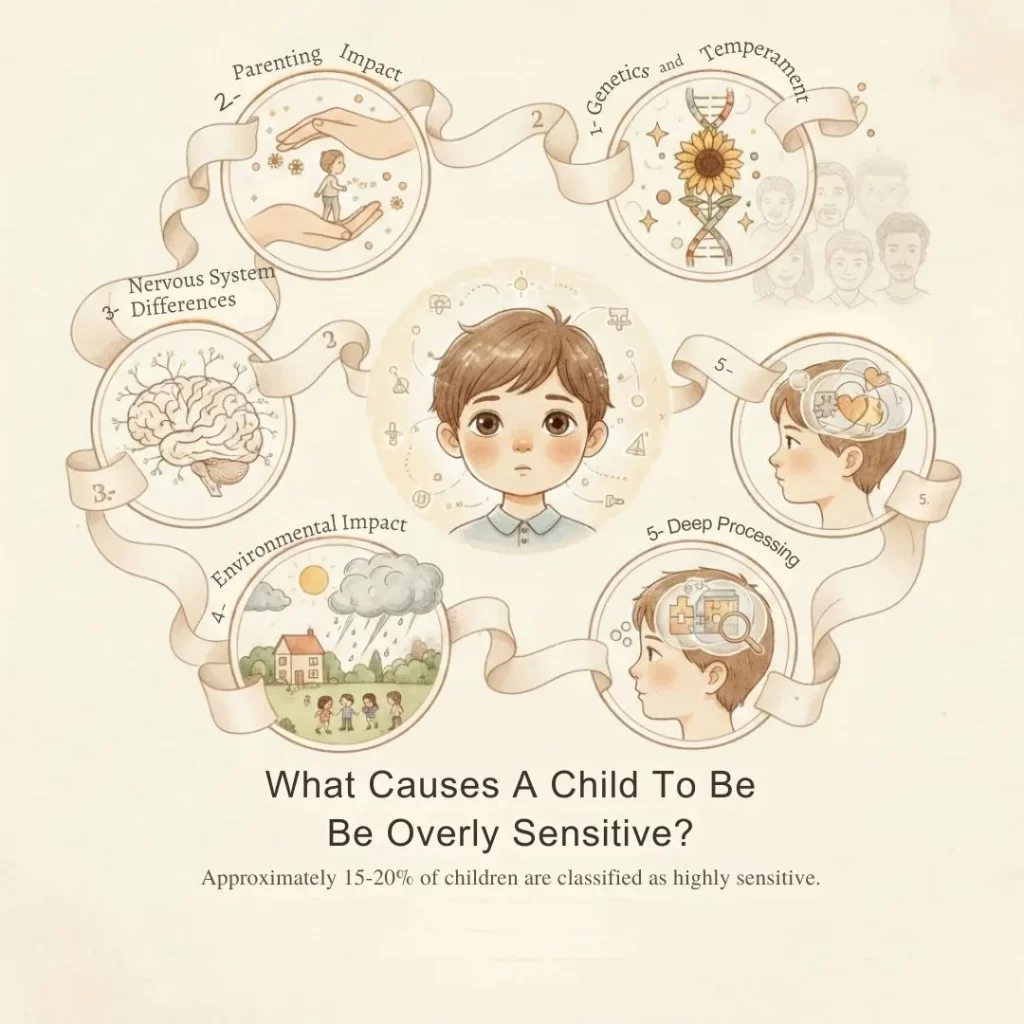
Approximately 15-20% of children are classified as highly sensitive. Here are the main causes of high sensitivity in children 3
- Parenting impact: Styles and cultural expectations determine if sensitivity becomes a strength or challenge.
Parenting styles matter deeply for HSCs, and even well-meaning modern parenting can backfire if it adds pressure or overstimulation.
- Genetics and Temperament: High sensitivity is mostly inherited. The sensory processing sensitivity trait is a key part of a child’s personality, shaped by both genetics and environment. It’s a natural personality trait, not a disorder.
- Nervous System Differences: These children have more responsive nervous systems, so sounds, textures, emotions, and changes feel stronger to them.
- Environmental Impact: They react more to their surroundings. Calm, supportive environments help them thrive, while loud or chaotic ones can overwhelm them.
- Deep Processing: Highly sensitive children think and observe before acting. This makes them perceptive, but it can also make them feel overloaded more easily.
The traits of highly sensitive children influence how they perceive and react to their environment, sensory stimuli, and social interactions.
How Do I Tell If My Child Is Highly Sensitive?
Signs of a highly sensitive child (HSC) include intense emotional reactions, deep empathy, high awareness of environmental subtleties (loud noises, bright lights, smells, or clothing tags), and easy overstimulation, leading to meltdowns. They often struggle with transitions, prefer quiet activities, and may be cautious in new situations, taking time to “warm up”.
Here are some common traits:
- Strong emotional responses: They get overwhelmed easily in busy or noisy places.
- Deep empathy: They feel other people’s emotions intensely.
- Emotional meltdowns: They may cry or shut down when things get to be too much or they feel overwhelmed.
- Attention to detail: They notice small things others often miss.
- Difficulty with correction: They take feedback personally and may feel hurt.
- Struggle with change: They prefer routine and find surprises stressful.
- Quiet play: They enjoy calm, gentle activities.
- Strong intuition: They think deeply and trust their instincts.
- Watch first, act later: They observe before joining in new situations.
- Shy or quiet: They may be reserved, especially around new people.
- Emotional highs and lows: Highly sensitive children experience emotional extremes, often feeling either ecstatic or enraged, with little middle register. Their reactions often lack a middle register, making their moods swing from one extreme to another.
- Self-conscious: They are often self-conscious, feeling uncomfortable with attention, praise, or scrutiny, and may take things more personally or be easily slighted.
- Peer and sibling interactions: Peer and sibling interactions can be challenging, as highly sensitive children may misinterpret others’ actions and take social exchanges personally, sometimes filtering experiences through a defensive or victim mindset. Sibling interactions, in particular, can be especially challenging due to these tendencies.
Is Being Highly Sensitive A Mental Illness?
While high sensitivity itself isn’t a mental health condition, it can sometimes be mistaken for anxiety or ADHD. Some highly sensitive children can be more susceptible to developing mental health challenges, such as anxiety, as a result of their heightened emotional responsiveness.
Not all HS kids display every trait described below. Each highly sensitive child (HSC) is unique, and understanding their individual needs is essential for effective support.
Core Differences to Identify Highly Sensitive Children
- Personality Trait vs. Diagnosis: High sensitivity is a temperament trait (like being introverted or extroverted), not an official mental health diagnosis.
- “Pause-to-Check” Behavior: HSCs often observe before acting, are cautious in new situations, and reflect deeply, whereas conditions like ADHD often involve impulsivity.
- Sensory Overload Management: While anxiety or autism might cause meltdowns, an HSC’s meltdown often stems specifically from being overwhelmed by environmental factors (loud noises, bright lights, textures).
- Deep Empathy & Processing: HSCs possess deep empathy, noticing subtle changes in a caregiver’s mood or tone, and analyze experiences extensively.
- Sensitivity to Criticism: Easily slighted or preoccupied with how others perceive them.
- Response to Environment: HS kids are intensely affected by their environment—thriving in calm, supportive settings and struggling in chaotic ones.
To manage effectively, they often develop coping mechanisms such as routines, withdrawal, or seeking quiet spaces, which help them function effectively despite emotional and sensory challenges.
- Need for Control & Rigidity: HS kids have a more intense need for control and can be rigid and inflexible in their expectations, which can impact their ability to function effectively in daily life.
- Fearfulness & Caution: HS kids are often more fearful and cautious in new situations, leading to anxiety and resistance to change.
- Low Frustration Tolerance: HS kids tend to have a lower tolerance for frustration and may give up more easily when facing challenging tasks.
- Perfectionism & Shame: HS kids are prone to perfectionism and have a very hard time losing, often feeling shame when they do not meet their own standards.
- Difficulty with Correction: HS kids have a hard time tolerating being corrected, often perceiving even benign directions as personal indictments.
- Emotional Extremes: HS kids experience emotional extremes, often being described as either ecstatic or enraged with no middle register.
Coping behaviors such as laughing, avoiding eye contact, or getting angry serve as protective strategies to manage intense emotions and prevent emotional flooding.
Children with Anxiety or ADHD:

Some children show strong sensitivity, while others show strong will and resistance.
Do Highly Sensitive Children Grow Out Of It?
Highly sensitive kids usually don’t just ‘grow out of’ their sensitivity. Highly sensitive children may find it challenging to meet life’s expectations, as their sensitivity can make adapting to societal or developmental standards more difficult.
It’s a part of who they are, an innate nervous system temperament that is going to stick with them for their whole lives.
So how do they handle being this way?
They learn to manage and regulate those intense emotions and sensory inputs coming at them from all sides.
Highly sensitive children develop coping strategies to manage their intense emotions and sensory experiences, such as grounding, deep breathing, or withdrawing from overwhelming situations. This adaptation is part of their learning process, helping them gain control and make sense of their environment.
Gifts of Highly Sensitive Children:
- Incredible empathy
- Creativity
- Intuition
However, they may also have:
- Lower tolerance for frustration
- Tendency to give up more easily when faced with challenging tasks
With some effort, they can turn their sensitivity into superpowers, like being super empathetic or incredibly creative.
How To Parent A Highly Sensitive Kid?
Understanding highly sensitive children is essential for parents and caregivers, as recognizing their unique emotional and sensory needs allows for more effective support and guidance.
Parenting highly sensitive children includes:
- Validate and Name Emotions: Accept that their intense feelings are real, not just “overreacting.” Help them name emotions to improve emotional intelligence.
Highly sensitive children often experience difficult emotions such as shame, fear, and frustration.
- Provide Down Time and Calm Spaces: Highly sensitive children need time to decompress from sensory stimulation. Create a quiet, safe space at home, such as a cozy corner, for them to retreat to.
Facing a challenging task or natural discomfort can be especially hard for these children, so regular downtime is essential.
- Establish Predictable Routines: Structure reduces anxiety and helps HSCs manage the unknown.
- Use Gentle Discipline: Avoid harsh punishments, as HSCs are deeply affected by criticism. Provide helpful guidance and avoid even seemingly benign directions that may be perceived as criticism.
Use co-regulation and stay calm yourself to help them through meltdowns.
- Recognize and Address Victim Mindset: Highly sensitive children may interpret feedback or social interactions through a victim mindset, feeling personally attacked or unfairly treated. Help them reframe these experiences to build resilience.
- Manage Aggressive Behavior: Aggressive behavior can be a response to emotional overwhelm or sensory overload. Understanding the root cause can help you respond with empathy and support.
- Acknowledge Everyday Challenges: Highly sensitive children face unique everyday challenges in daily life, from navigating social situations to managing sensory input.
- Support with Food Sensitivities: Highly sensitive children may reject foods with strong tastes or textures due to sensory sensitivities. Respect their preferences and introduce new foods gradually.
- Prepare for New Experiences: New environments like swim class or social events such as a birthday party can be overwhelming. Prepare your child in advance and offer reassurance.
- Provide a Safe Space: Many highly sensitive children seek comfort by sitting on mommy’s lap, which serves as a safe and soothing space to manage overwhelming emotions and sensory sensitivities.
Allow your child to claim a spot that helps them feel secure.
- Support Social Interactions: Highly sensitive children may feel uncomfortable with attention or praise from other adults and may compare themselves to other children.
Be mindful of their sensitivities in group settings, and support them in developing healthy relationships with peers and siblings by teaching emotional boundaries and positive engagement.
- Understand Constant Analysis: Highly sensitive children are always analyzing their environment, which can lead to overwhelm. HSCs are keenly tuned in to everyone and everything, often analyzing minute details, which makes them insightful but also easily overwhelmed. Help them process their thoughts and feelings.
- Frame Sensitivity as a Strength: Highlight their empathy, creativity, and conscientiousness as gifts rather than burdens. Remember, highly sensitive children are amazing kids with unique gifts.
- Prepare for Transitions: Give advance notice of changes in plans to reduce anxiety.
- Model Self-Care: Show your child how to manage stress and take breaks, as they pick up on your energy.
- Seek Professional Help: If your child’s sensitivity leads to behaviors that interfere with daily functioning or relationships, seek professional help.
Early intervention and expert guidance can make a significant difference. The sensory processing sensitivity questionnaire can be a helpful tool for evaluating sensory processing sensitivity in highly sensitive children.
- Collaborate with Educators: Work with teachers and school staff to ensure consistent support in school environments for your highly sensitive child. Collaborating with educators to ensure consistent support in school environments is vital for HSCs.
- Set Realistic Expectations: Setting realistic expectations helps highly sensitive children understand their limitations and reduces frustration.
- Remain Calm During Meltdowns: Remaining calm during a child’s meltdown helps them settle down more quickly.
- Avoid Cheerleading During Meltdowns: Avoid cheerleading or minimizing their feelings during a meltdown to prevent invalidating your child’s experience.
What Not To Say To A Sensitive Child?
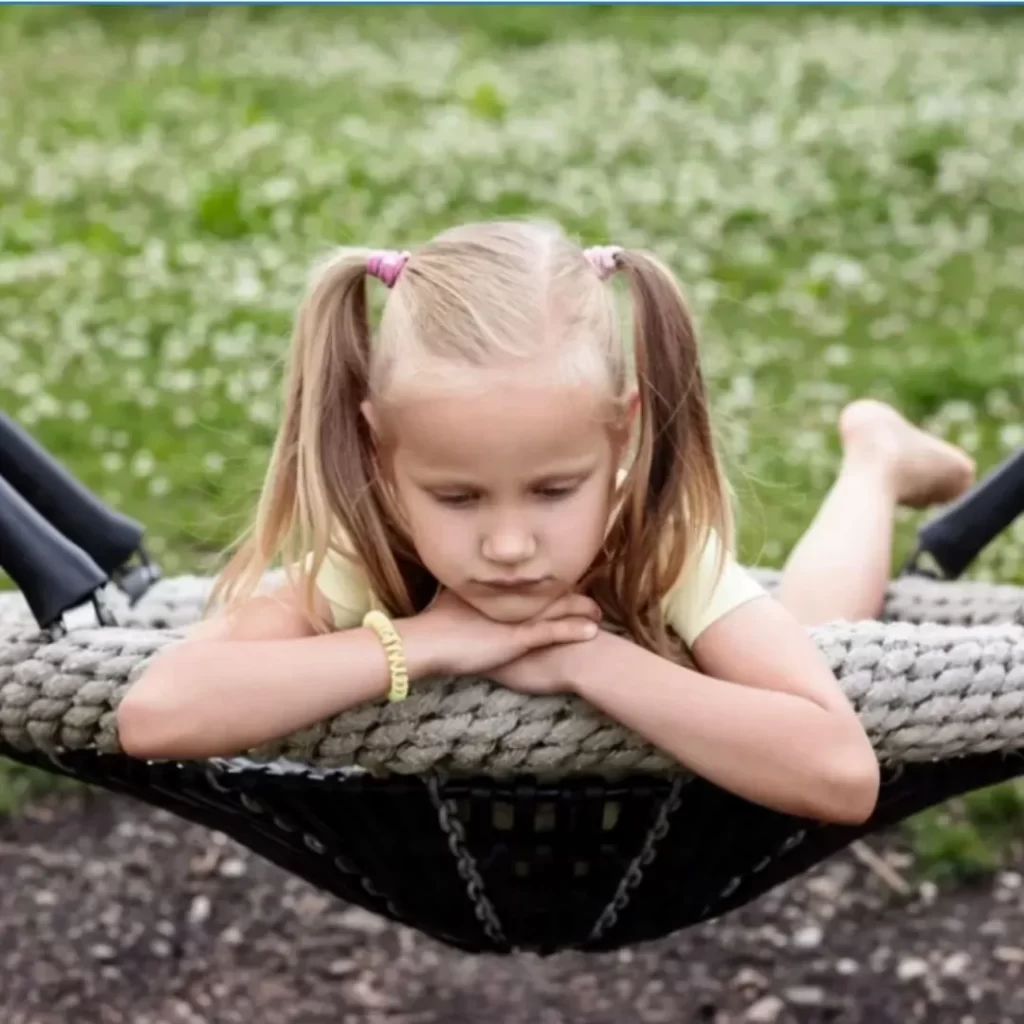
Avoid telling a sensitive child these Phrases:
- “You’re too sensitive” / “Stop being so sensitive”: This invalidates their personality and suggests their deep emotional processing is a flaw.
- “It’s not a big deal” / “You’re overreacting”: Minimizes their experience, which can make them feel misunderstood.
- “Calm down”: Often feels dismissive and implies their emotional intensity is wrong.
- “Why can’t you be more like your brother/sister?”: Creates shame and jealousy rather than motivation.
- “Stop crying” / “Boys don’t cry”: Suppresses necessary emotional release and teaches that vulnerability is dangerous.
- “You’re just trying to get attention”: Misinterprets a need for comfort as manipulation.
- “You never do anything right”: Destroys self-esteem and creates a negative self-image.
These comments teach children to hide emotions, creating self-doubt and anxiety.
How To Help A High Sensitive Child At School?
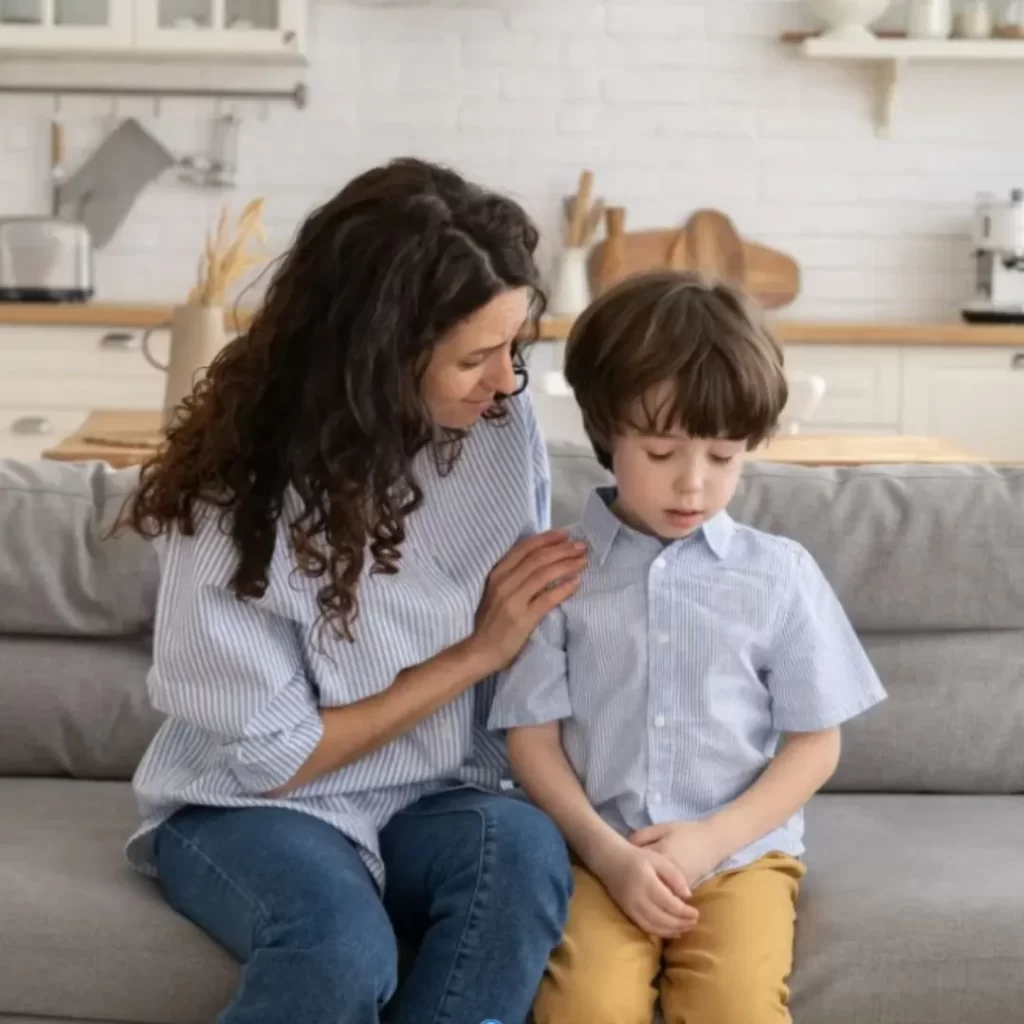
Helping a highly sensitive child (HSC) succeed at school requires understanding their unique needs and providing tailored support to create a positive learning experience.
Key strategies that help a highly sensitive child at school include:
- Allowing early arrival to avoid crowds
- Using noise-canceling headphones
- Facilitating small-group social interaction
Do Highly Sensitive Children Need Therapy?
Highly sensitive children may benefit from therapy, but it is not always necessary. Therapy can be especially helpful when a child’s sensitivity leads to significant challenges in daily functioning, emotional regulation, or social interactions.
It’s important to note that therapy should be tailored to the individual child. Not all highly sensitive children require formal therapy; many thrive with supportive parenting, structured routines, and nurturing environments.
Types of Therapy for Highly Sensitive Children
- Cognitive-Behavioral Therapy (CBT): Helps children understand and reframe their thoughts and feelings, promoting healthier emotional responses.
- Occupational Therapy: Focuses on sensory processing issues and developing effective coping skills to manage sensory overload.
- Play Therapy: Provides a safe and supportive environment for children to express their emotions through play, aiding emotional regulation.
Parenting a highly sensitive child feels overwhelming?
Text Avocado Health anytime for 24/7 personalized, evidence-based parent coaching.
Conclusion
Understanding and supporting overly sensitive children involves recognizing their unique traits, creating a supportive environment, and teaching them emotional regulation. Every child is unique, and with the right amount of nurturing support, they’ll find their individual emotional balance.
Frequently Asked Questions
Are highly sensitive children intelligent?
Highly sensitive children often show great intelligence because they think deeply and notice small details around them. This helps them solve problems and be creative, which can lead to doing well in school or in creative activities.
But sometimes, when they feel overwhelmed by too much noise or emotions, it can hide their talents and affect how they act or perform in school.
Why do highly sensitive children frequently have trouble sleeping?
The difficulty in shutting down their active thought processes is a primary reason why bedtime can be problematic.
What is the dark side of HSP?
A highly sensitive person (HSP) experiences emotions and sensory stimuli more deeply than others. This can lead to feeling overwhelmed by loud noises, bright lights, or strong smells. HSPs are more prone to anxiety, depression, and eating disorders, but they can also be more moved by music, art, and other experiences.
Why is my 3.5 year old so emotional?
A highly sensitive preschooler is still learning about their emotions and doesn’t have much control over them. When they find something funny, they might laugh a lot, and when they feel sad or angry, they might suddenly start crying.
Sources:
- The contribution of Sensory Processing Sensitivity and internalized attachment representations on emotion regulation competencies in school-age children
- Dandelions, tulips and orchids: evidence for the existence of low-sensitive, medium-sensitive and high-sensitive individuals
- The highly sensitive brain: an fMRI study of sensory processing sensitivity and response to others’ emotions


