


Why does my baby sound congested but no mucus? You might notice your little one waking up snuffly or stuffy, yet nothing comes out when you try to suction their nose. Many parents, just like you, find their newborn sounds congested but with no snot coming out. This is usually a normal part of newborn development and not a cause for concern. Understanding why this happens and how to relieve your baby can make those nights a little easier, though.
- Saline drops and suctioning
- Cool-mist humidifier
- Upright positioning while awake
Table of Contents
How To Tell If Your Infant Is Congested

It’s easy to tell if your baby is congested by listening to their breathing and looking for other symptoms. When you listen, you might hear noisy, snuffly, or rattly sounds, almost like snoring or snorting.
Watch for the following symptoms as indicators of congestion:
- Noisy breathing:
Changes in your baby’s breathing, such as snorting or a whistling noise, can signal congestion.
- Trouble feeding:
Since babies breathe through their noses, baby congestion can make it difficult for them to latch onto the breast or bottle and maintain a good seal.
- Difficulty sleeping:
A congested nose or stuffy nose can disrupt your baby’s sleep patterns.
- Irritability:
Stuffy noses are irritating to grown-ups and babies! Your baby might feel grumpy when they are congested.
- Sneezing:
While babies sneeze more frequently than grown-ups, more sneezing than normal could be a sign of irritation or illness affecting the nasal passages.
- Runny nose:
A runny nose or clear mucus is a common sign of baby congestion and may be accompanied by sneezing or other symptoms.
- Visible blockages or secretions in baby’s nostril:
Check each baby’s nostril for any blockages or secretions that could make breathing harder.

In some cases, this noisy breathing can be caused by laryngomalacia (or a “floppy airway”), a common condition in newborns in which the soft tissue above the vocal cords falls over the airway during inhalation.
This condition often resolves on its own as the baby grows, but in severe cases, babies might need other interventions.
Is It Normal For A Baby To Sound Congested But Not Sick?
Yes, it is completely normal for a baby to sound congested even when they are not sick—this is a regular part of newborn development. Most new parents feel concerned by these symptoms, but they are usually not cause for alarm.
Because newborns have tiny nasal passages, they can easily become irritated or partially blocked without the presence of visible mucus.
Why Does My Baby Sound Congested But No Mucus? 8 Common Reasons

Babies breathe exclusively through their noses until they are around three months old. Because their nasal passages are so small, even slight swelling or dryness in the nasal passage can make them sound stuffy.1
Unlike typical congestion caused by mucus buildup, this type of stuffiness is due to inflammation or irritation of the lining of the nasal passages rather than actual mucus blockage.2
Several factors can contribute to a stuffy nose without mucus, including:
Small nasal passages: Tiny airways make every little blockage noticeable.
Dry air or irritants: Low humidity, dust, pet dander, smoke, or strong odors that irritate the nasal lining without necessarily producing visible mucus.
Weather changes: Shifts in temperature or air quality may trigger stuffiness.
Reflux: Stomach acid can irritate nasal passages, leading to noisy breathing.
Leftover amniotic fluid: In newborns, fluid from birth may linger but usually clears on its own.
Newborn rhinitis: This is intermittent congestion in kids under the age of three without a known cause. It is usually harmless and gets better as kids get older. There are likely many causes, including viruses, reflux, and the nasal cycle.
Minor infections or inflammation that cause nasal tissues to swell but do not produce significant mucus.
The nasal cycle: While this is a very common phenomenon in adults, only 15-30% of babies have a nasal cycle. The nasal cycle occurs when one nostril becomes congested while the other decongests in a predictable pattern. This means that many people breathe out of only one nostril at a time.
Nasal congestion can make both breastfeeding and bottle feeding more challenging for your baby.
When Do Newborns Stop Sounding Congested?

Newborns typically sound congested during their first few weeks of life due to the presence of residual fluids from birth. This congestion usually improves as their nasal passages grow and clear naturally, though newborns may be suctioned in the delivery room and newborn nursery to help. 6
Babies start breathing through their mouths more regularly at 3 months old. At this age, you might notice that they sound less congested because they will breathe out of their mouths if they are a little stuffy.7
During this period, the nasal tissues become less swollen, and any leftover amniotic fluid or mucus is gradually cleared out. Additionally, as the baby’s immune system strengthens, they become less susceptible to minor irritations that can cause congestion.
However, every baby is different, and some may continue to have occasional nasal congestion or noisy breathing for a longer time, especially if exposed to environmental irritants like dry air, pet dander, smoke, or seasonal allergies.
What To Do For A Congested Baby
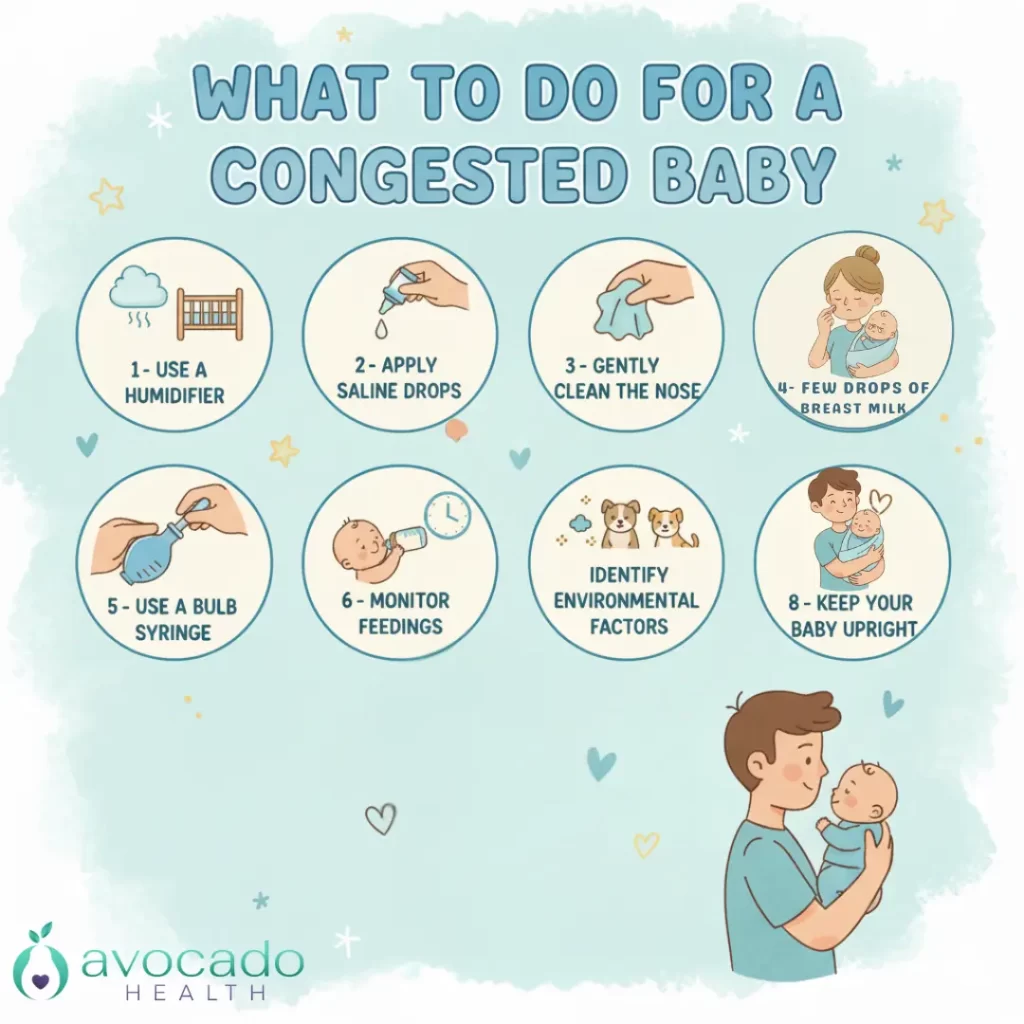
To soothe irritated nasal passages and relieve this type of congestion, gentle home remedies can be effective, such as:
- Use a Humidifier:
Using a cool mist humidifier to create a humidified environment helps keep the nasal tissues moist and reduces irritation.
As Dr. Hayley explains, “Be sure to clean and sanitize the humidifier at least once per week. Humidifiers become moldy quickly, which could make your baby more congested.”
- Apply Saline Drops:
Applying a few saline drops in the baby’s nostrils can also help soothe the nasal lining and promote drainage. Feel free to do this frequently throughout the day and night to help.
8
- Gently clean the nose:
Gentle cleaning around the baby’s nostrils can remove visible irritants.
- Few drops of breast milk:
Some parents also use a few drops of breast milk in the baby’s nose as a natural remedy to soothe and moisten the nasal passages. 9
- Use a Bulb Syringe:
After applying saline, you can gently use a bulb syringe to suction out any mucus that may be present. Alternatively, a nasal aspirator can be used for gentle and effective removal of mucus from the nasal passages.
As Dr. Hayley notes, “Be careful not to suction your baby more than four to five times per day. Excessive suctioning can cause their nasal passages to swell and actually worsen congestion.”
- Monitor Feedings:
If the baby can maintain a good latch and feed effectively, they are likely breathing well enough.
- Identify Environmental Factors:
Try to reduce exposure to irritants like smoke, dust, or strong perfumes in the home. Keeping your baby’s room clean and comfortable can help prevent congestion. Ensuring clean air in the baby’s environment also supports respiratory health.
- Keeping your baby upright

An upright position can help your baby’s mucus drain naturally, but for safe sleep, babies should always be placed on their backs on a flat surface. While your baby is awake, you can use a carrier, let them rest in a car seat, or hold them on your lap to keep them upright. 10
As Dr. Hayley emphasizes, “Be sure to always watch your baby closely when they are not flat on their back in an enclosed space.”
These preventive measures can ease congestion and support the baby’s comfort during this early developmental stage.
Sleep surfaces that raise both a baby’s head and feet, such as hammocks, can increase the risk of positional asphyxia (suffocation).
If a baby’s head tilts downward and the chin rests on or near the chest, it can block the airway and lead to suffocation.
Why does my C-section baby sound congested?
Congestion in newborns is common, but it can be more pronounced after a C-section for a few key reasons:
- Missing the “squeeze”: In a vaginal birth, the baby’s chest is compressed as it passes through the birth canal, helping to squeeze fluid from the lungs. This does not happen during a C-section.
- Transient Tachypnea of the Newborn (TTN): A C-section performed before labor begins can sometimes lead to a temporary condition called “wet lung,” or TTN. This is because the baby’s body may not have received the full hormonal signals that help the lungs absorb amniotic fluid. TTN is usually mild and resolves on its own. A baby should be monitored in the hospital until TTN resolves.
- General newborn adaptation: Newborns are obligate nose-breathers, meaning they breathe almost exclusively through their nose. A baby’s nasal passages are tiny and can easily become congested with leftover fluid, dried mucus, or breast milk, which they will sneeze out as they adapt.
When To Worry About Infant Congestion?

While congestion often sounds worrying, it’s usually normal for babies and doesn’t always mean they’re sick. Still, you should contact your pediatrician if your baby’s symptoms persist or worsen. Difficulty breathing can indicate a more serious issue, so it’s essential to monitor associated symptoms. 11
These can include:
- Labored or difficult breathing
- Wheezing or high-pitched whistling sounds
- Nostril flaring or chest retractions (chest sinking in with each breath)
- Blue tint to the skin or lips
- Fever, especially in a baby under three months, warrants immediate medical attention. A fever is a temperature of 100.4°F (38°C) or higher taken rectally in a baby.
- Fewer wet diapers than usual
- Trouble feeding or sleeping
- Signs of pain (ears or sinuses)
- Persistent cough lasting more than a couple of days
- Persistent congestion lasting more than a week
These signs can indicate something more serious, so it’s best to have your baby checked by a healthcare provider as soon as possible.
Need A Little Help Soothing Your Baby?
We know how stressful it can feel when your little one is congested or having trouble sleeping. Avocado Health is here to support you with 24/7 parent coaching and expert guidance tailored to your baby’s unique needs, helping make those tough nights a little gentler for both you and your baby.
Conclusion
Some newborns sound congested but not phlegmy, and that’s totally fine. Tiny nasal passages, mild irritation, or leftover fluid can cause your little one to sound congested. Gentle remedies, safe sleep habits, and watching for any red flags can help your baby feel more comfortable and cozy.
Frequently Asked Questions
What position is best for a congested baby to sleep?
The safest way for a baby to sleep is on their back. Even if your baby is congested or coughing, sleeping on their back reduces the risk of choking.
Why is congestion worse at night for babies?
For many children, nasal congestion tends to get worse at night. When they lie on their back, mucus can gather at the back of the throat, making it harder to breathe. Nighttime can also bring more swelling because the immune system is more active while they sleep.
Can a baby use a pacifier while congested?
When babies have trouble breathing through their nose, keeping a pacifier in place can be difficult, which often leads to fussiness and restless sleep. A gentle baby massage can be a great way to comfort your little one and help ease nasal congestion.
Can dairy cause more congestion in babies?
There’s no evidence that drinking milk causes excess mucus. While about 5% of infants may have a milk allergy, the symptoms are usually more noticeable than just in the nose, and nasal symptoms alone are not caused by the allergy.
How long do C-section babies stay congested?

It’s important to know that mild congestion in C-section babies is common and usually nothing to worry about. For most C-section babies, congestion typically lasts from a few days up to several weeks.
The duration of congestion can vary:
– Many babies see improvement within the first few days to weeks after birth.
– A temporary lung condition called Transient Tachypnea of the Newborn (TTN), more common in C-section babies, usually resolves itself within 24 to 72 hours but may cause congestion for a few days.
– Some parents report nasal or mucousy sounds lasting several weeks up to 2-3 months, especially if there are contributing factors like reflux or dry nasal passages.
Do reflux babies sound congested?
Yes, reflux can make babies sound congested. When stomach acid irritates the throat and nasal passages, it may create a raspy or stuffy sound. Along with congestion, common signs of reflux include:
– A raspy or congested sound in the throat
– Gagging or coughing
– Refusing to feed because of discomfort
– Wanting to feed very frequently or for long periods to soothe the burn
– Slow or limited weight gain and growth
Sources:
- Newborn Nasal Congestion
- INDOOR AIR POLLUTION SOURCES AND RESPIRATORY SYMPTOMS IN BRONCHOPULMONARY DYSPLASIA
- Mariah M. Servos Li, Erin R. S. Hamersley, Cristina Baldassari; Nasal Disorders. Pediatr Rev April 2024; 45 (4): 188–200.
- Pendolino AL, Lund VJ, Nardello E, Ottaviano G. The nasal cycle: a comprehensive review. Rhinol Online. 2018;1(1):67–76
- MARIA BACZEK ELZUBIETA HASSMANN, MAREK ALIFIER and WALENTYNA IWASZKO-KRAWCZUK. (2001). Acoustic Rhinometry Assessment of the Nasal Cycle in Neonates. Acta Oto-Laryngologica, 121(2), 301–304.
- Clearing up congestion: Options to treat infants in first three months of life
- Neonatal Nasal Obstruction
- Nasal Irrigation With Saline Solution for Pediatric Acute Upper Respiratory Infections: A Systematic Review
- Non-Nutritional Use of Human Milk Part 1: A Survey of the Use of Breast Milk as a Therapy for Mucosal Infections of Various Types in Poland
- Safe Sleep Environment for Baby
- Upper Airway Obstruction in a Newborn: A Rare Cause of Respiratory Distress