
Newborn excessive sweating can leave you second-guessing everything, and it’s completely normal to feel concerned. Most babies experience some degree of sweating due to their developing bodies, as a baby’s ability to regulate temperature is still maturing. Most of the time, sweating is harmless, but sometimes excessive sweating accompanied by other symptoms can indicate a more serious medical issue. The challenge is knowing the difference. Here’s what your baby’s sweating may really be telling you.
What Causes Newborn Excessive Sweating?
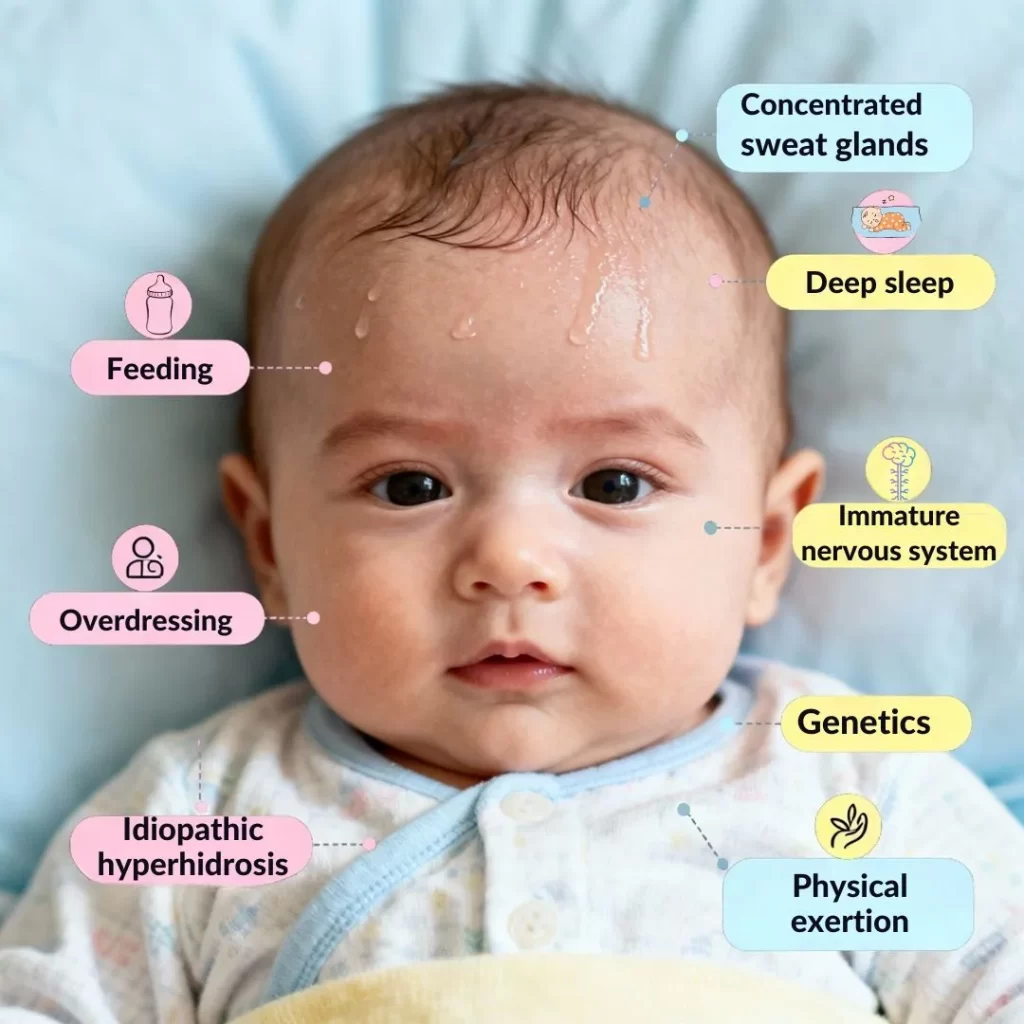
A newborn sweats a lot because of their sweat glands, especially on the head, are highly concentrated, making head sweating particularly common in newborns; this is part of the normal timeline of when babies start sweating and often triggered by deep sleep, feeding, or being overdressed.
Normal causes of sweating
- Immature nervous system: Newborns have an underdeveloped nervous system and are less efficient at controlling body temperature compared to adults. Their bodies may respond by sweating, even when the room temperature feels comfortable to you.
- High concentration of sweat glands: Babies are born with the same number of sweat glands as adults, but they are more densely packed on their smaller bodies. The head, in particular, has a very high concentration of these glands, which is why head sweating is so common.
- Deep sleep: Babies spend a larger portion of their sleep cycle in deep sleep than adults. During these deep sleep phases, it is normal for a baby to sweat profusely as their body works to regulate its temperature.
- Overbundling: Dressing a baby in too many layers of clothing or using heavy blankets can cause them to overheat and sweat.
- Feeding: It is normal for babies to sweat during nursing or bottle-feeding. This is caused by the physical effort of sucking and swallowing, as well as the close body contact with the caregiver.
- Physical exertion: Crying for an extended period is hard work for a baby and can cause their body temperature to rise, leading to sweating. Helping your baby relax during crying can reduce sweating caused by stress.
- Genetic Factors: Some babies may sweat more due to inherited traits. If parents or close family members tend to sweat excessively, their baby might also have a naturally higher tendency to sweat.
- Idiopathic Hyperhidrosis: Idiopathic hyperhidrosis describes excessive sweating that occurs even in the absence of any underlying medical condition. 1
In these cases, babies do not have a greater number or larger sweat glands; instead, their sweat glands are simply overactive.

A common form seen in infants is palmar hyperhidrosis, which causes sweaty palms. While it may seem alarming, this condition is fairly common in babies and is not harmful.
How to tell if baby has hyperhidrosis?
Determining if a baby has hyperhidrosis can be challenging because sweating is a normal part of infant development.
Hyperhidrosis is a specific medical condition of abnormal, excessive sweating, and is much less common in infants than normal developmental sweating.
Diagnosis can only be made by a pediatrician or dermatologist. Doctors can help determine if your baby’s sweating is normal or if further investigation is needed.
In infants, hyperhidrosis, especially if it involves excessive head sweating, may be a sign of an underlying cause or medical condition.
Does Baby Sweating Mean Dehydration?
Dehydration means that your baby has lost too much fluid, which can occur if the baby does not feed well. This can happen when a baby hasn’t been taking in enough breast milk or formula.
Ensuring adequate hydration through regular feeding is important, especially if your baby is sweating excessively.
Diarrhea, vomiting, or a baby’s sweating, especially during sleep, can also cause a baby to lose too much fluid.
Why Does My Baby Sweat So Much From The Head?
In the earliest weeks, babies often sweat more from the head, especially during sleep or feeding. A newborn’s clammy forehead is common and usually related to how infants release heat in the first months of life. This happens because:
More Sweat Glands On The Scalp
Sweat glands are most concentrated on the scalp, and the head plays a major role in heat dissipation.
Breastfeeding Can Increase Warmth
Baby sweats and head sweating often occur during feedings, and many babies experience this.
Sweating during feeding can be common as it increases the baby’s metabolic rate and generates heat.
Heat Loss Through The Head
Babies lose most body heat through their heads, which contributes to the prevalence of head sweating.
Why Do Babies Sweat When They Sleep?
It’s common for baby’s sweating at night to occur while sleeping, and in most cases, it’s completely normal. Here are the main reasons why it happens:
Immature Temperature Regulation
Babies are still developing their internal temperature control system. Their bodies can’t adjust as efficiently as adults, so they may sweat a lot to release excess heat.
More Time In Deep Sleep
During sleep, especially in the deep sleep phases, the body naturally cools itself through sweating as part of maintaining a stable body temperature.
Since babies spend a significantly larger portion of their sleep time in these deep sleep cycles compared to adults, sweating is more common in infants and especially newborns.
Limited Ability To Self-Regulate
Babies cannot remove a blanket or adjust their clothing if they feel warm. If they are overdressed, swaddled tightly, or the room is too warm, they are more likely to sweat during sleep. 2
Premature infants, underweight babies, children with rickets, infections, or digestive disorders are more prone to vitamin D deficiency and night sweats. 3
Baby Sweating But Cold To Touch?
If your baby is sweating but feels cold to the touch and has no fever, this is often normal. Still, it’s important to check quickly to make sure they are not overheating or sick. Babies’ nervous and circulatory systems are still developing, so they cannot control their body temperature as well as adults.
How to Check Your Baby’s Temperature
Don’t use your baby’s hands or feet to check their temperature. Their arms and legs are often cool since their body focuses on sending blood to important organs.
- To check, place two fingers on the back of your baby’s neck, or gently touch their chest or tummy.
- If your baby’s neck or chest feels warm and dry, they are fine.
- If their neck or chest feels hot, clammy, or wet, your baby may be overheating. Sweat can cool on their skin, making them feel cold to the touch.
Do Newborns Sweat On Their Back?
A newborn’s sweaty back is normal. Just remember that a baby’s sweat glands are not fully developed until they are a few weeks old.
If you find your baby’s back is damp or wet, it’s usually because of two main reasons:
- Trapped Heat From Sleeping On Their Back
Safe sleep guidelines say babies should always sleep flat on their backs. When their backs rest against a mattress, bassinet pad, or your chest during a nap, heat can build up in that area. If the mattress or their clothes are not very breathable, this trapped heat can cause moisture and dampness.
- Immature Temperature Regulation
When newborns begin to sweat, the most active sweat glands are on their head and the back of their neck. Sweat from the neck can drip down or collect on their upper back while they lie down, making their clothes feel wet.
If your newborn is just a few days old and their back is soaked after a nap, check their diaper first. Since newborns do not sweat much in the first week, a wet back is often caused by a diaper leak instead of sweat.
Do babies grow out of hyperhidrosis?
True primary hyperhidrosis is a lifelong genetic condition that does not go away as people get older. According to the International Hyperhidrosis Society, 88% of people with this condition find that their symptoms either stay the same or get worse over time.
It is important to note that most babies who sweat a lot do not actually have hyperhidrosis.
Normal Infant Sweating vs. True Hyperhidrosis
If a baby is sweating excessively, it is critical to distinguish between immature development and an actual medical diagnosis:
- Temperature Regulation Immaturity (Common):
A baby’s nervous system and sweat glands are still developing. It is incredibly common for normal babies to experience heavy sweating, especially on their head, neck, and back during deep sleep or feedings. Babies do grow out of this developmental phase within a few months as their body’s internal thermostat matures.
- True Primary Hyperhidrosis (Rare in Infants):
This is a genetic, inherited condition that causes the nervous system to overstimulate the sweat glands regardless of room temperature. If a baby truly has primary hyperhidrosis, it will not go away. Symptoms most commonly become noticeable or more pronounced as the child approaches school age or puberty, typically targeting the palms, feet, and underarms.
How to Help a Baby Who Sweats Too Much

While sweating during sleep is generally normal, you should ensure the baby’s sleeping environment is optimal to prevent overheating.
You can try the following simple steps to keep your little one comfortable:
- Offer more fluids: Breastfeed or give formula regularly to prevent dehydration, especially in warm weather or during illness.
- Lighten their clothing: Remove one layer or switch to breathable fabrics like cotton to prevent overheating, and avoiding heavy blankets or hats during sleep.
- Create a cooler environment: Move your baby to a shaded or well-ventilated area, or use air conditioning to gently lower the room temperature, maintaining a comfortable environment ideally between 68-72°F (20-22°C).
- Ensure adequate vitamin D: Talk to your pediatrician about vitamin D supplementation. Premature infants, underweight babies, and those with digestive issues are more prone to vitamin D deficiency, which has been linked to increased night sweats.
- Avoid hats: Do not put hats on your baby indoors or while sleeping, as this can lead to overheating.
- Use a wearable blanket: For babies who have outgrown swaddling, use a wearable blanket instead of loose blankets to prevent suffocation and keep them warm. 4
- Watch for patterns: Take note of when your baby sweats the most after feeding, during sleep, or in a warm room. Your observation can help identify possible triggers.
Other helpful tips:
- Keep the crib clear: Remove extra blankets, pillows, and stuffed animals from the crib to prevent overheating and suffocation.
- Wipe away sweat: If you see sweat, gently wipe it off with a soft towel to prevent them from getting a chill.
- Avoid exercise before bed: Try not to let your baby exercise too close to bedtime.
- Follow the one-layer rule: Dress your baby in one more light layer than you to keep them warm without overheating.
Check the back of your baby’s neck to make sure they are comfortable, not too hot or sweaty.
When should I be concerned about my newborn sweating?
While most cases of newborn sweating are harmless, you should contact your pediatrician if you observe any of the following symptoms in addition to sweating: Sweating that occurs with symptoms like difficulty breathing, poor feeding, or extreme lethargy should prompt immediate medical evaluation.
- Sweating during feeding: Excessive sweating while eating, especially with poor feeding or weight gain, can be a sign of congenital heart disease or another heart problem as an underlying cause.
- Breathing issues: Labored or rapid breathing, wheezing, or gasping during sleep can indicate sleep apnea.
Difficulty breathing is a red flag and may be associated with heart defects, or heart disease. Consulting your child’s doctor is important if you notice these symptoms.
- Fever: If excessive sweating accompanies a fever, especially in a baby under 3 months old, it may signal an infection.
- Unusual fatigue: Extreme lethargy or low energy can be a sign of illness or other health issues.
- Cold, clammy skin: If your baby is sweaty but feels cold to the touch, it can sometimes indicate an underlying issue, though it can also be a normal sign of an immature temperature regulation system.
- Bluish tint: A bluish color to the skin, especially around the lips, can be a sign of poor oxygen circulation and is an emergency.
- Poor weight gain: If your baby stops breathing or shows other concerning symptoms or other signs, contact your child’s doctor immediately if you notice any warning signs or red flags.
Worried about your newborn’s sweating? Get expert parent coaching anytime with Avocado Health. Text your questions 24/7 and receive instant, personalized advice tailored to your baby’s needs. Feel calm, confident, and supported even during those sweaty nights.
Try Avocado Health today and never parent alone.
Conclusion
Newborn excessive sweating is usually nothing to worry about. It often happens when your baby is sleeping, feeding, or dressed too warmly. Keep the room cool and choose lighter clothing. However, if your baby sweats a lot even when calm, especially along with poor feeding or breathing difficulties, it may indicate an underlying issue. It’s best to check with your pediatrician right away.
Frequently Asked Questions
What’s the link between SIDS and sweating?
Overheating is a significant risk factor for sudden infant death syndrome (SIDS).
Babies can overheat due to:
Too much bedding or clothing
A room that is too hot
How to check if your baby is too hot:
Feel the back of their neck or chest (this gives a more accurate reading than hands or feet)
If your baby is sweating or their tummy feels hot, remove some bedding or layers
Sources:
- Primary Hyperhidrosis in Children—A Retrospective Study and a Short Review https://pmc.ncbi.nlm.nih.gov/articles/PMC11122639/#:~:text=The%20cause%20of%20primary%20hyperhidrosis,morphology%20of%20the%20sweat%20glands.
- The effects of clothing layers on the thermoregulatory responses to short duration babywearing in babies under 12 months old https://physoc.onlinelibrary.wiley.com/doi/10.14814/phy2.14425
- Sweating in preterm babies https://pubmed.ncbi.nlm.nih.gov/7062212/
- Quantification of Palmar and Digital Epidermal Thickness and Sweat Duct Density https://onlinelibrary.wiley.com/doi/full/10.1002/ca.24292#:~:text=Children%20were%20found%20to%20have%20an%20SDD,eccrine%20sweat%20glands%20by%2022%20weeks%20gestation.