

What causes UTI In Pregnancy is a common question for many expectant parents. During pregnancy, hormonal changes, pressure from your growing baby, slower urine flow, and natural shifts in vaginal bacteria can make infections more likely. And let’s not forget those natural shifts in vaginal bacteria that can make it all too easy for bacteria to find their way into your urinary tract. Learn the common causes, who’s most at risk, simple ways to lower complications, and when to consult a doctor.
Table of Contents
What Causes UTI In Pregnancy? 5 Common Reasons

A large U.S study which included over 41,000 women revealed that 18% of them had a UTI at some point – though that percentage varied widely between different groups – as low as 11% in some and as high as 26% in others.1
UTIs are commonly caused by ascending movement of bacteria that colonize the lower gastrointestinal and genitourinary tract, particularly E. coli or other gram-negative bacteria.
Why Pregnant women Are at Risk?
1- Hormonal Changes:
Progesterone levels go up during pregnancy which causes the smooth muscles in your urinary tract to relax, leading to urinary stasis. This allows bacteria to settle and cause an infection.
2- Uterine Pressure:
The expanding uterus presses on the bladder and ureters, preventing complete emptying.
The uterus growing inside you squeezes the bladder and tubes, stopping the bladder from fully emptying and providing the ideal conditions for bacteria to take hold.
3- Urinary Changes:
Urine becomes less acidic and contains more sugar, protein, and hormones, which bacteria thrive on. Pregnancy alters urine composition, leading to higher concentrations of sugar, protein, and hormones, which makes it a feast for bacteria to thrive on.
4- Bacterial Entry:
Bacteria, often E. coli from the bowel, easily enter the urethra and travel upwards. The shorter female urethra facilitates the easy entry of bacteria into the urinary tract, increasing UTI risk.
5- Immune System Changes:
Your immune system isn’t as good at fighting off infection during pregnancy which can make you more susceptible to UTIs.
Bacterial colonization is more likely due to urinary stasis and anatomical changes, which facilitate the process by which bacteria enter the urinary tract. As pregnancy progresses, especially during the first and second trimesters, the risk of developing a UTI increases.
How To Tell If You Have UTI While Pregnant?

UTI symptoms during pregnancy often include:
- Painful Urination (Dysuria): A burning or stinging sensation while peeing.
- Frequent or Urgent Urination: Needing to pee more often than usual, or a sudden, intense urge, even when the bladder is mostly empty.
- Urine Changes: Cloudy, dark, bloody, or strong-smelling urine.
- Abdominal Pain/Pressure: Pain in the lower stomach area or pelvic region.
- Systemic Symptoms: Fever, chills, or shaking, which may indicate the infection has spread to the kidneys.
- Other Symptoms: Fatigue, general weakness, or pain during intercourse.

Start your 7-Day free Trial
How Can I Prevent UTI During Pregnancy?

To avoid UTIs during pregnancy:
- Drink Water: Aim for 8-10 glasses of water daily to help flush bacteria from your system.
- Limit Irritants: Cut back on caffeine, sugary drinks, alcohol, and refined foods.
- Consider Supplements: Discuss Vitamin C, Beta-carotene, and Zinc with your doctor.
- Wipe Front-to-Back: This prevents bacteria from the anal area reaching the urethra. Using proper perineal care techniques can help minimize the risk of bacterial colonization and ascending infection.
- Urinate Often: Don’t put off going for a wee; empty your bladder fully as soon as you feel the urge. Regularly emptying the bladder can help prevent urinary stasis and reduce the likelihood of UTIs during pregnancy.
- Pee After Sex: Urinating before and after intercourse flushes out bacteria introduced during intimacy.
- Showers Over Baths: Avoid baths where skin bacteria can enter the urethra.
- Cotton Underwear: Choose breathable fabrics over synthetics that trap moisture.
- Avoid Tight Clothes: Tight pants and underwear create a moist environment where bacteria thrive.
- Avoid Scented Hygiene Products: Skip scented hygiene products, douches, and bath additives.
- Healthy Diet: Eat whole foods and probiotics (like yogurt) to support your immune system.
Can A UTI While Pregnant Harm The Baby?
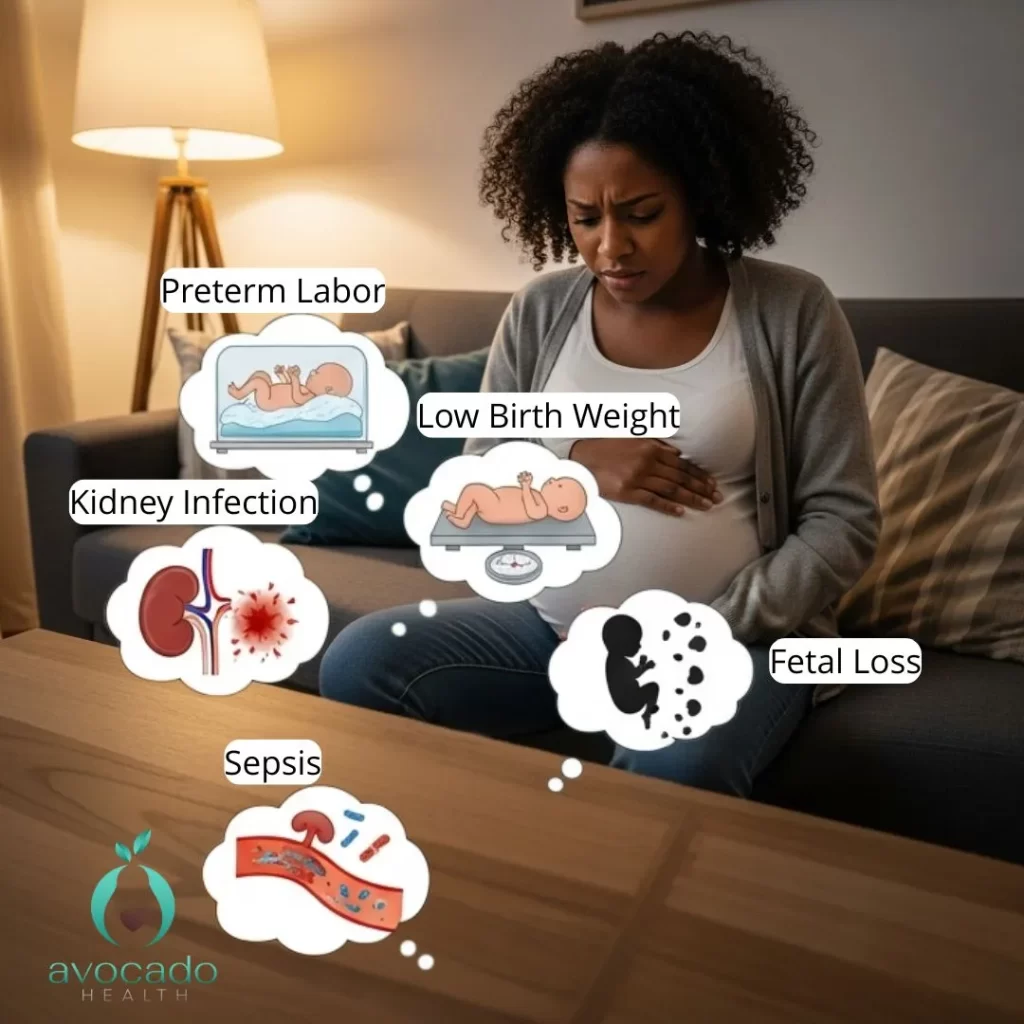
Yes, an untreated urinary tract infection (UTI) during pregnancy can harm your baby.
Here are the risks of an untreated UTI during pregnancy:
- Preterm Labor:
The infection can trigger early contractions, leading to premature birth. UTIs are associated with an increased risk of preterm birth, which can have significant health implications for the baby.
- Low Birth Weight (LBW):
Babies Born Prematurely Often Have a Lower Birth Weight which in itself brings its own set of health risks. Not to mention if your Baby suffers from Fetal Sepsis because you never got your UTI treated, things can get really bad fast.
- Kidney Infection (Pyelonephritis):
A bladder infection can travel to the kidneys, causing severe illness in the mother and increasing risks for the baby.
- Sepsis:
A severe, body-wide infection. Other complications from UTIs in pregnancy can include anemia, acute respiratory distress syndrome (ARDS), disseminated intravascular coagulopathy, and preterm contractions or labor.
- Fetal Loss:
In rare, severe cases, untreated infections can lead to miscarriage or fetal loss.
Additionally, the presence of bacteria in urine during pregnancy is associated with an increased risk of pre-eclampsia, a serious condition that can affect multiple organs.
What Are The Different Types Of UTI In Pregnancy?
Most UTIs in pregnancy are caused by Escherichia coli (E. coli), responsible for 80-90% of cases, which typically travels from the rectum to the urethra.
Urinary tract infections during pregnancy can be classified into several types based on the location and severity of the infection.
- Asymptomatic Bacteriuria (ASB):
It affects 2% to 10% of pregnancies. Asymptomatic UTIs occur when bacteria are present in the urine without causing any symptoms.
Although the pregnant woman may feel fine, untreated ASB can progress to acute cystitis or pyelonephritis in up to 40% of cases.
Screening for ASB is an important part of prenatal care, even in the asymptomatic pregnant woman. A urine sample is collected for urine culture and urine test to detect bacteria.
Positive urine dipstick testing and the presence of white blood cells in the urine sample can indicate infection.
- Acute Cystitis:
It is a symptomatic urinary tract infection, specifically a lower urinary tract infection involving the bladder, with symptoms appearing suddenly. It occurs in 1% to 2% of pregnant individuals.
It Occurs in 1% to 2% of pregnant individuals. Common symptoms include:
- Burning sensation during urination
- Urinary frequency
- Urinary urgency
- Suprapubic pain and tenderness
If untreated, it can progress to a more serious kidney infection.
- Acute Pyelonephritis:
This is a serious kidney infection that can develop if a bladder infection ascends to the kidneys. Symptoms often include:
- Fever
- Flank pain
- Chills
- Nausea
- Vomiting
Pyelonephritis in pregnancy requires prompt medical attention and usually hospitalization for intravenous antibiotic therapy.
- Recurrent UTIs:
Some pregnant patients may experience multiple episodes of UTIs during pregnancy. These recurrent infections increase the risk of complications and may require suppressive therapy to prevent further infections.
Urine culture results are used to guide management. If group b strep (GBS) is found in a urine culture with a colony count greater than 100,000 CFU/mL, the pregnant patient should be treated with antibiotics.
Each type of UTI requires specific management strategies to ensure effective treatment and minimize risks to maternal and fetal health.
How Do I Get Rid Of A Urine Infection While Pregnant?
Treating a urinary tract infection (UTI) during pregnancy requires prompt medical attention to protect both you and your baby. Your provider will prescribe an antibiotic that’s safe and effective, following clinical practice guidelines.
The primary treatment involves antibiotic therapy prescribed by your healthcare provider.
- Use antibiotics that are safe during pregnancy and effective against the infection.
- Typical treatment duration is 3 to 7 days, depending on infection severity. Empiric therapy, including empiric antibiotic therapy, is often started before culture results are available and then adjusted based on the results to ensure the most effective treatment.
Complete the full course even if symptoms improve early to prevent resistance.
Antibiotic treatments that are safe and effective for both you and the developing fetus include:
- Cephalosporins
- Nitrofurantoin
- Fosfomycin
- Trimethoprim-sulfamethoxazole
Antibiotics that aren’t recommended:
- Fluoroquinolones are not recommended as a first-line treatment in pregnancy due to conflicting studies regarding teratogenicity.
- Amoxicillin and ampicillin should be avoided as empiric therapy due to high antibiotic resistance from E. coli.
Regular prenatal screening for asymptomatic bacteriuria helps prevent complications.
In addition to antibiotics, some supportive measures can help alleviate discomfort during a UTI:
- Use a heating pad on the lower abdomen for pain relief
- Avoid irritants like caffeine and spicy foods
- Oral antibiotics are typically used to complete therapy after initial treatment, while parenteral antibiotics (IV) may be required for more severe infections
Complications such as renal abscess may occur in severe or persistent cases.
Patients with pyelonephritis should receive directed antibiotic therapy and IV fluids to maintain adequate urine output.
Evaluation of severe infections often includes laboratory tests such as complete blood count and blood cultures, although blood cultures rarely change management.
How Can I Flush Out A UTI At Home?
While it is essential to seek medical treatment for a urinary tract infection (UTI) during pregnancy, there are some supportive home measures that may help flush out bacteria and ease symptoms alongside prescribed antibiotic therapy.
- Drinking plenty of water is one of the most effective ways to help flush bacteria from the urinary system.
- Urinate Frequently: Avoid holding in urine to prevent bacteria from multiplying.
- Empty Your Bladder Completely: Reduces urinary stasis, lowering infection risk.
What Herbal Remedies Are Good For UTI During Pregnancy?
During pregnancy, many expectant mothers seek natural ways to manage urinary tract infections (UTIs). However, it is important to approach herbal remedies with caution, as not all are safe during pregnancy.
Here are some herbal options may help alleviate symptoms or support urinary tract health, but they should always be used under the guidance of a healthcare provider:
- Cranberry: Cranberry juice or supplements are commonly used to help prevent UTIs by preventing bacteria from adhering to the urinary tract walls. While generally considered safe during pregnancy, it is best to consult your doctor before use, especially regarding dosage and form. 2
- D-Mannose: This natural sugar is thought to help flush out bacteria like Escherichia coli from the urinary tract. Although evidence is limited, some pregnant women use D-mannose supplements as a preventive measure. Speak with your healthcare provider before starting.
- Probiotics: Taking probiotics, such as Lactobacillus strains, may help maintain healthy vaginal and urinary tract flora, potentially reducing the risk of bacterial infections. Probiotics are generally safe during pregnancy, but it’s advisable to discuss with your provider.3
- Herbal Teas: Some herbal teas, like chamomile or ginger, may provide soothing relief for urinary discomfort and support overall hydration. Avoid teas with herbs that are contraindicated in pregnancy, such as parsley or juniper.4
- Avoid Harmful Herbs: Certain herbs like goldenseal, uva ursi, and horsetail are not recommended during pregnancy due to potential risks to the fetus.
How Can I Prevent UTI During Pregnancy?
Consult with your healthcare provider before starting any prenatal vitamins or supplements. Generally, for preventing UTIs, it is recommended to take daily doses of 250 to 500 milligrams of vitamin C, 25,000 to 50,000 IU of beta-carotene, and 30 to 50 milligrams of zinc.
What Are The Risk Factors For UTI In Pregnancy?
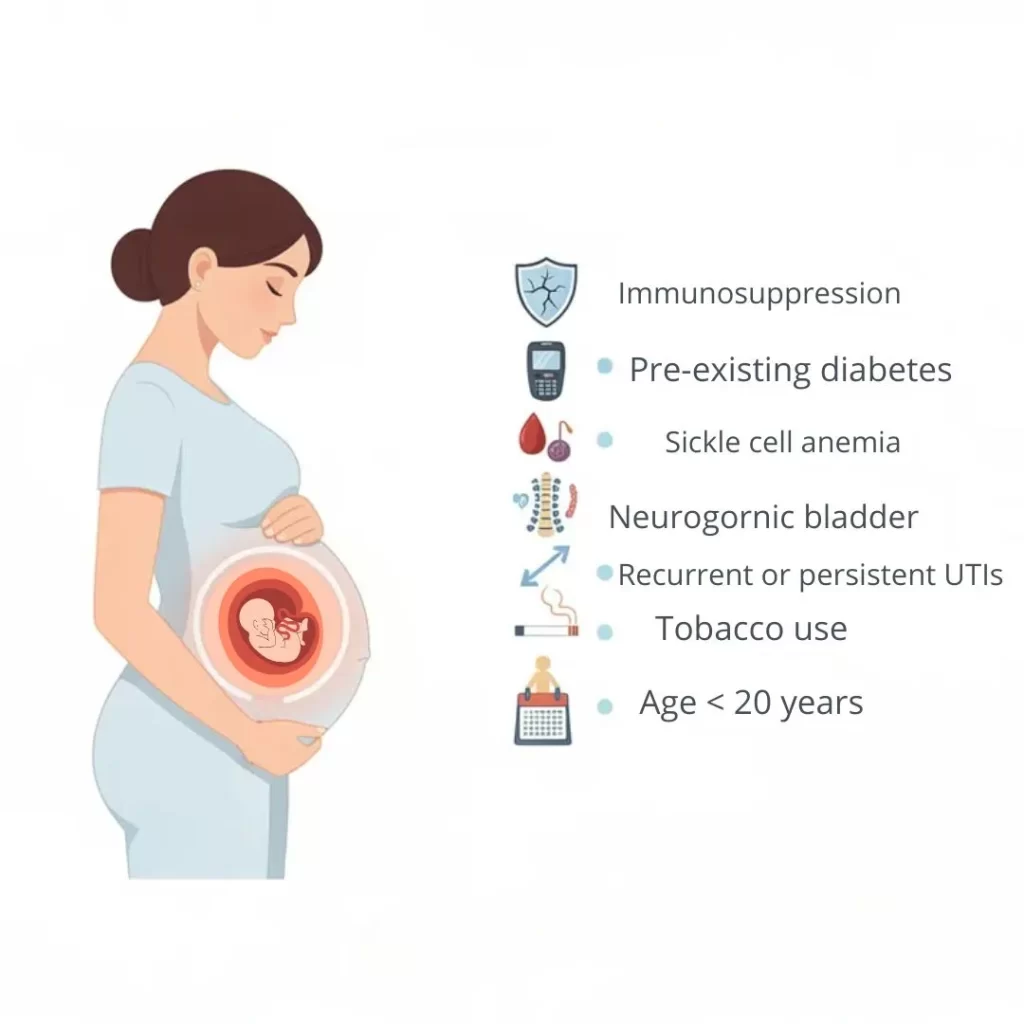
Risk factors for complicated UTI in pregnancy include the following :
- Immunosuppression.
- Pre-existing diabetes.
- Sickle cell anemia.
- Neurogenic bladder.
- Recurrent or persistent UTIs before pregnancy.
- Tobacco use.
- Age < 20 years.
These risk factors predispose pregnant patients to increased risk of infection.
When To Go To The Hospital For UTI During Pregnancy?

It is important to seek hospital care promptly if you experience severe symptoms of a urinary tract infection during pregnancy. You should go to the hospital if you have:
- High fever (above 38°C or 100.4°F) that does not improve with home care
- Severe pain in your back or side, which may indicate a kidney infection (pyelonephritis). Pyelonephritis in pregnancy is a serious condition usually requiring hospitalization.
lower back pain during pregnancy can be an important warning sign that a UTI has spread to the kidneys and should never be ignored.
- Shaking chills or sweating
- Nausea and vomiting that prevent you from keeping fluids down
- Difficulty or pain when passing urine, especially if accompanied by blood
- Signs of sepsis such as rapid heartbeat, rapid breathing, confusion, or feeling very weak or dizzy. Pyelonephritis is a common cause of serious infections in pregnant patients and can lead to septic shock and acute respiratory distress syndrome.
- Symptoms of preterm labor, such as regular contractions, pelvic pressure, or vaginal bleeding.
What Can Be Mistaken For Urinary Tract Infection?
A thorough differential diagnosis is essential when evaluating urinary symptoms in pregnancy, as several conditions can mimic the symptoms of a urinary tract infection (UTI). While some symptoms may overlap with those seen in non pregnant patients, certain considerations and complications are unique to pregnancy, making accurate diagnosis especially important to ensure proper treatment. These include:
- Sexually Transmitted Infections (STIs): Infections such as chlamydia, gonorrhea, and herpes can cause symptoms similar to UTIs, including painful urination and pelvic discomfort.
- Vaginal Infections: Yeast infections or bacterial vaginosis may cause irritation, burning, and discharge that can be confused with UTI symptoms.
- Kidney Stones: These can cause severe flank pain, painful urination, and sometimes blood in the urine, resembling a kidney infection.
- Interstitial Cystitis: A chronic bladder condition that causes pelvic pain and urinary frequency, often mistaken for recurrent UTIs.
- Urethritis: Inflammation of the urethra can cause burning and discomfort during urination, similar to cystitis.
- Pelvic Inflammatory Disease (PID): Infection of the female reproductive organs can cause lower abdominal pain and urinary symptoms.
- Vaginal Atrophy: Especially in postmenopausal women, thinning and inflammation of vaginal tissues can cause urinary symptoms.
Worried about UTI symptoms or unsure what’s normal during pregnancy? Text Avocado Health anytime to get 24/7 expert-backed guidance tailored to your pregnancy.
Conclusion
UTI in pregnancy often happens because normal body changes make infections easier to develop. With early recognition, proper care, and timely treatment, most UTIs can be treated safely. Always contact your healthcare provider if symptoms appear to protect both you and your baby.
Frequently Asked Questions
Where is UTI pain in pregnancy?
UTI pain during pregnancy is commonly felt in the lower abdominal area, particularly around the bladder region. Many pregnant women describe this pain as a persistent pressure or discomfort just above the pubic bone. Additionally, pain or a burning sensation may be experienced during urination, which is a hallmark symptom of a urinary tract infection.
When do UTIs start in pregnancy?
Urinary tract infections (UTIs) can occur at any time during pregnancy, but they most commonly start in the first and second trimesters.
Should I take a pregnancy test if I have a UTI?
If you suspect you have a urinary tract infection (UTI) and are unsure whether you might be pregnant, taking a pregnancy test can be a helpful step. Some symptoms of UTIs, such as frequent urination and abdominal discomfort, can overlap with early signs of pregnancy, making it difficult to distinguish between the two without testing.
Can a UTI in pregnancy cause brown discharge?
Yes, a urinary tract infection (UTI) during pregnancy can sometimes cause brown discharge. This discharge may be due to irritation and inflammation of the urinary tract or the genital area caused by the infection.
Sources:
- Characteristics of women with urinary tract infection in pregnancy
- Examination of Complementary Medicine for Treating Urinary Tract Infections Among Pregnant Women and Children
- D-mannose vs other agents for recurrent urinary tract infection prevention in adult women: a systematic review and meta-analysis
- Herbal Medicines—Are They Effective and Safe during Pregnancy?


