

Many expectant moms wonder how to help constipation during pregnancy. To relieve constipation, try to eat more fiber (about 25-30 grams a day) from fruits, vegetables, and whole grains. Adding fiber to your diet is important for supporting a healthy digestive system during pregnancy. Also, drink 8-12 cups of water daily to soften your stool, as dehydration and insufficient fluid intake are common causes of constipation in pregnancy. Learn why constipation happens, what to avoid, whether it affects your baby, and when to see a doctor.
Table of Contents
How To Help Constipation During Pregnancy: 20 Safe Ways To Find Relief

To relieve constipation and help you poop during pregnancy, the recommended treatment includes increasing fiber intake (25-30g daily) from fruits, vegetables, and whole grains, and drinking at least 8-12 cups of water per day to soften stool.
To overcome constipation in pregnancy, both lifestyle changes and, if necessary, over-the-counter remedies may be considered, but always consult a doctor first.
How to relieve constipation while pregnant fast:
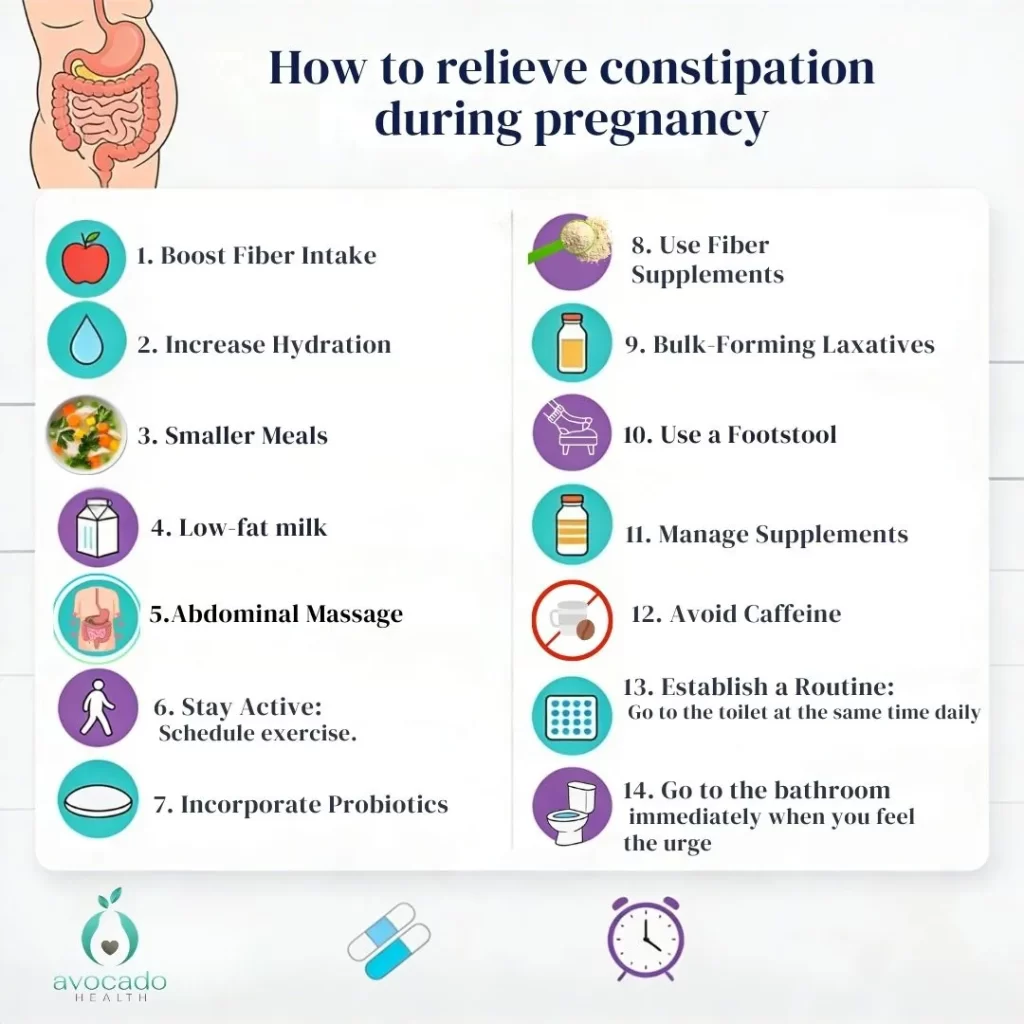
1- Boost Fiber Intake:
Add high fiber foods to your diet such as lentils, beans, prunes, apples, bananas, broccoli, and whole-wheat bread or pasta. Aim for 25–35 grams of fiber daily from sources like fruits, vegetables, beans, and whole grains.
2- Increase Hydration:
Drink plenty of water (up to 10-12 glasses daily) to help fiber move through the system as part of a healthy diet.
3- Low‑fat milk:
1% or skim milk is generally helpful for preventing constipation during pregnancy as a source of hydration. Lactose‑intolerant women may experience bloating or gas, so lactose‑free or plant‑based alternatives are better options.
4- Stay Active:
Schedule exercise. Engage in 20–30 minutes of moderate exercise most days, such as walking, swimming, or prenatal yoga, to stimulate bowel movements during your current pregnancy.
5- Smaller Meals:
Eat 5-6 smaller meals rather than 3 large ones to reduce digestive load and help maintain regularity.
6- Incorporate Probiotics:
Include probiotics and yogurt with live cultures in your diet to help balance gut bacteria and improve bowel function and regularity during pregnancy.
7- Use Fiber Supplements:
Fiber supplements like psyllium husk (Metamucil) are generally considered safe for pregnancy and can help increase fiber intake if needed.
8- Relax Your Pelvic Floor To Make Bowel Movements Easier:
To have regular bowel movements, your pelvic floor needs to relax its hold on your anal sphincter. This can be difficult for some people, especially during pregnancy, when your pelvic floor muscles often get used to tightening. You might clench to hold in urine when you sneeze, to make it to the bathroom in time, or to support your pelvis as your baby grows. All of this leads to a lot of clenching.1
Here are ways to help your pelvic floor muscles relax:
- Keep both feet flat on the floor, a little wider than hip-width apart.
- Let your belly and jaw muscles relax.
- Take a few slow, deep breaths into your belly, using your diaphragm.
- Use a footstool to raise your knees above your hips. This helps straighten your rectum and relax your pelvic floor (straighten the anorectal angle), so it’s easier for stool to pass without excessive straining.
9- Bulk-Forming Laxatives:
Bulk-forming laxatives are generally considered safe for use during pregnancy, are not absorbed into the bloodstream, and are safe for long-term use. Bulk-forming laxatives help your poop act more like normal poop so it can move out more easily.
Bulk-forming laxatives are usually powders, seeds, or tablets made from plant fibers, such as psyllium or methylcellulose. You mix them with water or another drink and swallow them.
They stay in your gut. Your body does not absorb them into your blood, so they are usually safe to use in pregnancy when your doctor or midwife says they are okay.2
How they work for constipation
- They soak up water in your intestines.
- This makes your poop softer, bigger, and easier to push out.
- Because the poop has more “bulk,” it helps your bowel move in a steady rhythm.
10- Osmotic Laxatives:
Osmotic laxatives like lactulose and polyethylene glycol are commonly used during pregnancy and are not associated with adverse effects. Lactulose draws water into the bowel to soften stools, and polyethylene glycol is poorly absorbed with minimal systemic side effects.
11- Docusate Sodium:
Docusate sodium is a stool softener with a good safety profile in pregnancy and has not been associated with increased risk of congenital disabilities.
12- Manage Supplements:
If iron supplements are causing constipation, discuss with your healthcare provider the option of switching to a different type of iron supplement (such as ferrous bisglycinate) or using alternate-day dosing.3
13- Establish a Routine:
Go to the toilet at the same time daily, ideally after a meal, to encourage regularity.
14- Don’t Hold It:
Go to the bathroom immediately when you feel the urge. When you feel like you need to poop, try to go right away. Your body sends that signal for a reason, and listening to it makes pooping easier and less painful.
After you eat, your gut muscles squeeze and push food and poop forward. When enough poop reaches the rectum, your brain gets a clear message: “Time to go.” If you go soon after that feeling, the poop is usually softer and easier to pass, so you do not need to push as hard.
If you ignore the urge to poop:
- The poop sits in the bowel longer and gets harder and drier.
- This can cause constipation, pain, and straining.
- Over time, the bowel can stretch and make it even harder to feel the need to go.
- Constipation can become a hard-to-break cycle.
15- Try Natural Remedies:
Prune juice (a natural laxative because it contains sorbitol) or warm liquids like lemon water, herbal tea, and sparkling water can help stimulate the bowels.
16- Abdominal Massage:
Gently massage the abdomen in a clockwise direction (avoid in the first/third trimester or if it causes cramping).
17- Avoid Stimulant Laxatives:
Avoid stimulant laxatives unless prescribed by your healthcare provider, as they can pose risks such as dehydration or stimulating uterine contractions during pregnancy.
18- Avoid Mineral Oils:
Avoid mineral oils during pregnancy as they may reduce nutrient absorption, even though mineral oil is poorly absorbed from the gastrointestinal tract and does not appear to be associated with adverse effects.
19- Avoid Caffeine:
Excessive caffeine can cause dehydration and worsening constipation.
20- Avoid Straining:
Take time in the bathroom and avoid forcing movements.
- Straining makes poop and pelvic floor problems worse, not better.
- Straining increases pressure in your belly. This pressure pushes down on your rectum, anus, and pelvic floor muscles. Over time, too much pressure can stretch and weaken these muscles. The pelvic floor helps control pee and poop, so weakness can lead to leaks later in life.
- Straining also does not solve the real problem. If poop is very hard or you feel blocked, the answer is softer stool and healthier bowel habits, not more force.

Not sure what’s safe to try?
Text Avocado Health for personalized pregnancy guidance anytime.
Is It Normal To Be Constipated During Pregnancy?
Yes, it is very normal to be constipated during pregnancy. In fact, most women experience constipation during pregnancy at some point. About half of all pregnant women experience constipation, according to the American Pregnancy Association.4
What Are Signs Of Constipation During Pregnancy?

Types 1–2 = constipation
Types 3–4 = ideal stools
Types 5–7 = loose stools or diarrhea
Doctors usually diagnose constipation by looking at your symptoms, such as:5
- Having fewer than three bowel movements each week.
- Stools that are hard or lumpy.
- Struggling or straining when trying to poop.
- Feeling like you haven’t fully emptied your bowels.
Constipation In Pregnancy When Does It Start?
Constipation can happen at any time during pregnancy, but it has the lowest prevalence (21.1%) in the first trimester and peaks in the second trimester (34%).5
How Long Does Pregnancy Constipation Last?
Pregnancy constipation duration varies among individuals. For some, it may be a temporary issue that resolves quickly with lifestyle adjustments, while for others, it can be a persistent problem throughout pregnancy and sometimes postpartum.
Does Pregnancy Cause Constipation?
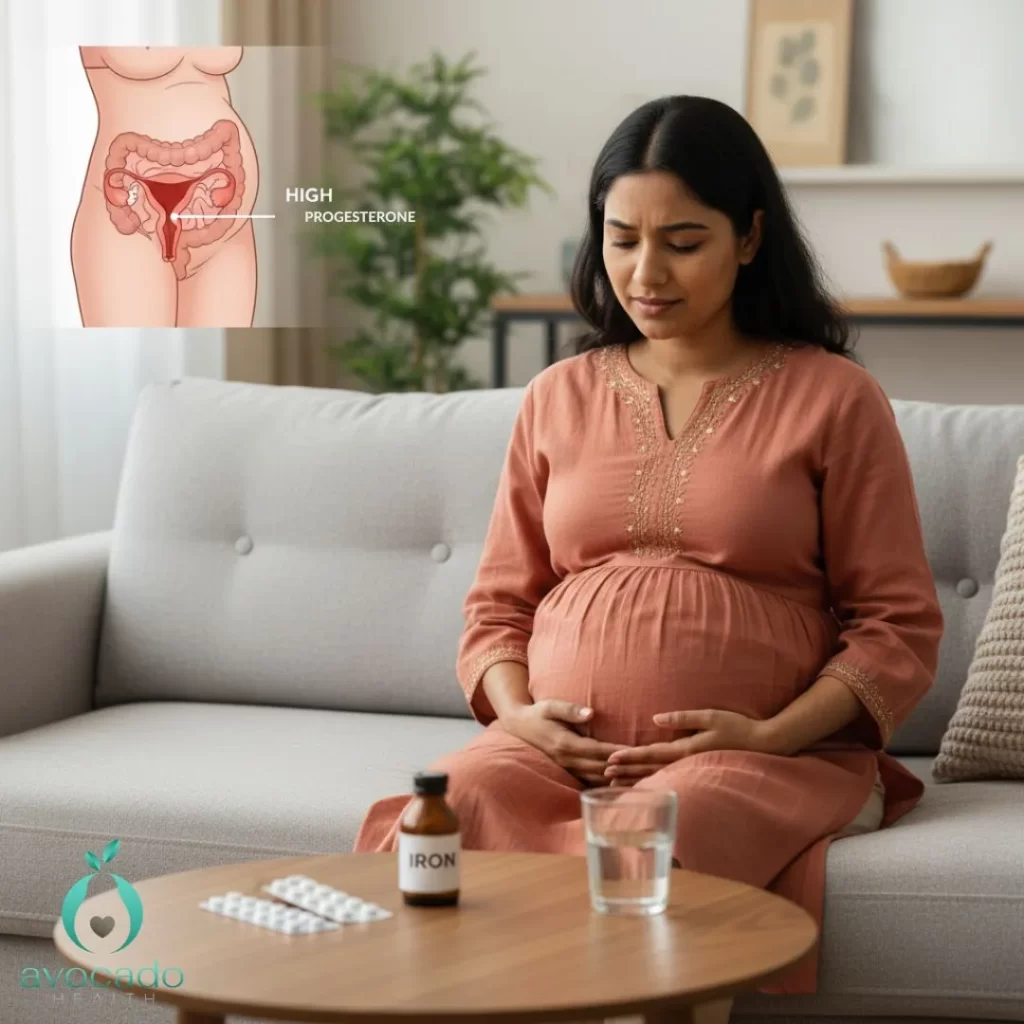
Constipation during pregnancy gets worse mainly because of higher levels of the hormone progesterone, which slows down digestion. Also, as the baby grows, the uterus presses on the intestines, making it harder for waste to move through. Here are the primary factors for pregnancy constipation:
- Hormonal Changes: Increased progesterone relaxes intestinal muscles, which slows down the movement of waste through the digestive tract.6
- Physical Pressure: As the baby grows, the enlarging uterus and increased weight put extra pressure on the intestines, making it harder for waste to pass.
- Iron Supplements: Many prenatal vitamins contain iron, which is a common cause of harder, more difficult-to-pass stools.7 It’s important to balance iron intake to support both mother and baby’s health while minimizing constipation.
- Dietary and Lifestyle Factors: Inadequate fiber consumption, not drinking enough water to keep stools soft, and reduced physical activity (due to fatigue or discomfort) contribute to slower digestion.
Poor nutrient absorption can also contribute to digestive issues during pregnancy, so it’s important to choose remedies that do not interfere with your body’s ability to absorb essential nutrients.

Women with chronic constipation (fewer than 3 bowel movements a week for 3+ months) are at high risk for pregnancy problems like hemorrhoids (2.5–4.3 times more likely) and need special doctor attention during pregnancy.
Which Foods Cause Constipation During Pregnancy?
Foods that commonly cause or worsen constipation during pregnancy are usually low in fiber, high in fat, or heavily processed. Key foods to limit or avoid:
- Refined Grains: White bread, white rice, white pasta, and crackers.
- Dairy Products: High-fat cheese, milk, and some yogurts.
- Processed Foods: Fast food, fried foods, frozen meals, cakes, cookies, and pastries.8
- Meat: Red meat and processed meats.
- Fruits/Produce: Bananas (especially unripe or green ones) may contribute to constipation due to resistant starch, and, in some cases, excessive amounts of certain legumes can also have this effect.
- Beverages: Alcohol, which causes dehydration.
What To Do When Extremely Constipated During Pregnancy?
Although the first recommended way to treat constipation is to eat more fiber, drink more fluids, and exercise, sometimes these don’t work well enough, especially with severe constipation. In that case, laxatives might be used. Types of specific laxatives include:
- Bulk-forming laxatives (e.g., psyllium, methylcellulose) are generally considered safe for use during pregnancy.
- Lubricant laxatives (e.g., mineral oil)
- Stool softeners (e.g., docusate sodium, which has been shown in multiple studies to have no increased risk of birth defects or adverse effects)
- Osmotic laxatives (e.g., polyethylene glycol, lactulose—polyethylene glycol is poorly absorbed and has minimal systemic side effects, while lactulose is commonly used during pregnancy and is considered safe as it draws water into the bowel to soften stools)
- Stimulant laxatives (e.g., bisacodyl, senna)
Most laxatives have minimal absorption into the body, so they are not expected to harm the baby. However, osmotic and stimulant laxatives should be used only short-term or occasionally to avoid dehydration or mineral imbalances in pregnant women.9
Can Mother Constipation Affect Baby?
While constipation can cause discomfort and complications such as swollen veins (hemorrhoids), it does not harm the baby. However, if constipation is severe and accompanied by symptoms like abdominal pain, bleeding, or vomiting, it is important to seek immediate medical care.10
Can Constipation Cause Morning Nausea?
While constipation itself does not directly cause morning nausea, the discomfort and bloating that come with constipation can make feelings of nausea worse. When waste stays in the digestive system because of fewer bowel movements, it can cause more pressure and discomfort in the belly, which might lead to feeling queasy.
Can Constipation Cause Lower Back Pain In Pregnancy?
Yes, constipation can contribute to lower back pain during pregnancy. When stool builds up in the large intestine due to infrequent bowel movements, it can cause abdominal discomfort and pressure that radiates to the pelvic area and lower back. The added strain from straining during bowel movements may also exacerbate muscle tension and discomfort in the lower back region.
When To Go To The ER For Constipation While Pregnant?
Go to the emergency room (ER) for pregnancy-related constipation if you have:
- Severe, persistent, or worsening abdominal pain or cramping.
- Vomiting that does not stop.
- Inability to pass stool or gas.
- Rectal bleeding or blood in the stool.
- High fever (100°F or higher).
- Signs of dehydration.
Conclusion
Constipation during pregnancy is a common and manageable condition that affects many expectant mothers. By understanding how to help constipation during pregnancy through dietary fiber, hydration, exercise, and safe medications, pregnant women can maintain comfort and digestive health throughout all three trimesters.
Frequency Asked Questions
Can straining to poop cause miscarriage in early pregnancy?
Mild straining to poop during early pregnancy is generally unlikely to cause a miscarriage, as the fetus is well-protected deep in the uterus. While intense straining is not recommended, it is more likely to cause hemorrhoids, anal fissures, or physical discomfort than to trigger a miscarriage.
Which foods cause constipation during pregnancy?
Whole wheat, barley, or rye. While a low-fiber diet can cause constipation in some people, others might find that eating too many high-fiber, high-FODMAP foods like whole wheat, barley, and rye can actually lead to constipation.
Do bananas cause constipation?
Ripe bananas contain more soluble fiber, which helps make stools softer and easier to pass. Because of this, fully ripe bananas are less likely to cause constipation and might even help some people feel better if they are constipated.
Sources:
- The pelvic floor
- Laxatives
- Gastrointestinal Complications of Ferrous Sulfate in Pregnant Women: A Randomized Double-Blind Placebo-Controlled Trial
- Constipation During Pregnancy
- Global prevalence of constipation during pregnancy
- Progesterone Inhibitory Role on Gastrointestinal Motility
- Gastrointestinal Complications of Ferrous Sulfate in Pregnant Women
- Have a healthy diet in pregnancy
- Treating constipation during pregnancy
- Risk factors for constipation during pregnancy: a multicentre prospective cohort study