
How to help dizziness in early pregnancy usually starts with simple things like drinking more water, eating smaller meals throughout the day to keep your blood sugar steady, and standing up slowly so your blood pressure doesn’t suddenly drop. Dizziness is very common in the first trimester and is often caused by hormones, low blood sugar, or dehydration. Learn why it happens, what helps it go away quickly, and when you should call your doctor.
Table of Contents
Is Dizziness In Early Pregnancy Normal?
Dizziness is a very common symptom during pregnancy, with studies indicating that over half of pregnant women may experience dizziness or vertigo, particularly during the first two trimesters.1
How Long Does Dizziness In Early Pregnancy Last
While dizziness often improves by the beginning of the second trimester (around week 12–14), pregnant individuals may experience lightheadedness that can persist throughout the entire pregnancy.
How To Help Dizziness In Early Pregnancy

To help prevent dizziness in early pregnancy, follow these practical tips:
- Eat small, frequent meals: Eating small, frequent meals can help prevent low blood sugar levels during pregnancy. Include snacks rich in protein and complex carbohydrates to keep your energy steady.
- Stay hydrated: Drink plenty of water to avoid dehydration, which can worsen dizziness.
- Stand up slowly: Take care to stand up slowly from sitting or lying positions to prevent dizziness caused by sudden drops in blood pressure.
- Rest when dizzy: If you feel lightheaded, lie down as soon as you start to feel dizzy to prevent fainting. Alternatively, sit down and bend forward, putting your head between your knees.
- Wear comfortable clothing: Wear breathable clothing and avoid tight clothing to ensure proper blood flow and comfort.
- Avoid hot baths or overheating, as heat can cause blood vessels to dilate and lower blood pressure, which can increase dizziness.
- Use support stockings: If standing for long periods, wear compression stockings to boost circulation in your lower body and keep your feet moving to help prevent dizziness.
- Taking breaks to move your legs can help improve circulation and reduce dizzy spells.
- Maintaining physical activity appropriate for your pregnancy and eating small meals frequently can help stabilize blood sugar levels and improve overall circulation.
- Avoid lying flat: To help increase circulation and reduce dizziness, it is recommended to avoid lying flat on your back and instead lie on your side.
- Eating iron-rich foods like red meat can help prevent anemia and maintain healthy iron levels.
- Iron supplements: Your healthcare provider may recommend iron supplements or prenatal vitamins containing iron to help prevent or treat anemia.

If you are experiencing dizziness in the second or third trimester, try taking deep breaths and getting some fresh air. Drinking plenty of water is also important for preventing dizziness, as staying hydrated supports healthy blood pressure and reduces the risk of dehydration-related lightheadedness.
What Type Of Dizziness In Early Pregnancy?
Dizziness in early pregnancy can manifest in several different ways, each with its own characteristics and causes.
- Lightheadedness: This is the most common type of dizziness in early pregnancy. It feels like you might faint or pass out, often described as ‘feeling faint’, and is usually caused by low blood pressure, dehydration, or low blood sugar levels. It often occurs when standing up too quickly or after long periods of standing or sitting.
- Vertigo: Unlike lightheadedness, vertigo is the sensation that you or your surroundings are spinning or moving. Changes in the inner ear can cause this due to hormonal fluctuations during pregnancy or issues with blood flow to the brain.2
- Presyncope: This is the feeling that you are about to lose consciousness, but do not actually faint. It is often related to a sudden drop in blood pressure or reduced blood flow to the brain, which can happen when the growing uterus puts pressure on major blood vessels. During pregnancy, less blood flow to the brain can contribute to this feeling.3
- Orthostatic Hypotension: This type occurs when your blood pressure drops significantly upon standing up from a sitting or lying position. It is common in pregnancy due to the relaxation of blood vessels and increased blood volume.

Feeling dizzy and not sure if it’s normal?
What Causes Dizziness In Early Pregnancy?
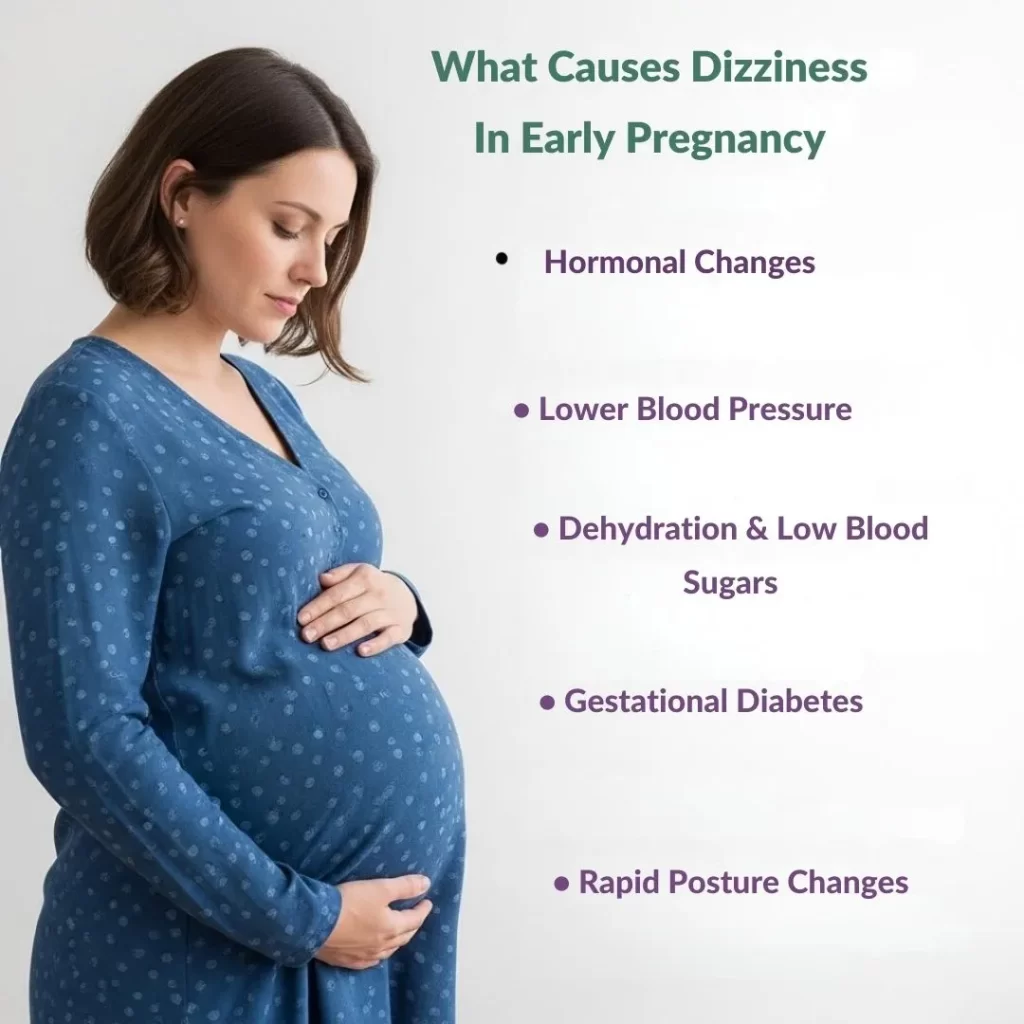
Several factors contribute to dizziness in early pregnancy, including:
- Hormonal Changes: Rising hormone levels, especially progesterone, cause blood vessels to relax and widen, which can slow the return of blood from the lower body to the heart and lead to lower blood pressure.4
- Lower Blood Pressure: The expansion of the vascular system in the first trimester often results in lower blood pressure, making dizziness more likely.5
- Dehydration & Low Blood Sugar: Reduced food or water intake, often due to morning sickness, nausea, or vomiting, can lead to dehydration and low blood sugar levels. Both dehydration and low blood sugar contribute to dizziness as the body adapts to metabolic changes.
- Iron Deficiency (Anemia): Anemia is a common cause of dizziness during pregnancy due to a reduced number of red blood cells that carry oxygen to the brain. 6
- Gestational Diabetes: Gestational diabetes can lead to dizziness if blood sugar levels drop too low during pregnancy.
- Rapid Posture Changes: Standing up quickly from a sitting or lying position can cause a sudden drop in blood pressure.
Feeling tired can also be a symptom of anemia and may accompany dizziness, so it’s important to monitor your symptoms and discuss them with your healthcare provider.
Related: Eye Twitch in Pregnancy: Causes, Relief, and When to Worry
Is Dizziness Normal In The 2nd Trimester?
During the second trimester, your body continues to adapt to the growing baby, and several factors can contribute to dizziness:
- Pressure from the expanding uterus: The uterus can press on blood vessels, especially the inferior vena cava, a large vein that carries blood from your lower body back to your heart.
- Lying flat on your back: This position increases pressure on the vena cava, reducing blood flow and causing lightheadedness or dizziness.
Other factors that can exacerbate dizziness in the second trimester include dehydration, overheating, and prolonged standing without movement.
Does Dizziness Mean Labor Is Coming?
Dizziness is a common symptom during pregnancy, but it does not typically indicate that labor is imminent. While some women may experience dizziness as their body undergoes changes throughout pregnancy, it is not a reliable sign that labor is near.
However, if dizziness occurs close to your due date, it is important to monitor it carefully. Severe dizziness or dizziness accompanied by other symptoms like heavy bleeding, intense abdominal pain, or decreased baby’s movements could signal complications that require immediate medical attention.
Related: What Causes UTI in Pregnancy? 5 Common Causes & Prevention Tips
When Should I Be Worried About Dizziness During Pregnancy?
Always communicate with your ob gyn or healthcare provider about any dizziness you experience, especially if it is persistent or severe. They can evaluate your iron levels to check for anemia, monitor your blood pressure to rule out pre eclampsia, and ensure that your pregnancy is progressing healthily.
If dizziness persists or is accompanied by other symptoms such as
- abdominal pain
- vaginal bleeding
- severe headaches
- blurred vision
- irregular heartbeat
It is important to contact your healthcare provider promptly. They can assess for conditions such as anemia, gestational diabetes, or preeclampsia that may require treatment.
Conclusion
Dizziness in early pregnancy is often normal, maintaining a healthy pregnancy through proper nutrition, hydration, and rest can help minimize symptoms and keep you feeling your best as your pregnancy progresses.
Frequently Asked Questions
Can you feel dizzy before a positive pregnancy test?
Yes, it is possible to feel dizzy before you even get a positive pregnancy test. This early dizziness can be attributed to the hormonal changes that begin shortly after conception.
Is lightheaded a symptom of preeclampsia?
Preeclampsia typically occurs after the 20th week of pregnancy, especially during the third trimester. While many women experience dizziness or lightheadedness during pregnancy due to normal hormonal and circulatory changes, if these symptoms are accompanied by high blood pressure, severe headaches, vision changes, swelling, or abdominal pain, it is important to seek medical help immediately.