


How to help newborn with hiccups is a common concern for many parents. Though usually harmless, hiccups can cause discomfort. To soothe your baby, burp them during and after feedings, hold them upright for 20 to 30 minutes, gently pat or rub their back to release trapped air, take short feeding breaks, ensure a proper latch or correct nipple size to reduce swallowed air, feed in calm surroundings, and try a pacifier to relax the diaphragm. Learn why baby hiccups occur, how to prevent them, and effective ways to ease your newborn’s hiccups safely.
Table of Contents
Is It Normal For Newborns To Have Hiccups?
According to the American Academy of Pediatrics, it is completely normal for newborns to have hiccups or burps. Most babies get hiccups, and infant hiccups are a normal reflex. In fact, hiccups are one of the most common reflexes observed in infants, often starting as early as when the baby is still in the womb. The exact cause of hiccups in newborns is not always known. 1
Scientists found that baby hiccups send signals to the brain, and the brain reacts in a clear pattern each time a hiccup happens. They also found that this brain response begins very early, as early as 10 weeks before birth, suggesting that hiccups help the developing brain learn and grow.2
Related: Why do babies grunt in their sleep?
What Causes Newborn Hiccups?
Baby hiccups are involuntary contractions of the baby’s diaphragm. This muscle controls breathing, which causes the characteristic “hic” sound when the vocal cords suddenly close. 3
Because a newborn’s diaphragm is still developing and more sensitive than in adults, it can spasm more easily, leading to frequent hiccups.
The exact cause of hiccups is not always known.
What triggers baby hiccups?
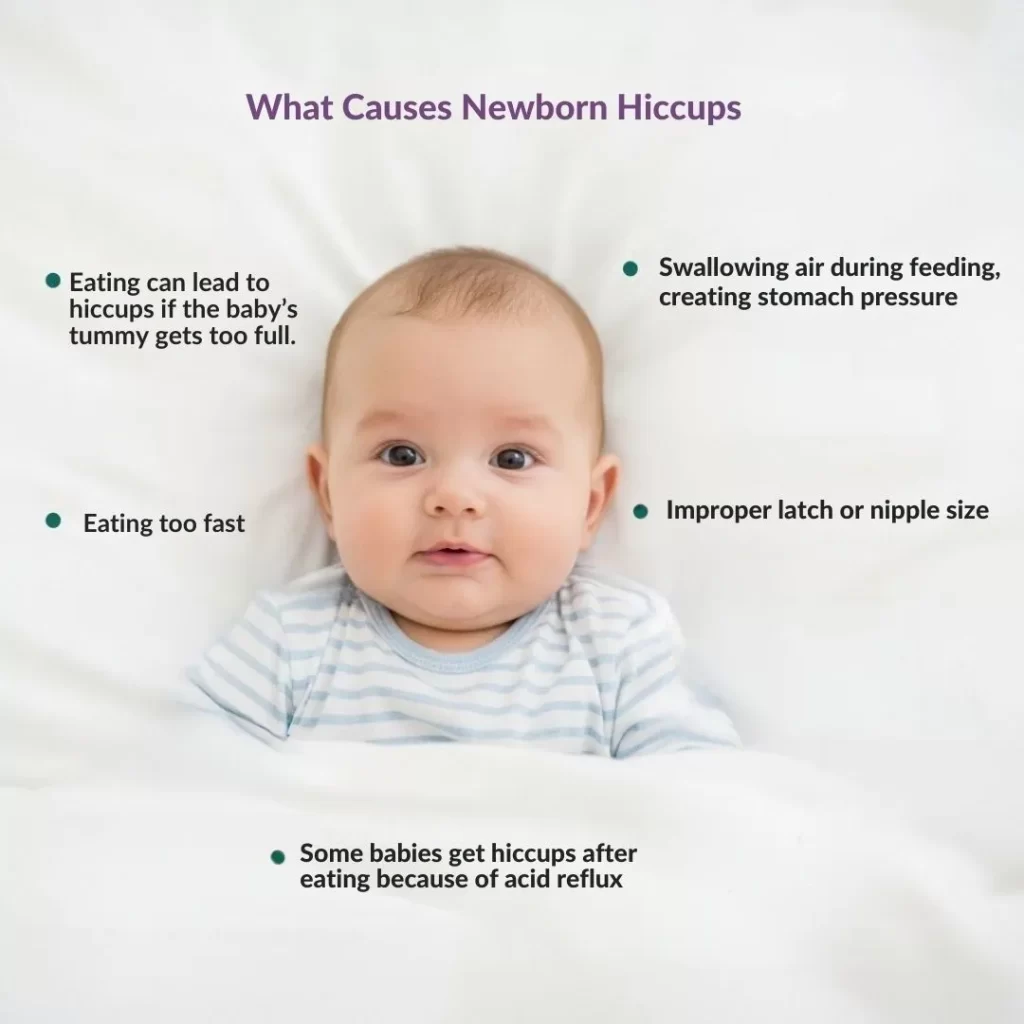
- Eating can lead to hiccups if the baby’s tummy gets too full.
- Swallowing air during feeding, creating stomach pressure
- Eating too fast
- Some babies get hiccups after eating because of acid reflux, also called gastroesophageal reflux (GERD). The backward flow of stomach contents (reflux) can irritate the esophagus and trigger the phrenic nerve, causing hiccups.
- Improper latch or nipple size can cause milk to flow too quickly into the baby’s mouth, leading them to swallow air.
While hiccups may seem concerning to new parents, most babies are not bothered by them and may continue feeding, sleeping, or playing as usual.
Related: Why Is My Newborn Crying When Feeding & How to Calm
How To Help Newborn With Hiccups

When your newborn experiences hiccups, there are several gentle and effective ways to help get rid of baby hiccups quickly.
How do I make my baby’s hiccups go away?
- Make sure to burp your baby during and after feedings. Baby burps are important for releasing trapped air and can help prevent hiccups.
For breastfed babies, try burping when you switch breasts to give your baby a feeding break and an opportunity to relax.
- Holding your baby in an upright position for about 20 to 30 minutes allows gravity to aid digestion and prevents stomach acid from irritating the diaphragm.
- Gently patting your baby’s back can help get rid of hiccups by encouraging trapped air to escape.
- Take short breaks during feeding. Pausing for short breaks can help prevent baby hiccups and reduce the amount of air your baby swallows.
- Ensure your baby latches onto the whole nipple when feeding to prevent swallowing air and reduce the risk of hiccups.
- Offer breast milk to soothe your baby. Breast milk is optimal for comfort and nutrition, and feeding can sometimes help relieve hiccups.
- Sometimes, a little experimentation with feeding positions and techniques may be needed to find what works best for your baby.
- Try to feed your baby in calm surroundings and avoid rushing the feeding process.
In many cases, it’s best to wait and let hiccups resolve on their own, as they are usually harmless.
Newborn Hiccups?
For Safe, Fast Relief Tips
How To Prevent Hiccups In Newborn?

While it is impossible to prevent newborn hiccups entirely, you can significantly reduce their frequency by minimizing the amount of air your baby swallows during and after feeding.
- Try to feed your baby before they become extremely hungry and start crying, as crying causes them to swallow more air.
- Keep the bottle tilted so the nipple is always full of milk, not air.
- Avoid vigorous movements like bouncing or high-energy play immediately after a meal.
Should I Give My Baby Gripe Water If They Have Hiccups?
Consider gripe water with caution. Gripe water is a liquid dietary supplement sometimes given to address fussiness, gas, and hiccups after feeding a newborn. However, it is not regulated by the U.S. Food and Drug Administration (FDA) like medications, so ingredients, quality, and effectiveness can vary between brands.4
Before you even think about giving your baby gripe water for the hiccups, talk to their doctor first because:
- Lack of Scientific Proof: There is not enough evidence that gripe water effectively stops hiccups in babies.
- Age Caution: Experts warn against giving gripe water to babies under 6 months of age.
- Potential Risks: It may reduce breast milk intake and pose risks of adverse effects.
How Long Do Newborn Hiccups Last?
Newborn hiccups typically last only a few minutes, usually between 5 to 10 minutes. In most cases, they resolve on their own without any need for intervention. As babies grow and their diaphragm matures, hiccups usually become less frequent.
Is It OK To Lay Baby Down With Hiccups?
When it comes to newborn sleep, many babies can sleep through a bout of hiccups without being disturbed, and hiccups rarely affect a baby’s breathing. Yes, it is generally safe to lay a baby down to sleep while they have hiccups, provided they are not in distress, spitting up, or having breathing difficulties.
Can A Pacifier Help Newborn Hiccups?
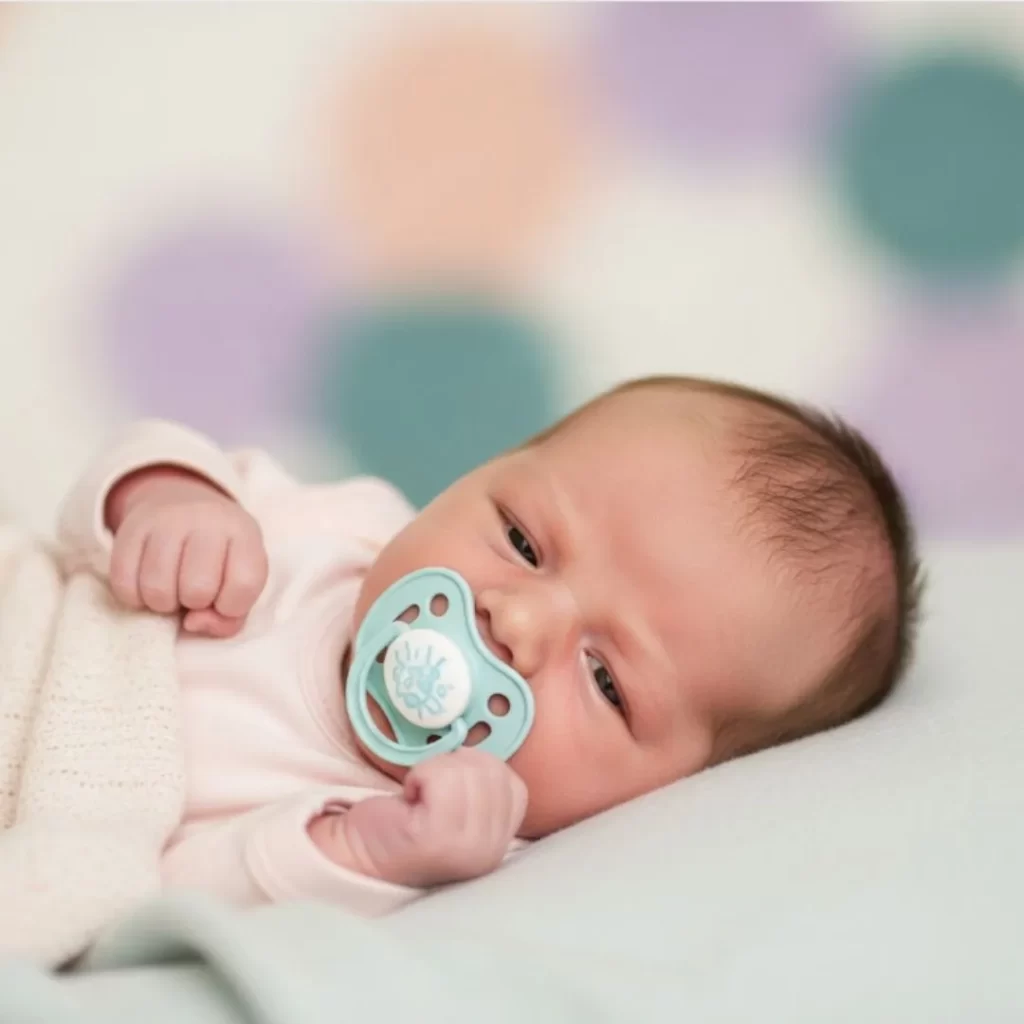
A pacifier can help relieve newborn hiccups by promoting a sucking motion that relaxes the diaphragm and interrupts the spasm. It is a safe and effective, non-pharmaceutical method to soothe a hiccupping baby.5
How Pacifiers Help with Hiccups:
- Relaxes the Diaphragm: The rhythmic motion of sucking on a pacifier helps to calm the diaphragm muscle, which is often responsible for the contractions that cause hiccups.
- Regulates Breathing: Sucking can help regulate the baby’s breathing pattern.
- Comforts: It acts as a distraction if the hiccups are causing the baby any fussiness.
Does Hiccup Mean Overfeeding a Baby?
Hiccups do not necessarily mean that a baby has been overfed. Eating, feeding time, and swallowing air are all related to hiccups, but the exact cause is not always known. While a full stomach pressing against the diaphragm can trigger hiccups, they can also occur for other reasons such as swallowing excess air during feeding or even spontaneously without any apparent cause.
When Should I Worry About Newborn Hiccups?
While hiccups are a normal part of infancy and usually harmless, if your baby’s hiccups:
- Last for several hours
- Interfere with your baby’s sleep or feeding
- Are accompanied by concerning symptoms such as fussiness, vomiting, or feeding difficulties
Persistent or frequent hiccups can indicate medical issues like gastroesophageal reflux disease (GERD). Discuss prolonged or frequent hiccups with your baby’s doctor to rule out underlying digestive concerns.6
Conclusion
Hiccups in babies are completely normal and generally do not require medical treatment. Most babies develop hiccups as a natural reflex related to their immature diaphragm and digestive system. However, if your baby experiences frequent hiccups accompanied by other signs such as fussiness, vomiting, or feeding difficulties, it’s a good idea to consult your baby’s doctor or pediatrician to rule out any underlying medical issues.
Frequently Asked Questions
Does cold cause hiccups in newborns?
Yes, newborns frequently get hiccups when they are cold or experience a sudden, chilly temperature change, such as during a diaper change or after a bath. A sudden cold chill can trigger spasms in their undeveloped diaphragm muscles.
Sources:
- Hiccups or Burps – Normal
- Event-related potentials following contraction of respiratory muscles in pre-term and full-term infants
- Intrapulmonary Volume Changes during Hiccups versus Spontaneous Breaths in a Preterm Infant
- Gripe Water Administration in Infants 1-6 months of Age-A Cross-sectional Study
- Effects of implementing non-nutritive sucking on oral feeding progression and outcomes in preterm infants
- Hiccups: A Non-Systematic Review