

Does Hand Foot And Mouth Disease Cause Vomiting? Yes, hand, foot, and mouth disease (HFMD) can cause vomiting, along with other gastrointestinal symptoms like diarrhea, belly pain, and fever. While not the most common symptom, vomiting can occur in children younger than 5 years as part of HFMD. It often appears alongside fever, rash, and sore throat, with symptoms usually resolving within 7 to 10 days. Learn why it happens, how to manage it, and when to call your pediatrician.
Does Hand Foot And Mouth Disease Cause Vomiting?

Hand, foot, and mouth disease (HFMD) is primarily known for causing fever, sore throat, painful mouth sores, and a characteristic skin rash on the hands, feet, and sometimes the buttocks.
However, vomiting and diarrhea can also occur in some cases, though they are not among the most common symptoms. These symptoms are more likely to be seen in cases involving certain strains of the virus or in more severe illness, but they are not the primary indicators of HFMD.2
Related Articles: What helps toddlers with constipation
Why Do Vomiting and Diarrhea Happen with Hand, Foot, and Mouth Disease?
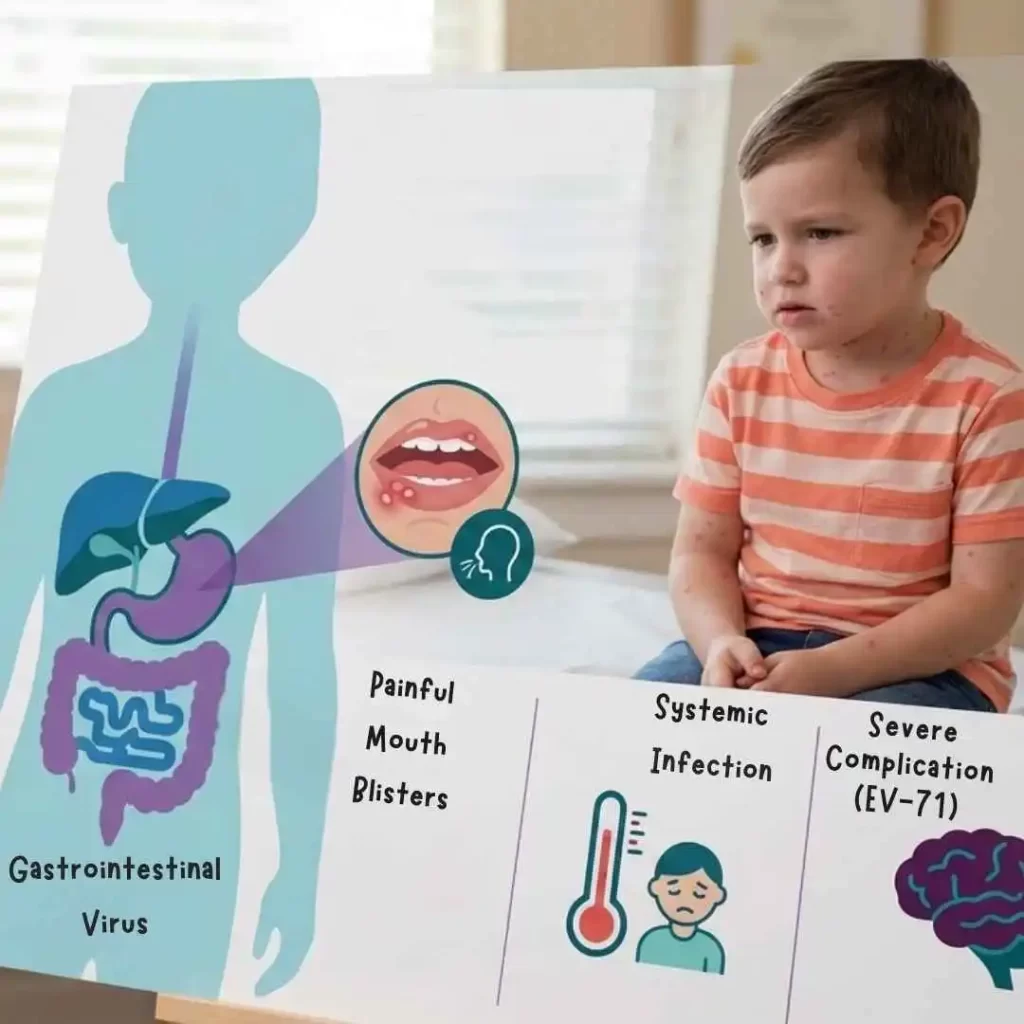
Vomiting and diarrhea occur with Hand, Foot, and Mouth Disease (HFMD) primarily because it is caused by enteroviruses (such as Coxsackievirus A16 or EV-71) that infect the gastrointestinal tract, causing stomach irritation.
Why Vomiting Happens with HFMD:
- Gastrointestinal Virus: Coxsackieviruses live in the digestive tract, leading to belly discomfort, nausea, and vomiting.
- Painful Mouth Blisters: Severe sores in the throat and mouth can make swallowing difficult and trigger a gag reflex or vomiting.
- Systemic Infection: The virus causes fever and malaise, which often include gastrointestinal symptoms.
- Severe Complication (EV-71): In rarer, more severe cases, particularly those caused by Enterovirus 71, vomiting can indicate a more serious infection (e.g., encephalitis).
Why Diarrhea Happens with HFMD:
- Viral Replication in Intestines: After ingestion, the virus specifically replicates in the lower intestine, causing inflammation and diarrheal symptoms.
- Fecal-Oral Shedding: Because the virus thrives in the gut, it is passed in bowel movements. It can continue to be shed in the stool for several weeks after the skin rash has cleared.3
- Microbiota Imbalance: The infection can disrupt the natural balance of gut bacteria, increasing inflammation-inducing strains that impair the intestinal barrier.4
Related Articles: How To Get Toddler To Stop Sucking Thumb?
How long does vomiting last with hand, foot, and mouth disease?
Vomiting associated with hand, foot, and mouth disease (HFMD) is typically a short-lived symptom, often appearing alongside a fever during the first 1–2 days of the illness. While the illness itself lasts 7 to 10 days, gastrointestinal symptoms like vomiting usually resolve quickly as the fever subsides.5
Worried about HFMD and vomiting?
See exactly what to do now
Is HFMD from bad hygiene?
Poor hygiene significantly contributes to the spread of Hand, Foot, and Mouth Disease (HFMD), as it’s a highly contagious viral illness transmitted through fecal-oral contact, respiratory droplets, and contaminated surfaces. This makes frequent handwashing and cleaning crucial for prevention.6
While not caused by filth, the viruses thrive in environments with close contact, like daycare centers, where improper hand hygiene after diaper changes or toilet use easily transmits the infection.7
How to Help a Vomiting Toddler with Hand, Foot, and Mouth Disease?
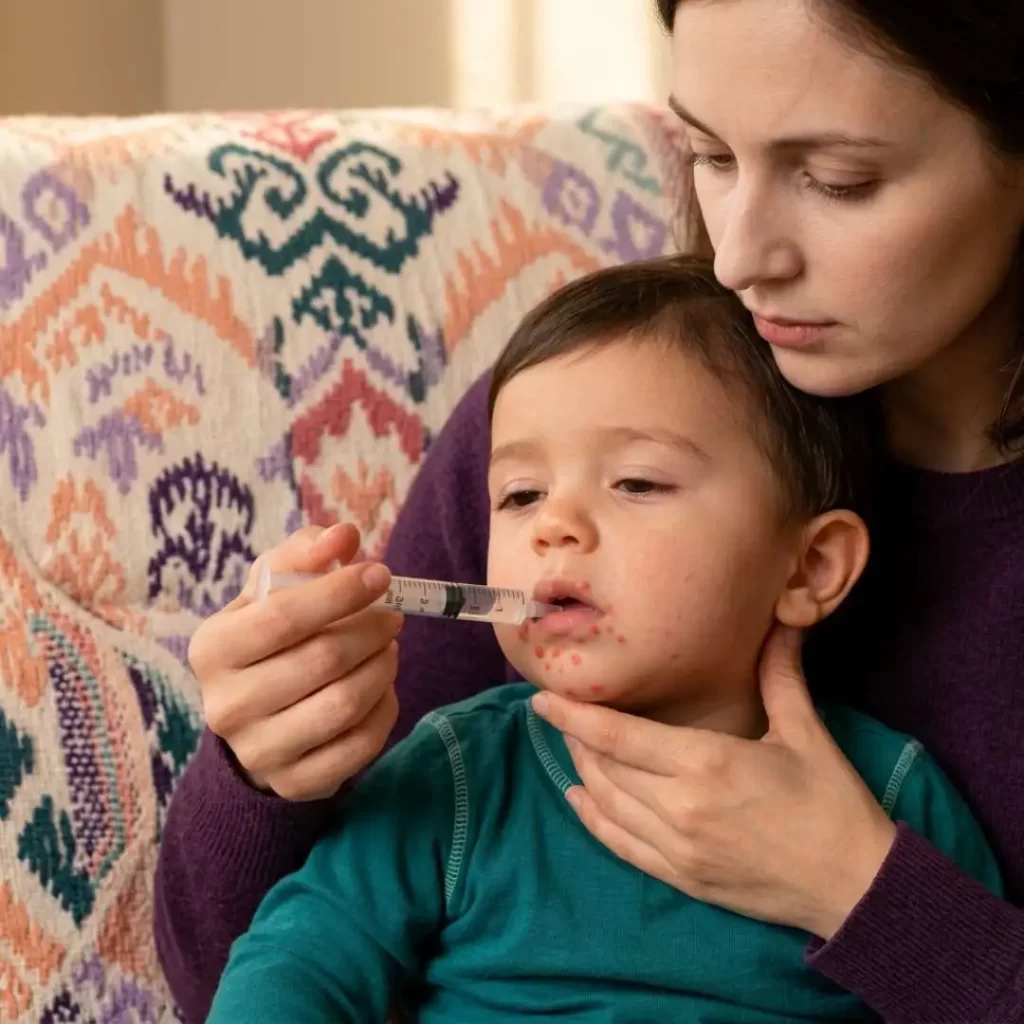
To treat vomiting in toddlers with Hand, Foot, and Mouth Disease (HFMD), focus on preventing dehydration by offering small, frequent sips of cool fluids (Pedialyte, water, popsicles) rather than large amounts at once. Manage pain from mouth sores with OTC acetaminophen or ibuprofen to encourage drinking. Avoid dairy and acidic foods.
Key Treatment Strategies:
- Hydration is Key: Offer tiny amounts of liquid frequently to avoid triggering more vomiting. Wait 30–60 minutes after a vomit spell before offering fluids again. Offer 1/2 to 1 ounce of fluids every 20 minutes.8
- Soothe Mouth Sores: Cold items like dye-free popsicles, slushies, or ice cream help hydrate and numb the pain from mouth sores, which often lead to reduced fluid intake.
- Dietary Adjustments: Offer soft, bland foods (yogurt, pudding, smoothies) when the child is ready to eat.
- Comfort Measures: Use a syringe to give fluids if your child is refusing a bottle or cup due to mouth sores.
- Avoid: Milk, citrus juice, or soda, as they can worsen discomfort or vomiting.
When To Go To The ER For Hand, Foot, And Mouth Disease?
Parents should monitor children for signs of dehydration, especially if vomiting or diarrhea is present, since painful mouth sores can make it hard to drink enough fluids. Preventing dehydration is crucial when managing HFMD at home.
When to call the pediatrician:
- Signs of dehydration such as:
- Few wet diapers
- No urine for 6-8 hours
- Dark urine
- Very dry mouth
- No tears when crying
- The child cannot keep fluids down
- Vomiting is persistent or severe, which may indicate complications or the need for medical evaluation
Conclusion
While vomiting can occur with hand, foot, and mouth disease, it is not a hallmark symptom and tends to occur less frequently compared to fever, sore throat, and rash. Parents should focus on supportive care, ensuring adequate fluid intake, and seek medical advice if vomiting leads to dehydration or worsens.
Frequently Asked Questions
Can a 2 year old catch hand, foot, and mouth twice?
Yes, a 2-year-old can catch hand, foot, and mouth disease (HFMD) more than once. HFMD is caused by several different viruses, most commonly Coxsackievirus A16 and Enterovirus 71, but other strains of enteroviruses can also cause the illness. Because immunity is typically specific to the particular virus strain that caused the initial infection, a child can become infected again if exposed to a different strain.
Do breastfed babies get HFMD?
Breastfed babies can get hand, foot, and mouth disease (HFMD) despite some immune protection from breast milk. While breastfeeding may lessen symptoms or speed recovery, it doesn’t fully prevent infection. Babies catch HFMD through close contact, contaminated surfaces, respiratory droplets, or stool.1
Do toddlers sleep more with HFMD?
A child with hand, foot, and mouth disease may also experience a fever, muscle soreness, or other symptoms similar to the flu. They might become more irritable, fussy, or sleep more than usual. Increased sleep is a common response as the body fights the viral infection, helping to conserve energy and support the immune system.
Sources:
- Prolonged Breastfeeding Is Associated With Lower Risk Of Severe Hand, Foot And Mouth Disease In Chinese Children
- HFMD Symptoms and Complications
- Overview of the Trending Enteric Viruses and Their Pathogenesis in Intestinal Epithelial Cell Infection.
- Integrated analysis reveals important differences in the gut and oropharyngeal microbiota between children with mild and severe hand, foot and mouth disease Gut and oropharyngeal microbiota in HFMD
- A review of enterovirus-associated HFMD: preventive strategies and the need for a global enterovirus surveillance network
- Current status of hand-foot-and-mouth disease. Journal of Biomedical Science
- Hand, Foot, and Mouth Disease
- Understanding the use of oral rehydration therapy: A narrative review from clinical practice to main recommendations