
Newborn breathing rapidly while sleeping can definitely make your heart skip a beat. Babies breathe in random, uneven ways that can look scary but are usually totally normal as their tiny lungs get the hang of things. If you’ve caught yourself staring at your baby, feeling worried and wondering what’s normal and what’s not, you’re not alone. Every parent has been there. Let’s break down why it happens, what’s normal, and what might need a closer look.
Table of Contents
Do Newborns Breathe Faster?

Yes, newborns breathe faster than older children and adults. It’s also normal for them to have irregular breathing, sometimes pausing for a few seconds or suddenly breathing rapidly, which can appear quite fast to parents. This periodic breathing can happen even in term babies during their first few days of life.1
How Many Breaths Per Minute Is Normal For A Newborn?
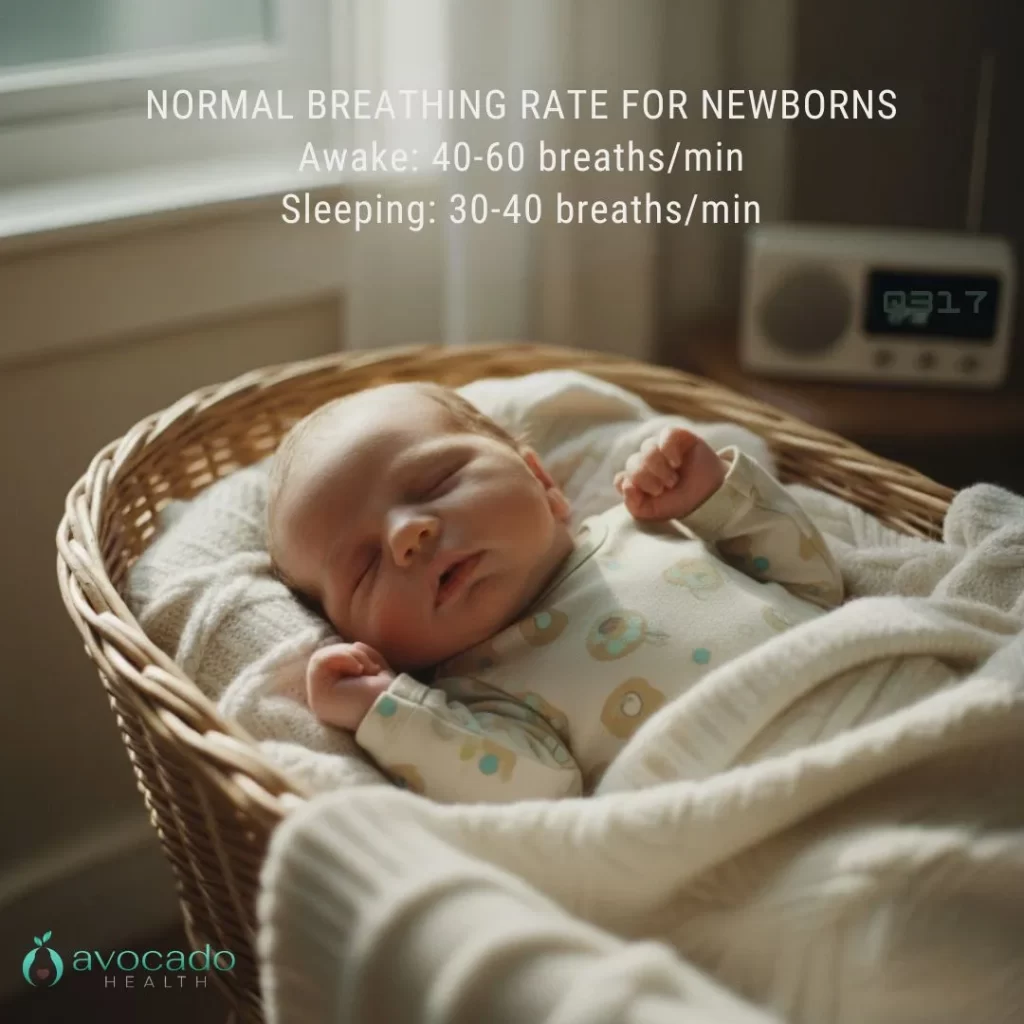
A normal breathing rate for a newborn baby when awake and active is typically between 40 and 60 breaths per minute, slowing to 30 to 40 breaths per minute while sleeping.
Why Does My Newborn Breathing Rapidly While Sleeping?
A newborn’s fast breathing is a sign of their developing respiratory system learning to breathe independently. A newborn’s breathing during sleep can vary due to their immature respiratory system, and some irregularity is normal in healthy infants.
Normal reasons for rapid breathing:
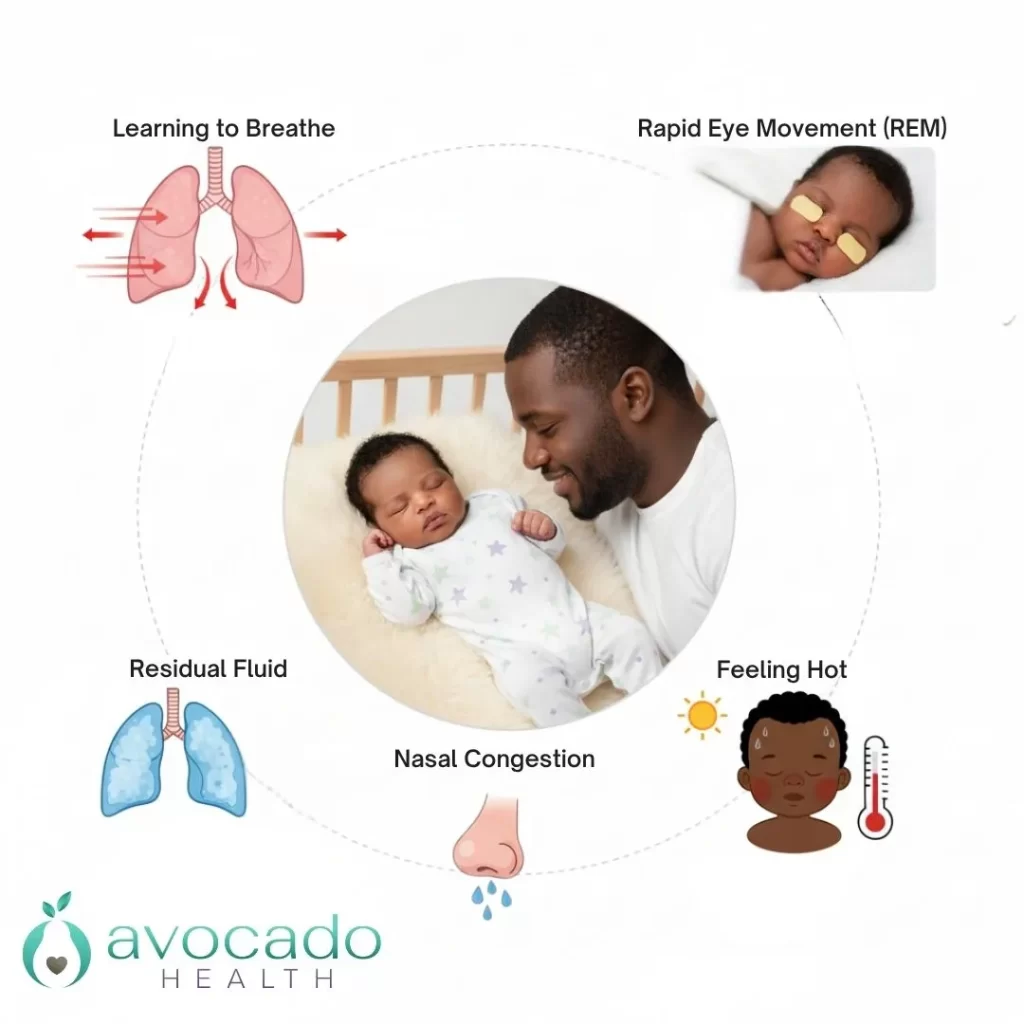
Learning To Breathe
After being in the womb, a newborn’s lungs need to learn to work on their own, which includes coordinating breathing. Because newborns have small lungs and weak breathing muscles, they tend to breathe much faster than adults.
This rapid breathing often results in irregular patterns, such as fast, shallow breaths, as the respiratory system develops and adapts to life outside the womb. The pause in periodic breathing usually lasts five to 10 seconds. Newborns with periodic breathing may repeat this cycle three or more times in a row.

While most rapid or irregular breathing is normal as newborns adjust, persistent or severe changes in breathing could signal a breathing problem and should be evaluated by a medical professional.
Rapid Eye Movement (REM)
During this stage:
- Breathing naturally becomes irregular and faster.
- Rapid breathing is often interspersed with brief pauses (periodic breathing), which is a normal part of development and is not typically a cause for concern as long as the baby’s skin color remains normal and the pauses are less than 10 seconds. 2
Periodic breathing is different from apnea, which can affect oxygen levels. Newborns should not pause breathing for more than ten seconds, even while at rest.
Residual fluid
Sometimes, residual fluid in the lungs after birth can contribute to rapid breathing. Transient Tachypnea of the Newborn (TTN) is a temporary condition occurring more often in C-section deliveries, caused by fluid in the lungs and typically resolves within 24-72 hours.3
To help diagnose TTN or other causes of rapid breathing, doctors may use a chest X-ray to assess the baby’s lung health.
Nasal congestion
Babies are obligate nose breathers and cannot clear their throats or breathe through their mouths easily. Saliva or mucus can pool in their throat, creating noisy breathing. Congestion can partially block the baby’s airways, sometimes leading to noisy or heavy breathing. A mild cold is a common cause of congestion in newborns.
If your baby’s nasal congestion causes ongoing breathing difficulties, consult a healthcare provider for further evaluation and guidance.
Feeling hot
Newborns are less efficient at regulating their body temperature. If a baby is hot, they may breathe faster to cool down. Parents may also notice heavy breathing if the baby is overheated.
What Are Normal Newborn Breathing Patterns?
Newborn breathing patterns are naturally irregular and can differ widely from one baby to another. This is mainly because of the immaturity of the respiratory control centers located in the brainstem, which regulate breathing. Many healthcare providers consider periodic breathing normal in newborns. Periodic breathing is normal up to 6 months of age. 4
As a result, newborns often experience periodic breathing, characterized by brief pauses followed by rapid breaths, which helps them maintain sufficient oxygen levels despite the irregular rhythm. In periodic breathing, your baby resumes breathing on their own after a pause.
Periodic breathing is very common, occurring in up to 80% of full-term babies and nearly all premature infants.
Is Belly Breathing Normal In Newborns?
Yes, belly breathing is normal and common in newborns because they rely more on their diaphragm as their respiratory system develops. This is known as diaphragmatic breathing, where the belly moves with each breath. 5
Home Remedies For Fast Breathing In Babies
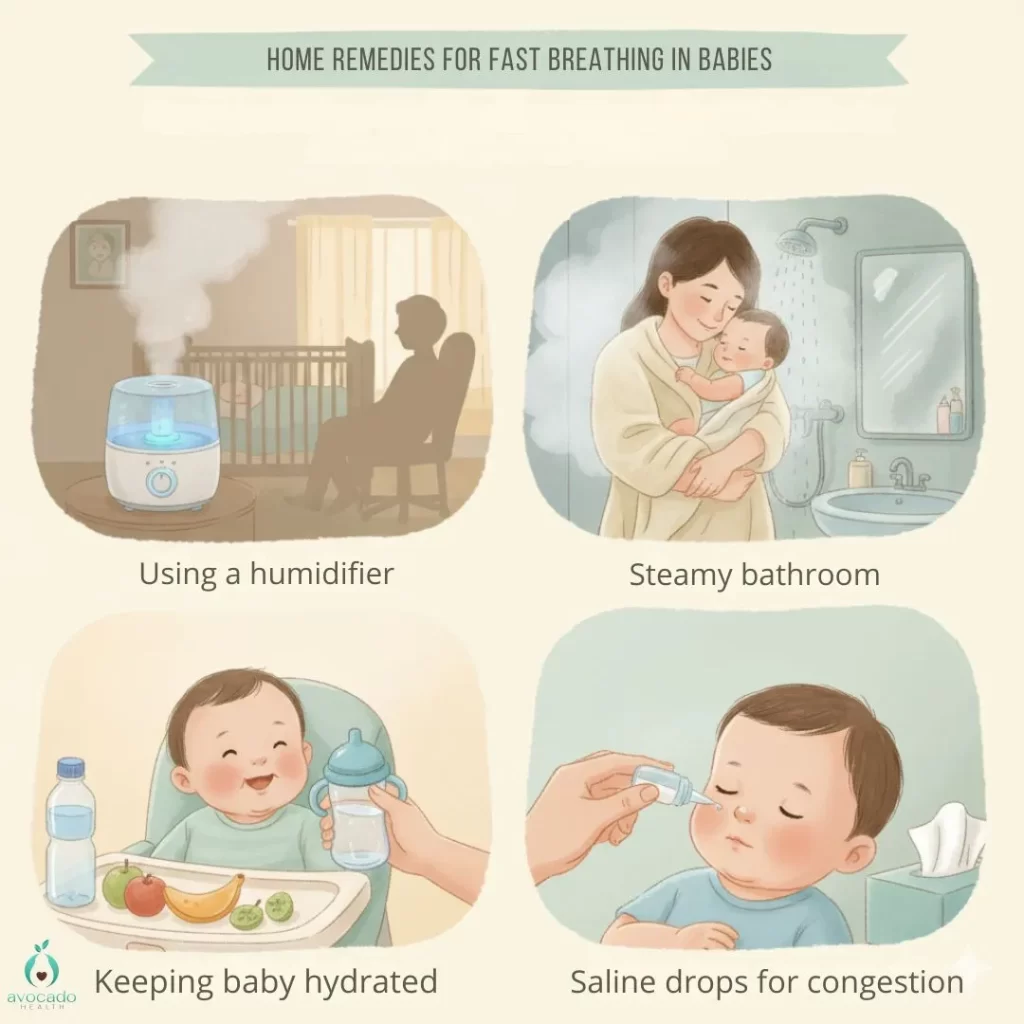
Keeping track of your baby’s breathing patterns and using the following methods can help reduce fast breathing:
- Using a humidifier to add moisture to the air,
- Spending time in a steamy bathroom to help loosen mucus and soothe the airways,
- Keeping the baby well-hydrated with fluids,
- Using saline drops to relieve nasal congestion.
If your baby’s breathing does not improve with these home remedies, consult a healthcare professional for further evaluation and guidance.
When Should I Worry About Newborn Fast Breathing?
Rapid breathing can sometimes indicate underlying breathing issues. Always remain vigilant for signs that may indicate the newborn stops breathing or experiences trouble breathing.
Look for the following signs of respiratory distress in your child:
- Rapid Breathing (Tachypnea): A persistently increased breathing rate, often more than 60 breaths per minute, indicating the baby is working harder to get enough oxygen.
- Chest Retractions: Visible pulling in of the skin around the ribs, breastbone, or neck with each breath as the baby uses extra muscles to breathe.
- Nasal Flaring: Widening of the nostrils during inhalation to increase airflow.
- Grunting: A low-pitched sound during exhalation as the body tries to keep air in the lungs to improve oxygen exchange.
- Respiratory distress syndrome occurs when a newborn’s lungs do not produce enough surfactant, a substance that helps keep the lungs open and functioning properly. Signs of respiratory distress include fast, shallow breathing, grunting while breathing, flaring nostrils, and skin or lips turning bluish.
- Infections can lead to breathing difficulties in newborns due to conditions like bronchiolitis, which may require urgent medical attention.
- Pneumonia can develop in newborns shortly after birth and is characterized by symptoms such as lethargy, poor feeding, and difficulty breathing.
- A heart condition in newborns may manifest as fast breathing due to inefficient oxygen circulation.
Additional signs to watch for include:
- Bluish Skin or Lips (Cyanosis): Indicates low oxygen levels and requires immediate medical attention. Take your baby to the emergency room if their skin color changes to blue or gray. Parents can also take their baby to a care facility if urgent evaluation is needed.
- Lethargy, Poor Feeding, or Irritability: Changes in behavior or feeding may signal the baby is unwell or not getting enough oxygen.
- Prolonged Pauses in Breathing (Apnea): Pauses lasting more than 10 seconds combined with other symptoms are concerning. 6
If you notice any of these symptoms, contact your doctor or seek medical help immediately.
Premature newborns are more likely to experience respiratory issues due to underdeveloped lungs and immature respiratory systems.
Worried about your newborn’s fast breathing? Text Avocado Health for 24/7 personalized, expert parent coaching whenever you need it, in the moment, and in your own words.
Conclusion
Newborn breathing fast while sleeping can be distressing. While irregular breathing patterns like periodic breathing with pauses followed by fast breathing are normal due to the baby’s developing lungs and respiratory muscles, stay alert for any signs of breathing issues.
Frequently Asked Questions
When do newborns breathe through mouth?
Newborns breathe exclusively through their noses until they are about 3 to 4 months old, except when crying. After this age, they develop the reflex to breathe through their mouths, which can happen temporarily due to a stuffy nose from a cold or allergies, or as a result of more complex airway blockages.
Why is my newborn breathing with mouth open?
A newborn may breathe with their mouth open due to nasal congestion, which is the most common cause. Other reasons include enlarged tonsils or adenoids, structural issues like a deviated septum, or even a temporary habit after a cold.
How to tell if baby is breathing ok in car seat?
To ensure a baby is breathing ok in a car seat, regularly check their position to make sure their chin is not on their chest, as this can obstruct their airway.
Also, monitor for signs like a bluish color, gasping, or grunting, and check for proper harness tightness using the pinch test.
For high-risk infants, a hospital may perform a car seat test that monitors heart rate, breathing, and oxygen levels using a pulse oximeter.
Sources:
- Normal ranges of heart rate and respiratory rate in children from birth to 18 years: a systematic review of observational studies https://pmc.ncbi.nlm.nih.gov/articles/PMC3789232/#:~:text=The%20evidence%20underpinning%20the%20guidelines,with%20the%20existing%20reference%20ranges.
- Sleep Studies for Clinical Indications during the First Year of Life: Infants Are Not Small Children https://pmc.ncbi.nlm.nih.gov/articles/PMC9025263/#sec5-children-09-00523
- Transient Tachypnea of the Newborn https://www.ncbi.nlm.nih.gov/books/NBK537354/
- Immature control of breathing and apnea of prematurity: the known and unknown https://pmc.ncbi.nlm.nih.gov/articles/PMC7952819/#:~:text=Indeed%2C%20periodic%20breathing%20appears%20to,and%20hence%20greater%20cyclic%20instability.
- Physiology masterclass: Extremes of age: newborn and infancy https://pmc.ncbi.nlm.nih.gov/articles/PMC4818244/#:~:text=The%20contraction%20of%20the%20diaphragm%20acts%20mainly%20in%20the%20posterior,adults%20%5B3%2C%2014%5D.
- Infant Apnea https://www.ncbi.nlm.nih.gov/books/NBK441969/#:~:text=Brief%20periods%20of%20apnea%20that,can%20occur%20at%20any%20age.