
Nosebleeds in teenagers are common and usually harmless, often caused by dry air, allergies, or frequent nose blowing. But if they happen frequently, it could signal something more. Knowing what to do when a nosebleed starts and how to prevent it is essential. It can make a big difference for your teen’s comfort and health.
Table of Contents
What are nosebleeds in teenagers?
Nosebleeds in teenagers are known as epistaxis, which is a loss of blood from the tissue lining the inside of the nose. This condition is common among teenagers. While they can be alarming, they’re typically not a serious concern.
The nose has a lot of tiny, delicate blood vessels that help in warming and moistening the air we breathe, and these can break easily, causing bleeding from one or both nostrils.
You should be aware of two main types of nosebleeds:
- Anterior Nosebleeds: It is the most common type, and represents up to 90% of cases. where the bleeding starts from the front of the nose in a specific area.
- Posterior Nosebleeds: This type is much less common but originates deeper inside the nose. These are more likely to be serious and often require you to seek medical attention.
What causes nosebleeds in teenager?
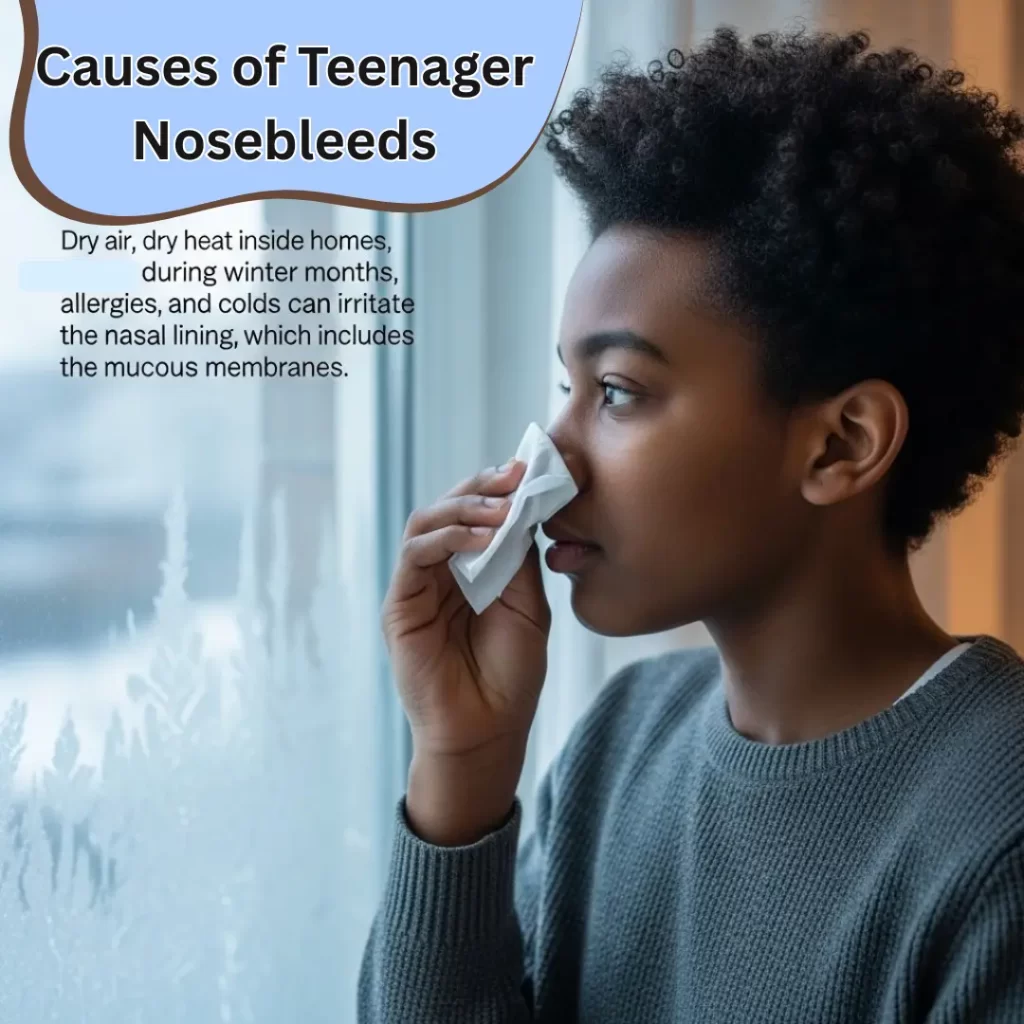
It’s common for teens to get random or frequent nosebleeds, but when they happen often, parents start to worry. Most nosebleeds are caused by everyday things or even habits like nose picking. There are many possible causes of nosebleeds, ranging from environmental factors to underlying health conditions.
Common Causes:
- Dry Air and Indoor Heating: Dry air—especially in winter or heated homes—can dry out nasal passages and make bleeding more likely.
- Colds and Allergies: These irritate the nose and cause extra mucus, which can lead to bleeding.
- Nose Picking: A simple habit that can break tiny blood vessels inside the nose. In a child, frequent nose picking can be a common reason for nosebleeds.
- Forceful Nose Blowing: Blowing the nose too hard can do the same, irritating delicate tissues.
- Frequent Rubbing or Scratching: Repeated rubbing can damage the nasal lining and cause bleeding.
- Medications: Blood thinners, anti-inflammatories, or nasal sprays can increase the chance of nosebleeds.
- Environmental Irritants: Smoke, strong odors, or pollution can irritate nasal tissues.
- Injuries: Even a slight bump to the nose can trigger bleeding.
- Upper Respiratory Infection: Colds, allergies, and sinus infections can irritate and inflame the nasal passages, making them prone to bleeding.
Less Common Causes:
- Foreign Objects: If something gets stuck in the nose, it can damage the inside and cause bleeding.
- Deviated Septum: A crooked nasal wall can make one side of the nose more sensitive and prone to nosebleeds.
- Tumors: Rare, but one example is juvenile angiofibroma, which affects adolescent boys. Children with this condition might experience frequent nosebleeds.
- Bleeding Disorders: Conditions that affect blood clotting can make nosebleeds frequent or harder to stop.
- Vitamin Deficiencies: Low levels of Vitamin C or K can impact blood vessel health and clotting ability. Some rare causes might be responsible for frequent nosebleeds, especially if other symptoms are present.
When to Be Concerned About Nosebleeds in Teenagers

Most nosebleeds are harmless, but there are times when parents should take them seriously. If your teen has frequent nosebleeds, or if you notice any of the following, you need to call your healthcare provider:
- Frequent Nosebleeds: If your teen gets nosebleeds more than once a week, or they’re hard to stop with basic care.
- Heavy Bleeding: If blood keeps flowing down the throat or doesn’t stop after 20–30 minutes of firm pressure.
- After a Head Injury: If the nosebleed happens after a blow to the head, it could mean something more serious.
- Other Symptoms: If your teen feels dizzy, weak, has trouble breathing, or vomits from swallowing too much blood.
- Underlying Conditions: If they have a bleeding or clotting disorder, that makes stopping the bleeding harder.
- Possible Drug Use: If you suspect nosebleeds are related to snorting substances, it’s essential to seek help.
See your health care provider if nosebleeds are frequent, severe, or associated with other symptoms, as you might need further evaluation or treatment.
How to Stop a Nosebleed
If your teen gets a nosebleed, stay calm—most stop on their own with a bit of care at home:
- Pinch the Soft Part of the Nose: The first step is to use your thumb and index finger to pinch the soft part of the nostrils, just below the bone, for about 10 minutes without checking. If the bleeding continues, apply pressure again and hold for up to 15 minutes.
- Sit Up and Lean Forward: Keep your teen upright and leaning slightly forward. This prevents blood from running down the throat, which can cause nausea or vomiting.
- Spit Out Blood: If blood gets in the mouth, have them spit it out instead of swallowing it.
- Use a Cold Compress: Gently place a cold pack or cloth on the nose to slow blood flow and help clotting.
- Avoid Stuffing Tissues: Don’t put tissues or cotton inside the nostrils—it can make things worse.
- Keep the Nose Moist:Once the bleeding has stopped, you can use a saline spray or a light ointment to keep the nasal passages moist and reduce the chance of irritation.
If these home steps do not stop the bleeding, healthcare providers may use gauze to pack the nose and control the bleeding.
Teens and parents should try home remedies first, but if nosebleeds are frequent or do not stop, further treatment may be necessary. Always seek medical attention if home treatment does not work or if you are concerned about recurring nosebleeds.
What Not to Do After a Nosebleed

Your teen’s nose needs time to heal—follow these tips to protect it and prevent another bleed:
- Don’t let your teen blow their nose: Blowing can break the clot and restart the bleeding.
- Stop them from picking their nose: Picking irritates the healing tissue and can cause a new nosebleed.
- Keep them away from strenuous activities: Avoid sports, heavy lifting, or intense workouts—anything that raises blood pressure can trigger bleeding.
- Avoid hot drinks and alcohol: Heat widens blood vessels, and alcohol thins the blood, making another nosebleed more likely.
- Don’t let them lie flat: After the bleeding stops, keep them upright or have them sleep with their head raised on extra pillows. This helps prevent pressure and keeps blood from pooling.
- Remind them to keep their head forward, not back: Tilting backward sends blood down the throat, which can make them feel sick or even throw up.
- Remind them to sneeze with their mouth open: This helps reduce pressure on the nasal passages.
- Don’t allow smoking: Smoke dries and irritates the nasal lining, slowing recovery.
- Check before using nasal sprays: Only use decongestants or antihistamines if approved by their doctor.
3 Simple Ways to Prevent Nosebleeds in Teenagers
Here are a few habits to try that can make a big difference in keeping your teen’s nosebleed-free:
Keep the Nose Moist
- Run a humidifier at night: Dry winter air or heated rooms can dry out nasal passages, so adding moisture to the air helps.
- Use saline spray or gel: A few spritzes of saline during the day keep the nose from drying out.
- Apply a thin layer of petroleum jelly: Gently dab inside the nostrils to protect sensitive tissue.
Avoid Things That Irritate the Nose&Sneeze gently
If your teen has to sneeze, remind them to open their mouth to reduce pressure.
Extra Tips That Help:
- Stay hydrated: Drinking water keeps tissues, including the nose, from drying out.
- Add iron-rich foods: Foods like lean meats and beans support healthy blood and reduce anemia-related nosebleeds.
- Trim fingernails: Short nails lessen the chance of scratching the inside of the nose.
How Avocado Health Helps You Handle Your Teen’s Nosebleeds
When your teen has frequent nosebleeds, it’s normal to feel worried and unsure of what to do. Avocado Health offers instant parent coaching powered by AI and backed by experts, so you’ll know exactly how to stop the bleeding and prevent it from happening again. Get reliable support now at Avocado Health, because you don’t have to parent alone.
Conclusion
Nosebleeds in teens are usually harmless, but knowing how to treat them and prevent future episodes can be a big help. Simple habits like keeping the nose moist, avoiding irritants, and spotting warning signs help protect your teen’s health and give you peace of mind.
Frequently Asked Questions
Can puberty cause nosebleeds?
Yes, puberty can play a role in nosebleeds. Hormonal changes during this time can make the lining inside the nose thinner and more fragile.
On top of that, the extra blood flowing through the body during growth puts more pressure on tiny blood vessels, making them more susceptible to rupture.
What vitamin deficiency causes nosebleeds?
Nosebleeds can be caused by deficiencies in vitamin K and vitamin C. Vitamin K is involved in blood clotting so a lack of it can cause bleeding, including nosebleeds. Vitamin C is important for blood vessel strength and a deficiency can weaken them and cause nosebleeds.
Here’s a breakdown:
Vitamin K Deficiency:
Vitamin K produces proteins that help blood clot.
When deficient it can cause prolonged bleeding from cuts, wounds and nosebleeds.
Vitamin C Deficiency:
Vitamin C produces collagen which reinforces blood vessel walls.
A shortage can cause blood vessels to weaken and rupture and cause nosebleeds.
Signs of vitamin C deficiency are easy bruising, bleeding gums and frequent nosebleeds.
Do nosebleeds mean low iron?
Iron deficiency anemia can also lead to uncontrolled bleeding. Prolonged anemia may cause noticeable physical changes in your body, making you more prone to frequent nosebleeds.
What foods trigger nosebleeds?
Foods to Avoid for Frequent Nosebleeds: Chili, mustard, onions, and pepper can create internal heat that irritates and damages the mucous membranes lining blood vessels. Lychees, longans, and mangoes are also considered high-heat foods.
What drink is good for nosebleeds?
Good options include water, juice, and other caffeine-free beverages. After a teenager experiences epistaxis, some blood may flow down the back of the throat into the stomach.
Can stress cause a nosebleed?
Nosebleeds are usually caused by physical things like dry nasal passages or injury, but some evidence suggests stress, too. Stress can make the body release hormones that raise blood pressure and heart rate, and cause blood vessels to dilate and bleed.