
What helps toddlers with constipation includes increasing water intake, boosting fiber-rich foods (fruits like pears and prunes, vegetables, and whole grains), and reducing dairy consumption. Encourage regular, relaxed toilet routines with a footstool to help with proper positioning. For persistent issues, contact a pediatrician. Learn how to recognize the symptoms, causes, and effective strategies to relieve constipation and promote regular bowel movements.
How Common Is Constipation In Toddlers?
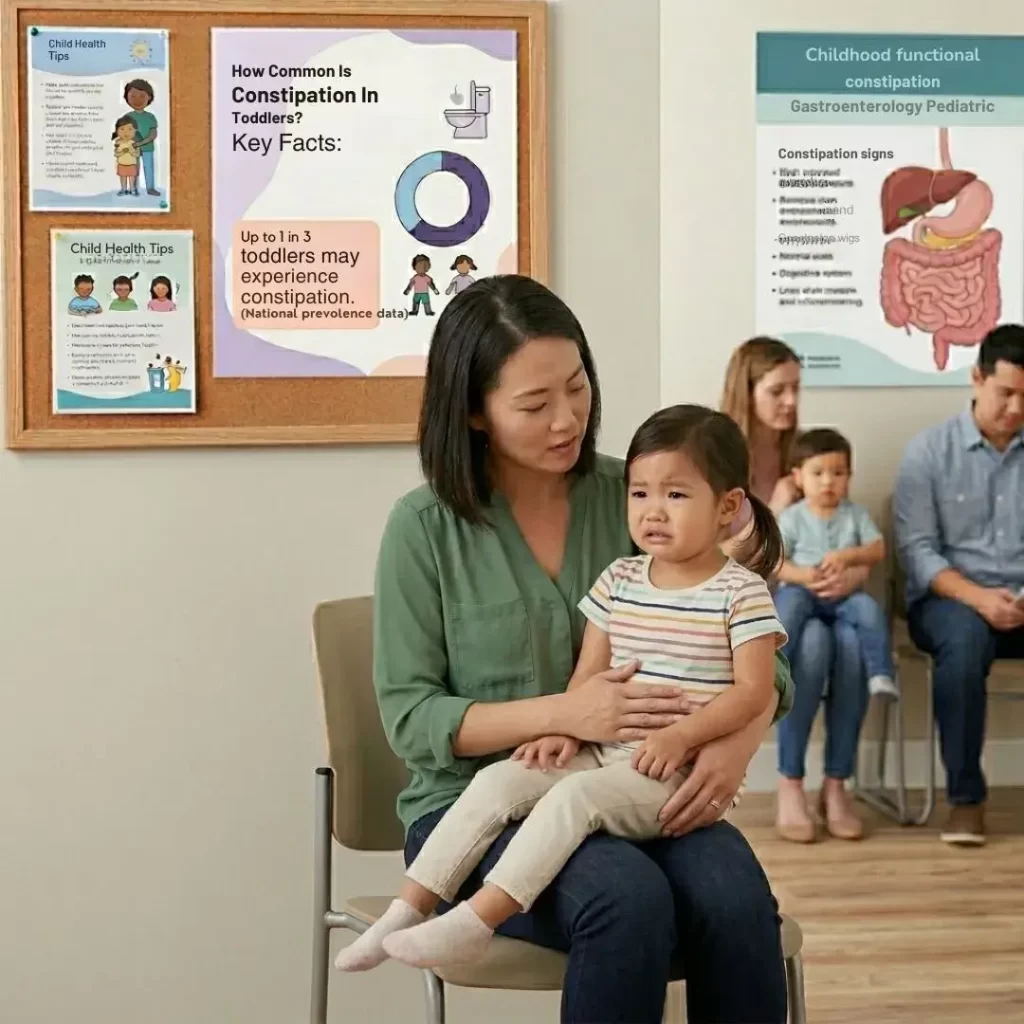
Constipation in toddlers is very common, with estimates indicating a prevalence of up to 30% in children, according to the American Academy of Family Physicians (AAFP).1 In fact, roughly 1 in every 20 visits children make to a doctor is because of constipation.
It is frequently functional (meaning it is caused by behavioral issues such as withholding or diet rather than an underlying disease), often peaking between ages 2 and 4, largely due to toilet training, dietary changes, and stool withholding.
What Helps Toddlers With Constipation?
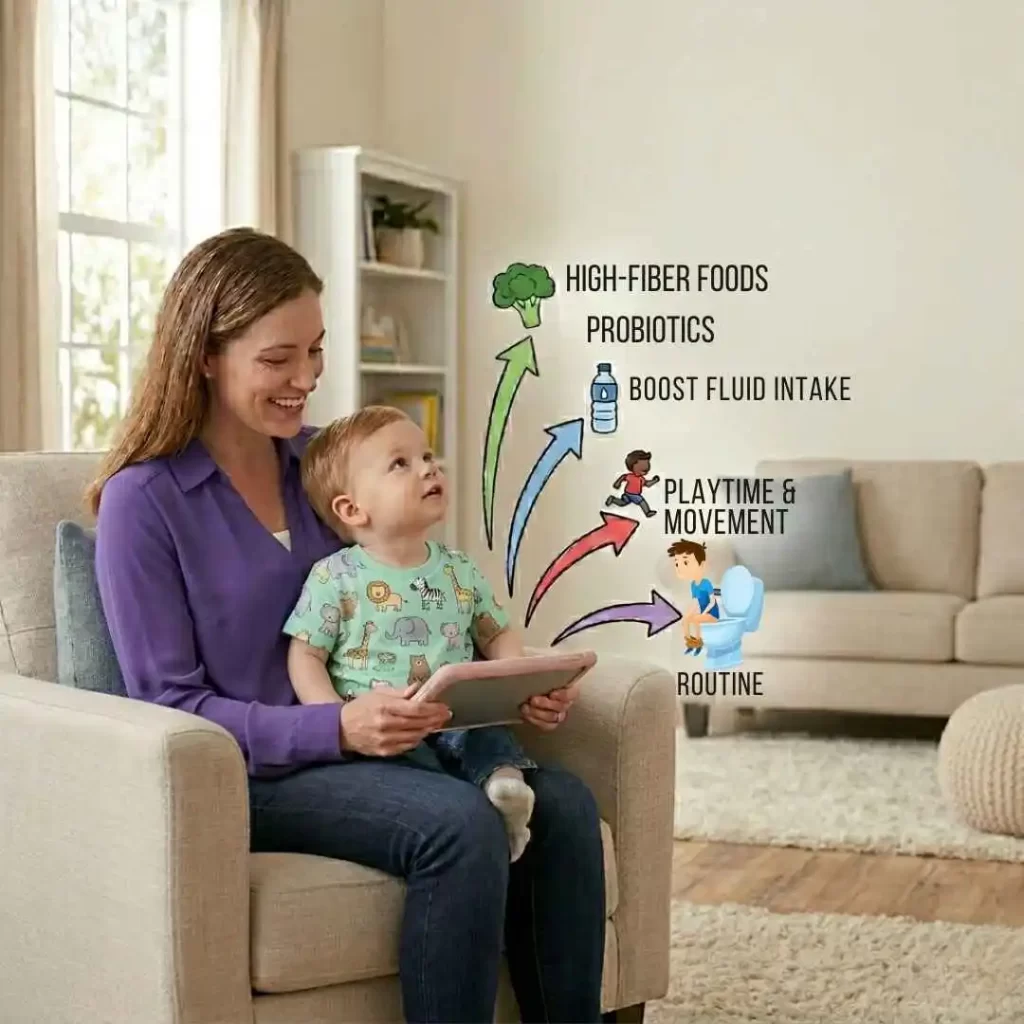
One of the most effective ways to treat constipation in toddlers is through dietary and lifestyle changes.
What is a natural laxative for toddlers?
A well-balanced, fiber-rich child’s diet is essential for maintaining healthy bowel movements and preventing constipation. Here are some natural laxatives and home remedies that can help:
- Increase Fiber Intake: Include plenty of high-fiber foods such as fruits and vegetables, whole grains like whole-wheat bread and brown rice, and other fiber-rich foods. These add bulk to stools and stimulate bowel movements.2
According to a 2025 study published in Frontiers in Nutrition, children with functional constipation showed significant reductions in abdominal pain, bloating, and straining after a targeted dietary fiber intervention, which helped restore more comfortable, spontaneous bowel movements.
- Probiotics: Some dairy products, like yogurt, are good sources of probiotics, such as Bifidobacterium and Lactobacillus, which can support digestive health and help manage constipation.3
- Boost Fluid Intake: Encourage your child to drink more fluids, especially water, throughout the day to stay hydrated and soften stools. Making sure that children drink enough water every day is crucial to preventing constipation.
- Encourage Physical Activity: Regular play and movement help promote digestive health and stimulate the digestive system.4
- Try Gentle Abdominal Massage: Gentle abdominal massage can help relieve the child’s constipation by stimulating the intestines and easing discomfort.
- Consider Over-the-Counter Remedies: If dietary and lifestyle changes aren’t enough, pediatricians frequently recommend osmotic laxatives (such as polyethylene glycol). This medication safely attracts water into the digestive tract to hydrate and soften stools. Traditional stool softeners (like docusate sodium) are also an option, but usually less effective. 5

Stool softeners retain water in the stool, making it easier to pass, while osmotic laxatives attract water into the digestive tract to hydrate and soften stools.
- Toilet Routine: During toilet training, encourage your toddler to sit on the toilet for 5–10 minutes after meals to promote regular bowel habits.
- Footstool: Use a small stool to elevate the child’s knees above their hips for better posture. A footstool allows the child to sit comfortably with feet supported, which helps relax the rectal muscles and facilitates easier passage of stools.
- Important: Always consult your pediatrician before starting any medication. Use stimulant laxatives cautiously and only under medical supervision due to potential side effects.
Is your toddler struggling to poop?
For Safe, Fast Relief Tips
How Does A Toddler Act When Constipated?
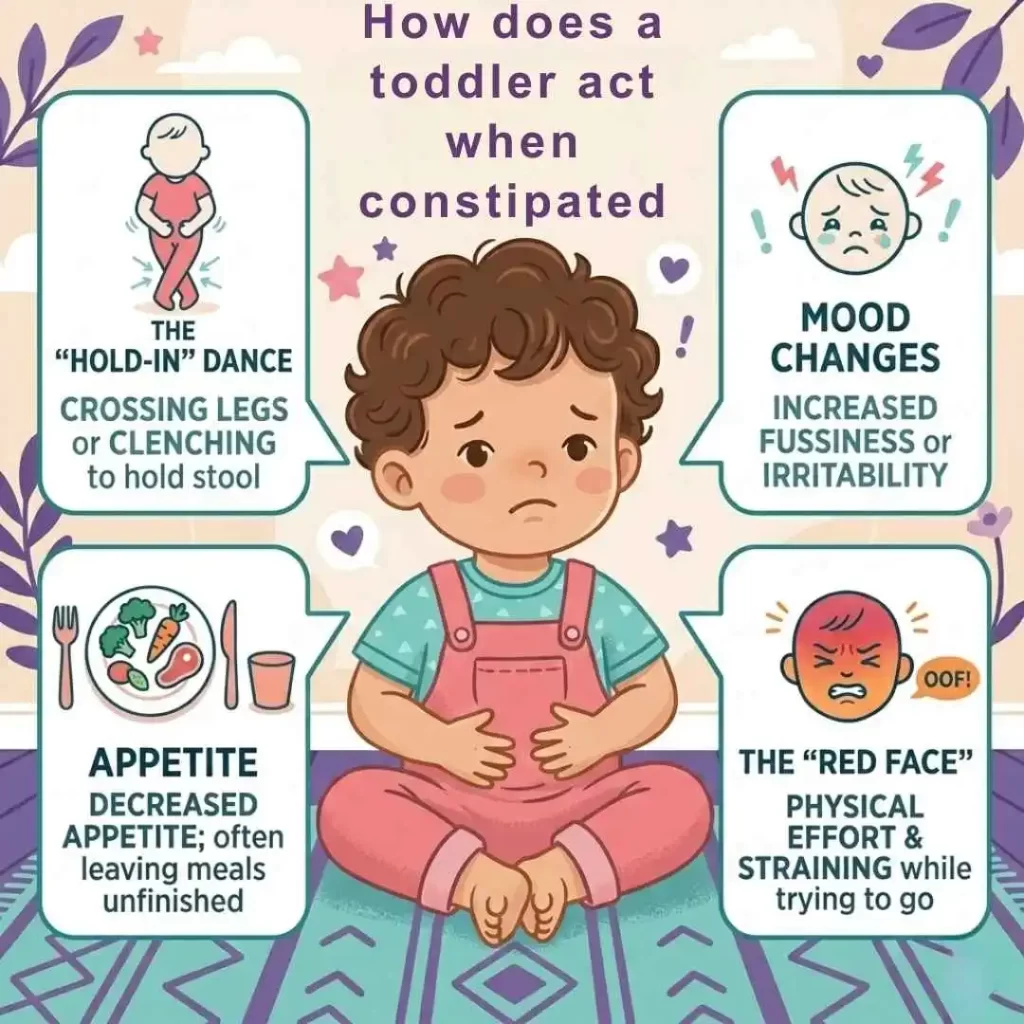
Constipation in children is common in their early years. It typically involves fewer bowel movements than usual, with stools that are hard, dry, and painful to pass. This discomfort often leads children to withhold stool out of fear, which can worsen the condition.
Common constipation symptoms include:
- Straining, crying, or turning red during attempts.
- Belly pain, bloating, and fussiness.
- Physical signs of holding it in, such as crossing legs, squeezing buttocks, clenching, or hiding to avoid passing.
- Decreased appetite.
- Liquid stool is leaking into the underwear around the impacted waste.
It is important to identify constipation symptoms early to prevent severe constipation and related complications such as anal fissures or stool leakage.
Related Articles: How to stop toddler from grinding teeth
How To Tell If A Toddler Has Impacted Stool Or Painful Bowel Movements?
Children who are impacted are often unable to pass any formed poos at all. A common symptom of a child’s constipation is dry stools, which are often difficult to pass. They tend to pass loose, mushy, or semi-solid poos, sometimes numerous times per day. They may also pass small hard bits of stool. They often do this without any awareness and so will deny it has happened. 6
What High Fiber Foods Help Toddlers Poop?
A well-balanced, fiber-rich child’s diet is essential for maintaining healthy bowel movements and preventing constipation. Some excellent fiber-rich options for toddlers include:
- Fruits such as pears, prunes, apples (with skin), and berries.
- Vegetables like broccoli, peas, and leafy greens.
- Whole grains such as whole wheat bread, brown rice, and oatmeal.
What Is The Main Cause Of Constipation In Toddlers?
Not enough fiber-rich fruits and vegetables, or not enough fluid in your child’s diet, may cause constipation. Kids’ constipation often results from a mix of dietary factors, low fluid intake, and sometimes emotional or behavioral issues.
- Common causes:
- Transitioning from liquid to solid foods.
- Withholding stool due to fear or discomfort, especially in older children at school or camp.
- Changes in routine, like traveling or starting school.
- Post-infectious functional constipation after stomach illness.
- Stress and anxiety affect digestion.
- Possible underlying health issues:
- Digestive and kidney diseases.
What Foods Should I Avoid When My Toddler Is Constipated?
The worst foods for toddler constipation are low-fiber, processed, and high-fat items that slow digestion, including:7
- Excess Dairy: Too much milk can contribute to constipation in some children. However, certain dairy products, such as yogurt, contain probiotics that may support digestive health and help manage constipation.
- Refined Grains: White bread, white rice, white pasta, and crackers.
- Processed Snacks & Fast Food: Chips, nuggets, pretzels, and fast-food meals.
- Specific Fruits/Foods: Unripe (green) bananas, applesauce, and white potatoes.
- Processed Meats: Hot dogs and lunch meats.
- Sweets: Cakes, cookies, and pastries.
How Long Is Too Long For A Toddler To Be Constipated?
Constipation in toddlers is generally considered prolonged if it lasts more than two weeks. While occasional constipation can be common and often resolves with simple dietary and lifestyle changes, persistent constipation may indicate the need for further evaluation and treatment.
What Can Be Mistaken For Constipation In Toddlers?
Constipation in toddlers is frequently mistaken for diarrhea, stomach flu, or behavioral issues due to overlapping symptoms.
- Diarrhea or Soiling (Overflow Encopresis): When a child is severely constipated, liquid stool from higher in the colon leaks around the hard, impacted stool, leading parents to believe the child has diarrhea.
- Stool Withholding Behaviors: Toddlers may tense their muscles, stand on tiptoes, rock back and forth, or cross their legs to avoid passing hard, painful stools. Parents often mistake this “poopie dance” for pushing or trying to poop.
- Stomach Flu or Infection: Symptoms like vomiting, reduced appetite, and severe abdominal pain/cramping are common to both constipation and stomach viruses (gastroenteritis).
- Urinary Tract Infections (UTIs): The pressure from a rectum filled with stool can cause bladder dysfunction, leading to daytime/nighttime accidents and recurrent UTIs.
- Anal Fissures: Hard, painful stools can cause small tears (fissures) in the anus, resulting in blood-streaked stool that might be mistaken for a more severe intestinal infection.
- Behavioral Changes: Extreme irritability, “crankiness,” and reduced appetite can be mistaken for a cold or behavioral issue rather than physical discomfort from constipation.
When To Worry About Toddler Constipation?
While occasional constipation is common in toddlers and often resolves with simple home care, there are certain signs and symptoms that indicate it’s time to seek medical advice.
- Lasts longer than two weeks despite dietary and lifestyle changes.
- It is accompanied by severe abdominal pain or stomach pain that causes significant discomfort.
- Includes blood in the stool or on the toilet paper after wiping.
- Leads to stool leakage or soiling, which may indicate overflow due to impacted stool.
- Causes the child to have difficulty sitting comfortably or shows signs of distress when trying to pass stools.
- It is associated with large stools that are hard and painful to pass.
- Occurs alongside other symptoms such as loss of appetite, vomiting, or weight loss.
- It is related to withholding behaviors where the child avoids sitting on the toilet or resists bowel movements due to fear of painful bowel movements.
Conclusion
By combining dietary improvements, hydration, physical activity, proper toilet training techniques, and medical guidance when needed, parents can successfully relieve constipation in toddlers and help their child develop good bowel habits that support long-term digestive wellness.
Frequently Asked Questions
What juice makes toddlers poop?
Apple juice and pear juice are commonly recommended as gentle natural laxatives for young children. These juices contain sorbitol, a sugar alcohol that draws water into the intestines, softening the stool and promoting easier passage. Prune juice is another effective option, known for its higher fiber content and natural laxative properties, making it especially helpful for toddlers experiencing constipation.
Can a toddler throw up from constipation?
A toddler can vomit from severe constipation. When stool becomes backed up in the large intestine (fecal impaction), it can cause significant abdominal pressure, pain, and nausea, leading to vomiting.
What if my 2-year-old hasn’t pooped in 4 days?
The AAP recommends contacting your child’s doctor if your tot hasn’t pooped in two to three days or if passing a stool hurts.
Does a warm bath help constipation in a toddler?
A warm bath not only relaxes the body but can also help stimulate bowel movements in kids. Ensure the water is comfortably warm, and let your child soak for about 15-20 minutes. The combination of warmth and water pressure can encourage a bowel movement.
Sources:
- Functional constipation in children: challenges and solutions
- Effects of dietary fiber on Chinese children with functional constipation and targeted modification of gut microbiota and related metabolites
- Adjunctive efficacy of Bifidobacterium animalis subsp. lactis XLTG11 for functional constipation in children
- The significance of the gut microbiome in children with functional constipation
- A narrative review on the diagnosis and management of constipation in infants
- Chronic constipation in infants and children
- Eating, Diet, & Nutrition for Constipation in Children