

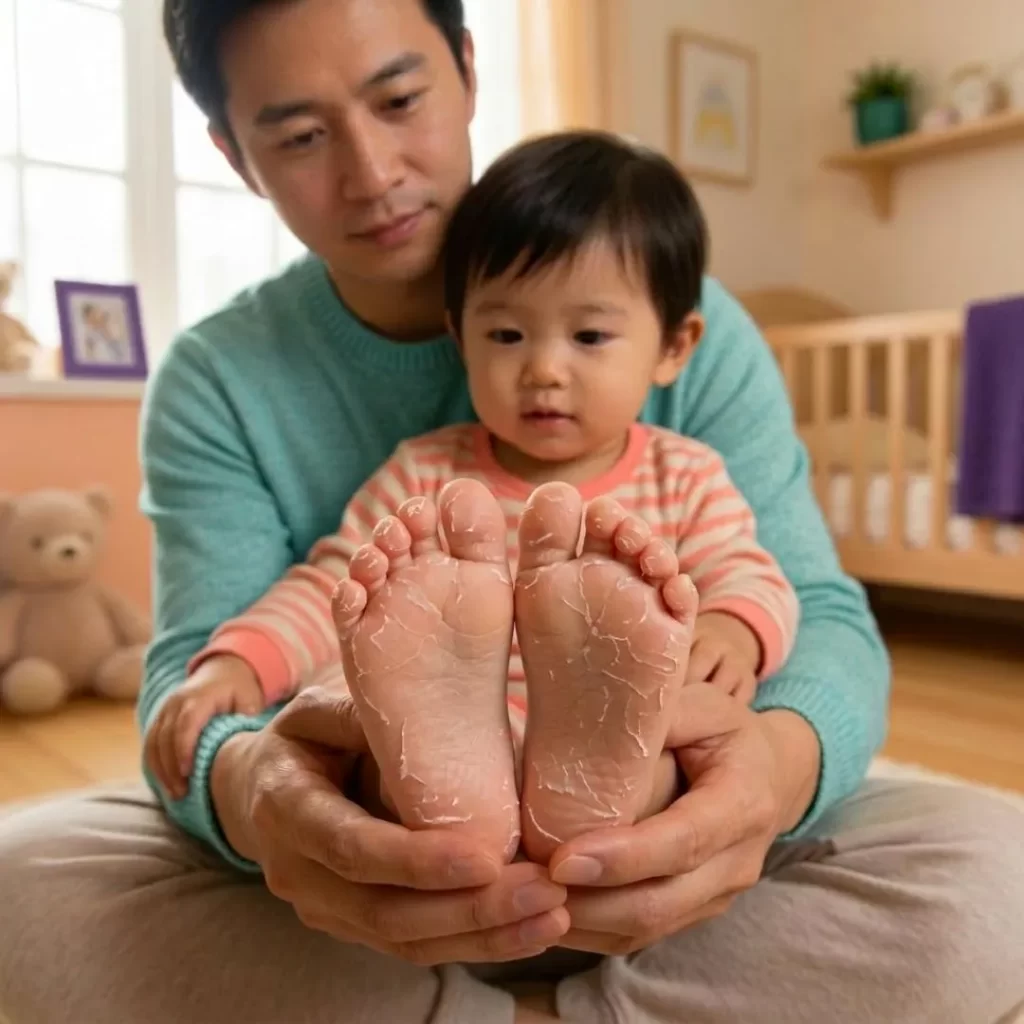
Why are my toddler’s feet peeling? This is commonly caused by benign factors such as dry skin, friction from running barefoot, or sweaty feet. Other common reasons include athlete’s foot (a fungal infection), eczema, or a reaction to new shoes or detergents. While often harmless, peeling can also stem from skin peeling syndrome or, rarely, from infections such as scarlet fever or Kawasaki disease. Learn why it happens, how to stop it, how to prevent it, and when you need to call your doctor.
Table of Contents
Why Are My Toddler’s Feet Peeling? 9 Common Causes
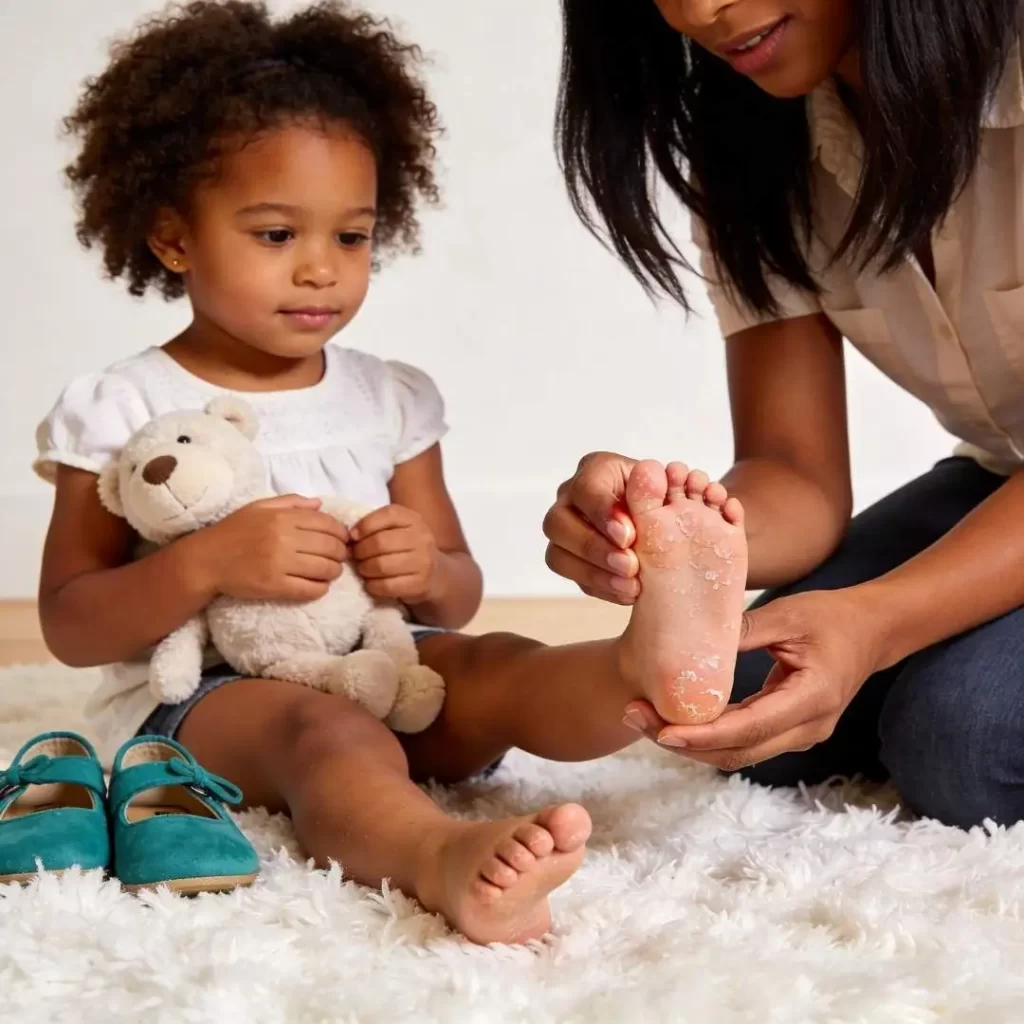
It can be alarming to see skin shedding from your little one’s toes, but a child’s feet peeling is frequently caused by minor, everyday factors. Most often, the culprit is simple dryness, friction from playing barefoot on rough surfaces, or moist skin caused by sweaty socks.
Common Reasons for Peeling Feet:
- Growth Spurts & Natural Turnover: As children grow, their feet grow, and their skin can shed faster. The skin typically regenerates itself, and dead skin sloughs off at the end of the cycle, which can lead to peeling if the feet are not washed regularly.1
- Dry Skin & Friction: Walking barefoot, in dry air, or a related type of skin damage.
- Excessive sweating due to hyperactive sweat glands
- Excessive washing or harsh soaps can strip away natural oils, leaving the skin dry and prone to peeling.
- Juvenile Plantar Dermatosis: Also known as ‘sweaty sock syndrome’, this common condition causes dry, shiny, or peeling skin on the soles due to sweat-drying cycles. Children aged 3–14 are particularly susceptible to this condition due to non-breathable shoes and sweating.
- Athlete’s Foot (Fungal Infection): Very common, causing redness, peeling, itching, and scaling.2
- Eczema or Allergies: Contact dermatitis from new socks, shoes, or detergents.3
- Post-Viral Infection: Peeling can occur after illnesses like Hand, Foot, and Mouth Disease.4
- Sunburn or blisters develop: If they have been playing outside barefoot. Peeling skin on a child’s feet often appears as mild flaking, particularly in summer.
Peeling feet in children may look dramatic, but most cases aren’t painful.
Related Article: What Helps Toddlers With Constipation? 7 Natural Remedies
How To Treat Peeling Feet In Toddlers?
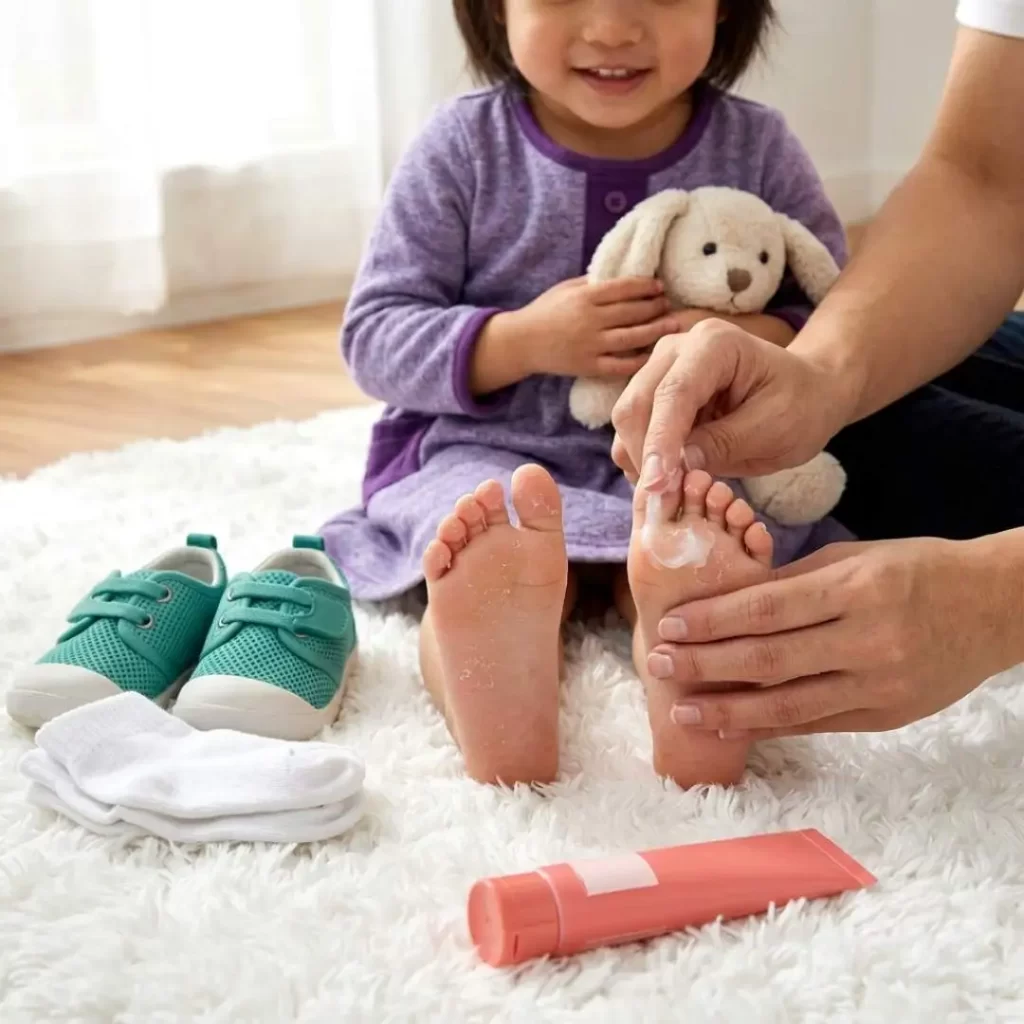
As children grow, their feet require different types of care. To stop toddler foot peeling, apply a thick moisturizer (petroleum jelly) daily, especially at night, then wear cotton socks.
How to stop toddlers’ feet from peeling?
- Moisturize Frequently: Apply thick creams, ointments, or petroleum jelly to the soles of the feet multiple times a day.
- Nighttime Treatment: Apply a heavy layer of Vaseline or a similar ointment before bed, then cover with socks to lock in moisture.
- Breathable Footwear: Use cotton socks and shoes that allow air to circulate, avoiding synthetic materials and rubber soles that trap sweat, for better foot health.5
- Keeping your toddler’s foot skin dry.
- Avoid putting on tight shoes; use protective shoes instead.
- Hygiene: Wash feet daily with gentle, non-soap cleansers to avoid removing natural skin oils.
- Protect Skin: If the skin is cracked, consider using a liquid bandage to protect it.
Keeping children’s feet healthy: Ensure shoes are breathable (avoid rubber), change socks immediately if sweaty, and use gentle, non-soap cleansers. For persistent peeling, consult a doctor, as it may indicate juvenile plantar dermatosis or a fungal infection.
Still unsure what is causing your toddler’s feet to peel?
Get fast, evidence-based
parenting guidance from
experts.
How to Prevent Peeling Feet in Kids?
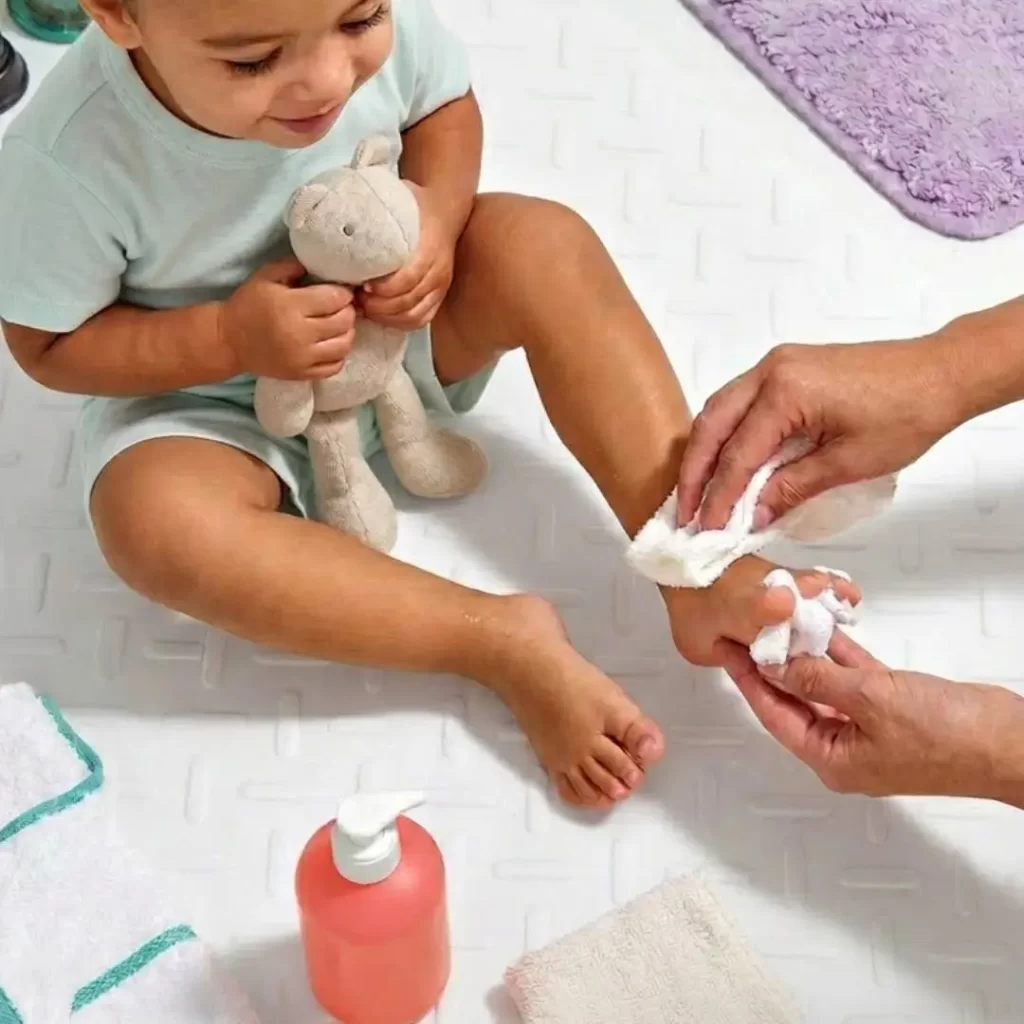
Preventing peeling feet in toddlers and young children requires a combination of good foot care habits, proper hygiene, and appropriate footwear. Here are some effective strategies to help keep your child’s feet healthy and free from peeling skin:
- Maintain Proper Hygiene: Wash your child’s feet daily using gentle, non-soap cleansers to avoid stripping natural oils. Make sure to dry thoroughly, especially between the toes, to prevent moisture buildup that can lead to fungal infections like athlete’s foot.
- Moisturize Regularly: Apply fragrance-free, thick moisturizers or petroleum jelly to your child’s feet, especially after bathing and before bedtime. This helps keep the skin hydrated and prevents dryness that can cause flaky skin and peeling.
- Choose Breathable Footwear: Opt for shoes made of natural, breathable materials such as leather or canvas. Avoid rubber or synthetic shoes that trap sweat, as this increases the risk of skin irritation and peeling.
- Change socks frequently, especially if they become damp, and use moisture-wicking cotton socks to keep feet dry.
- Avoid Tight Shoes or Socks: Tight footwear can cause friction and restrict airflow, leading to skin irritation and peeling. Ensure your child’s shoes and socks fit well, allowing the feet to feel comfortable and move freely.
- Protect Feet from Irritants: Be cautious with new detergents, lotions, or topical creams that might cause allergic reactions or contact dermatitis. Use hypoallergenic products when possible and monitor your child’s skin for any signs of sensitivity.
- Monitor for Excessive Sweating: Excessive sweating can contribute to peeling feet, especially in children prone to juvenile plantar dermatosis. Keep feet dry by changing socks regularly and allowing shoes to air out between uses.
- Encourage Foot Stretching and Movement: For babies and toddlers, allow their feet to stretch and kick freely without restrictive footwear to promote healthy development and comfort.
- Seek Early Medical Advice: If you notice persistent peeling, redness, pain, or signs of infection, such as pus or swelling, seek prompt counsel from a podiatrist or pediatrician. Early intervention can prevent medical problems and ensure appropriate treatment technologies are applied.
By following these preventive measures, you can help maintain your child’s healthy feet, avoid irritants that can cause peeling, and reduce the risk of other serious conditions that may be behind peeling skin.
Remember, keeping children’s feet healthy during growth stages plays a vital role in preventing medical problems later in life, including leg and back issues.6
Related Article: How to get toddler to stop sucking thumb
Does HFM cause peeling skin?
Yes, it is very common for the skin to peel after Hand, Foot, and Mouth Disease. While the actual rash usually lasts about 10 days, the peeling typically appears as a latent process that occurs after the initial blisters have healed.7
You might notice the skin on your toddler’s palms, soles, or even around their fingertips starting to flake away. It looks a bit intense, but it is just the body’s way of shedding the old, affected skin to make room for the healthy layer underneath.
The most important rule for this stage: don’t pick at it. Even though it’s tempting to help the process along, picking can irritate the tender new skin or lead to a secondary infection. Just let the skin fall off naturally.
If the peeling looks very dry or seems to bother your little one, a bit of gentle, fragrance-free moisturizer can keep the area soft while it heals.
Related Article: Does Hand Foot And Mouth Disease Cause Vomiting?
Can a 2-year-old get athlete’s Foot?
Yes, a 2-year-old can get athlete’s Foot, although it is less common in children under 10. It typically appears as dry, itchy, red, or peeling skin between the toes or on the soles. It is highly contagious and often caused by sweaty feet in tight shoes or contact with infected surfaces.
When To Worry About Peeling Feet In Toddlers?
You should seek medical care if the peeling is accompanied by any of the following:
- Signs of infection, such as pus, warmth, redness, or fever
- Severe cracking or pain that makes walking difficult
- Injury to the feet
- Peeling that persists for over 2 weeks despite moisturizing
- Rapidly spreading peeling or blistering
- Discomfort or fever
Early consultation with a podiatrist is important to:
- Use the newest diagnostic and treatment technologies
- Accurately identify and manage the underlying cause
- Keep your child pain-free and prevent complications
Remember, while most cases of peeling feet are benign, other serious causes, such as skin conditions or infections, may be present. Monitor your child’s feet closely and feel free to contact a specialist if you notice any concerning changes.
Conclusion
Peeling toddler toes and feet can look alarming, but most causes are common, treatable, and not dangerous. It is often caused by minor issues such as dry skin, friction, or post-viral shedding from Hand, Foot, and Mouth Disease, and it frequently appears weeks after recovery. Common treatments include the “soak and smear” technique with thick moisturizers, switching to cotton socks, and ensuring breathable footwear.
Frequently Asked Questions
How Long Will Peeling Last On Toddler Feet?
Peeling on toddler feet typically lasts 7 to 14 days, depending on the cause.
What Vitamin Deficiency Causes Peeling Feet In Toddlers?
Peeling feet in toddlers can be caused by deficiencies in Vitamin B3 (niacin), Vitamin C, Vitamin A, or Zinc, which lead to dry, cracked, and scaly skin. These deficiencies impair the skin’s ability to repair itself and maintain moisture.
Sources:
- Acral Peeling Skin Syndrome: Two Unusual Cases and the Therapeutic Potential of Botulinum Toxin
- Systematic Review of the Prevalence of Tinea Pedis in Children
- Footwear contact dermatitis in children
- Delayed Cutaneous Findings of Hand, Foot, and Mouth Disease
- Respectful Children’s Shoes: A Systematic Review
- Understanding the Role of Children’s Footwear on Children’s Feet and Gait Development: A Systematic Scoping Review
- Atypical cutaneous findings of hand-foot-mouth disease in children: A systematic review