

Why does my toddler’s breath stink? This condition, called halitosis, is most commonly due to poor oral hygiene, dry mouth, or food stuck in the teeth, which allows bacteria to build up. Other common causes include mouth breathing from a stuffy nose, sinus infections, tonsillitis, or a foreign object stuck in the nose. Learn about the causes of bad breath in toddlers, how to get rid of it, and when you need advice from a pediatric dentist.
Table of Contents
Why Does My Toddler’s Breath Stink? 11 Common Causes to Check
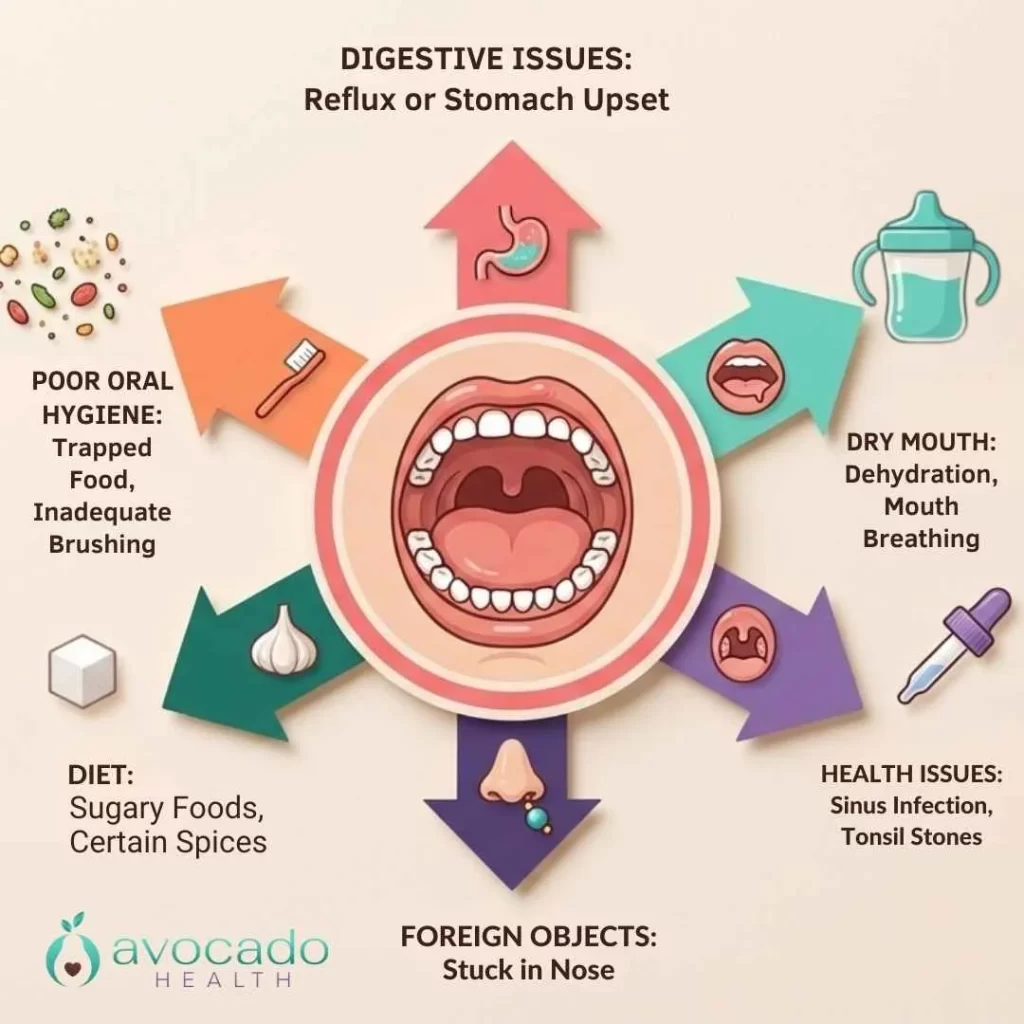
Bad breath in toddlers can have many causes. If your child’s breath smells bad, it’s important to consider a range of factors that may be affecting their oral cavity and overall oral health. Some of the most common culprits for stinky breath and yucky odors include:
- Poor Oral Hygiene & Plaque: Bacteria feed on food particles, causing a bad odor and sticky film (plaque) buildup on your child’s teeth. Tongue coating on your child’s tongue can also trap bacteria and contribute to a foul smell.1
- Dry Mouth: A healthy amount of saliva is crucial for washing away food debris and neutralizing cavity-causing acids. Reduced saliva allows bacteria to flourish. Dehydration leads to reduced saliva flow, so food particles and bacteria aren’t washed away as they should.
- Mouth Breathing: Often caused by colds, allergies, or enlarged adenoids, this dries out the child’s mouth and reduces saliva.2
Enlarged adenoids can block a toddler’s nasal airway, forcing them to breathe through their mouth while sleeping, which allows odor-causing bacteria to multiply.3 Nasal congestion and post-nasal drip can also contribute to mouth breathing and bad breath.
- Morning Breath: Morning breath occurs because saliva production decreases during sleep, allowing bacteria to accumulate overnight and cause an unpleasant odor when your child exhales.
- Infections: Throat infections (tonsillitis), sinus infections, or gum disease/cavities can cause persistent bad breath. Tonsil stones and visible white spots on tonsils are also possible sources of ongoing odor.
- Foreign Object: A small object stuck in the nasal passages can cause a very distinct, foul odor.
- Diet: Certain foods such as:
- Garlic, onions, strong spices, and spicy foods can leave your child’s breath smelling unpleasant for several hours after consumption.
- Toddlers who constantly “graze” or snack throughout the day don’t give their saliva enough time to wash away food particles and neutralize oral acids between meals, leading to rapid plaque buildup.
- Starchy foods and sugary snacks (like candies, chips, and cookies) provide a food source for bacteria in the mouth, leading to bad breath.
- High-protein foods like red meat, fish, and cheese can also contribute to odor.
- Drinking too much milk can coat the teeth and feed bacteria. At the same time, acidic fruits and vegetables can cause tooth decay and gum disease, which also lead to bad breath.
- When your child exhales, sulfur compounds from certain foods can be released through the lungs, causing a noticeable odor.
- Sticky Film & Tongue Coating: A sticky film (plaque) on teeth and a white coating on your child’s tongue are common causes of bad breath.
- Chronic Bad Breath: If your child has chronic foul breath (halitosis) that persists despite good oral hygiene, consult a pediatric dentist or pediatrician to rule out infections or other underlying issues.
- Health Conditions & Medical Conditions: Certain health conditions, such as diabetes, liver or kidney issues, and medical conditions like gastroesophageal reflux disease (GERD), can cause bad breath in toddlers. GERD allows stomach acid to flow back into the esophagus and mouth, leading to unpleasant odors.
- Certain Medications: Some medications can reduce saliva production, causing dry mouth and contributing to bad breath.
- Hand, foot, and mouth disease (HFMD) can cause bad breath. The mouth sores and blisters make it hard to swallow saliva or eat, which prevents proper oral hygiene. As a result, bacteria build up, causing unpleasant odors.
Related Articles: Does Hand Foot And Mouth Disease Cause Vomiting?
Worried About
Your
Toddler’s Bad Breath?
Get fast, evidence-based
parenting guidance from
experts.
How To Get Rid Of toddler Bad Breath?
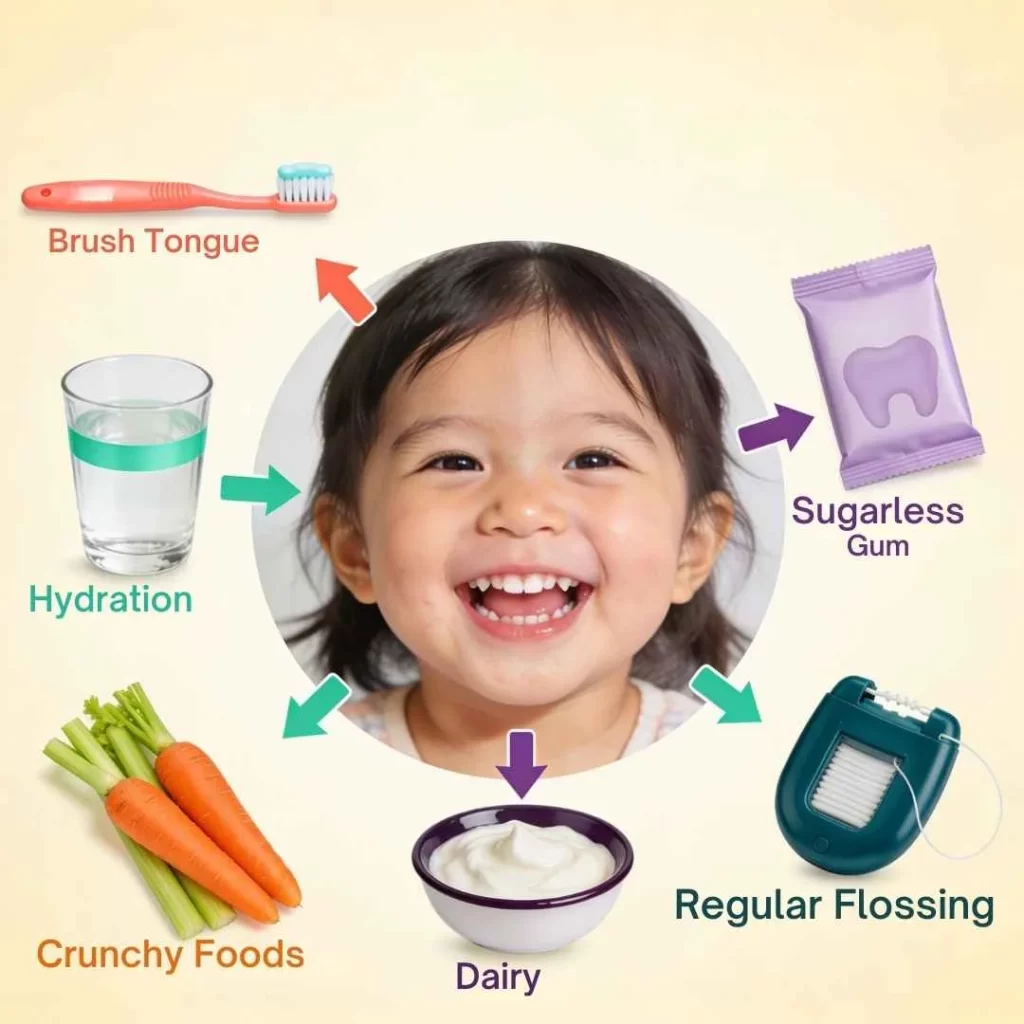
Make sure your child brushes their teeth and tongue twice daily with fluoride toothpaste, and supervise brushing until you are confident they can do it correctly on their own. Helping children learn proper brushing and flossing techniques encourages lifelong positive oral care habits and promotes overall oral health.
Increase water intake to boost saliva, and offer crunchy snacks like raw carrots or apples to scrape away bacteria. Consult a dentist if breath persists.
How do I stop my child’s breath from smelling?
- Brush the Tongue: Bacteria hide on the back of the tongue; gently brush it to remove odor-causing bacteria.4
- Hydration: Water flushes away food debris and reduces bacteria. Encourage drinking water throughout the day.
- Crunchy Foods: Raw vegetables and fruits (apples, carrots, celery) help naturally clean teeth and freshen breath.
- Sugarless Gum (for older children): Chewing sugarless gum, especially that containing xylitol, can help stimulate saliva production and reduce bad breath. Increased saliva helps wash away bacteria and food particles, promoting better oral hygiene and preventing cavities.
- Dairy: Yogurt or cheese can help reduce bacteria that cause bad breath.
- Regular Flossing: If teeth are close together, daily flossing is crucial to remove trapped food.
- Ensure pacifiers, toys, and especially sippy cups are meticulously clean. Mold, old milk, and bacteria can easily become trapped in the complex valves, straws, and spouts of toddler cups, directly introducing foul-smelling bacteria into their mouths.
Related Articles: What Helps Toddlers With Constipation? 7 Natural Remedies
Could Toddler Bad Breath Mean Cavities?
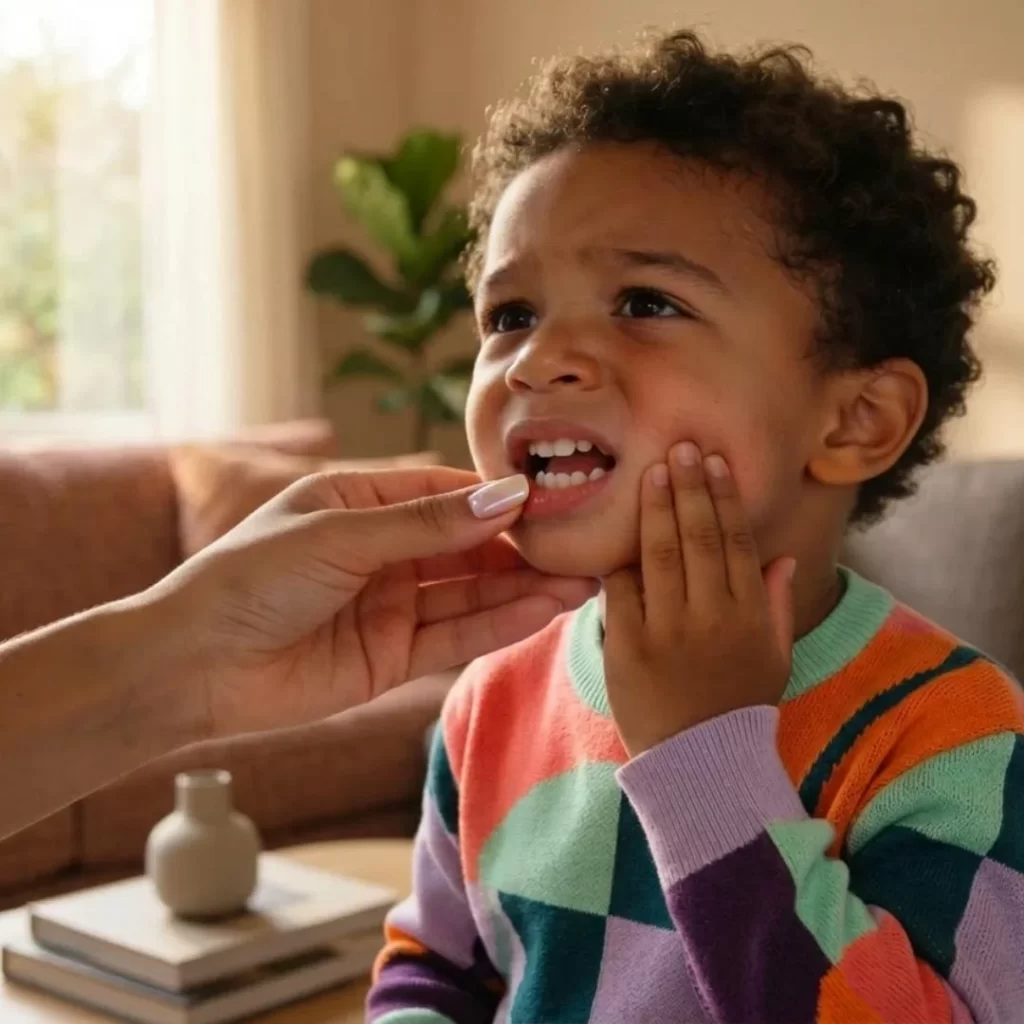
Yes, toddler bad breath can sometimes indicate cavities or tooth decay. Cavities create an environment where bacteria thrive, producing unpleasant odors that contribute to persistent bad breath.
When a cavity forms, food particles can get trapped in the damaged areas of the tooth, providing a breeding ground for smelly bacteria. This buildup not only causes an unpleasant smell but can also lead to tooth pain and other symptoms, such as bleeding gums or swelling.
Regular dental check-ups with your child’s dentist are important for early identification of oral care problems and prevention of bad breath. These visits help children get used to dental care and allow dental professionals to catch issues that may cause bad breath early on.
Related Articles: How To Stop Toddler From Grinding Teeth?
How Do I Improve My Toddler’s Oral Hygiene?
8 Ways to Fight Children’s Tooth Decay5
- Brush children’s teeth twice a day with the correct amount of safe, effective fluoride toothpaste.
- Use pacifiers safely until age 1.
- Offer only water at bedtime.
- Make sure children drink fluoridated water.6
- Eat a healthy, well-balanced diet.
Never let your toddler fall asleep with a bottle of milk or juice. Nighttime pooling of milk allows sugars to coat the teeth. At the same time, saliva production is low, allowing bacteria to feed aggressively and causing severe morning breath and tooth decay.7
Related Articles: How to get toddler to stop sucking thumb?
When Should I Be Concerned About My Toddler’s Bad Breath?
You should be concerned about your child’s bad breath if it is persistent, doesn’t improve with brushing/flossing, or is accompanied by symptoms like fever, pain, or thick nasal mucus. While often caused by poor oral hygiene or dry mouth, constant, foul-smelling breath can indicate dental decay, mouth sores, infections, or foreign objects in the nose.
Conclusion
Toddler’s bad breath usually comes from bacteria, dry mouth, or congestion. Regular brushing, including the tongue, along with flossing and plenty of water, can help. Offer snacks that are good for teeth, keep cups and pacifiers clean, and don’t forget to schedule dental check-ups. If the bad breath doesn’t get better or if you notice pain, fever, or swelling, reach out to a doctor.
Frequently Asked Questions
Is it normal for toddlers to have bad breath in the morning?
Yes, it is completely normal for toddlers to have bad breath in the morning, often called “morning breath”. This occurs because saliva production slows during sleep, allowing bacteria to multiply and cause odors. It usually disappears after brushing teeth or drinking water.
Why does my toddler have bad breath all of a sudden?
When there’s no saliva to wash away the bacteria in their mouths, halitosis sets in. Dry mouth can happen if your toddler breathes through their mouth. Other underlying ear, nose, and throat conditions can affect your toddler’s breath. Sinus infections, tonsillitis, and some seasonal allergies can cause bad breath.
What virus causes bad breath in children?
Certain viral infections, such as a first herpes infection, can cause bad breath in children.
Sources:
- Risk Factors, Diagnosis, and Management of Halitosis in Children: A Comprehensive Review
- Association between halitosis and mouth breathing in children
- Evaluation of Oral Health and Oral Health-Related Quality of Life in Children with Adenoid Hypertrophy
- Tongue brushing and oral probiotics for the treatment of halitosis: a randomized controlled trial
- Managing Early Childhood Caries: A Comparative Review of Preventive and Restorative Approaches
- Prophylaxis of caries with fluoride for children under five years
- Sugar consumption and early childhood caries: a systematic review and meta-analysis of cohort studies