

Why is my toddler peeing so much? It can happen because of small bladder capacity, extra fluids, cold weather, anxiety, constipation, bladder irritants such as acidic foods or caffeine, or a harmless phase called pollakiuria. Sometimes, frequent urination can also point to a UTI or, with excessive thirst and weight loss, diabetes. Learn how to manage bathroom trips, what to avoid, and when to call your pediatrician.
Table of Contents
How Many Times Urine Is Normal For A 2 Year Old?
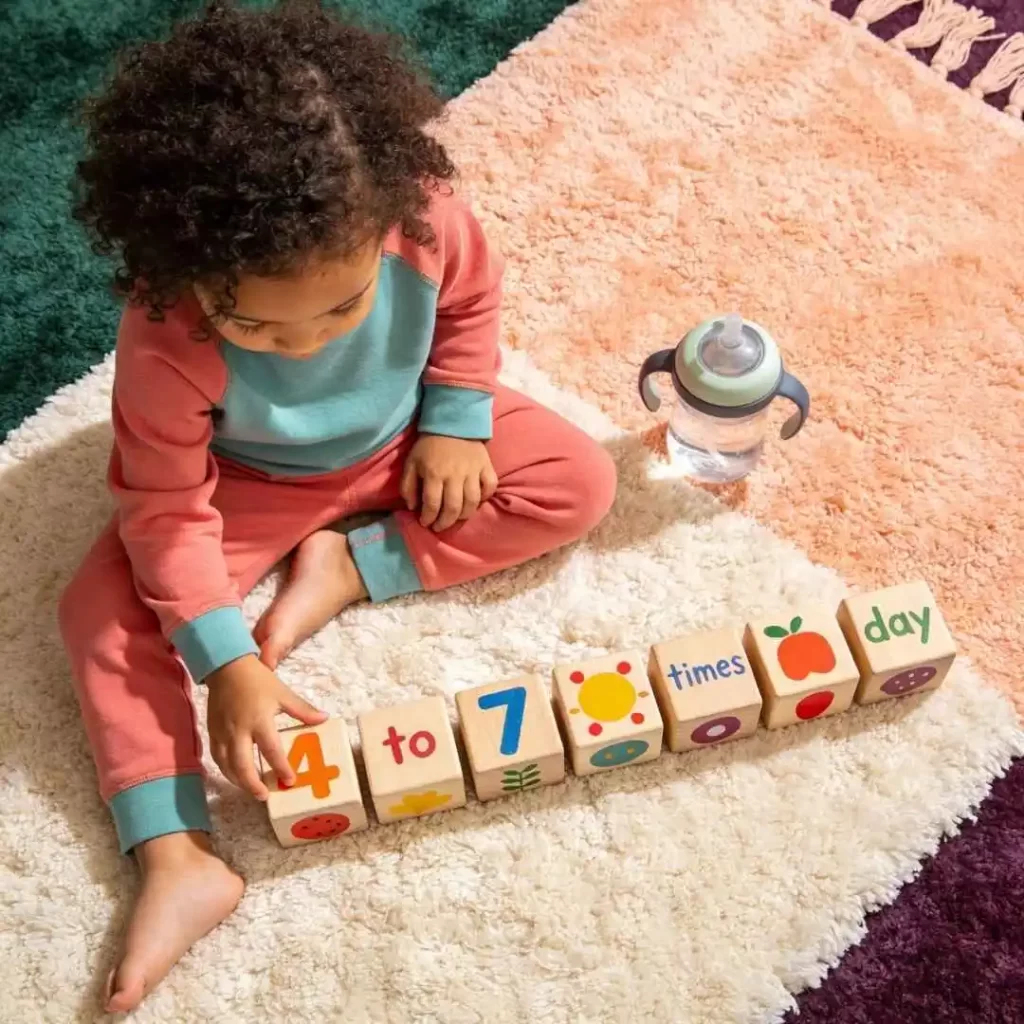
A child’s age and the size of the child’s bladder are important factors in determining what is considered normal urination frequency. Most children around the age of 2 typically urinate between four to seven times during waking hours.1 In general, children under age 3, urinating more frequently (up to 10–12 times) can still be normal depending on hydration and whether they are still in diapers.2
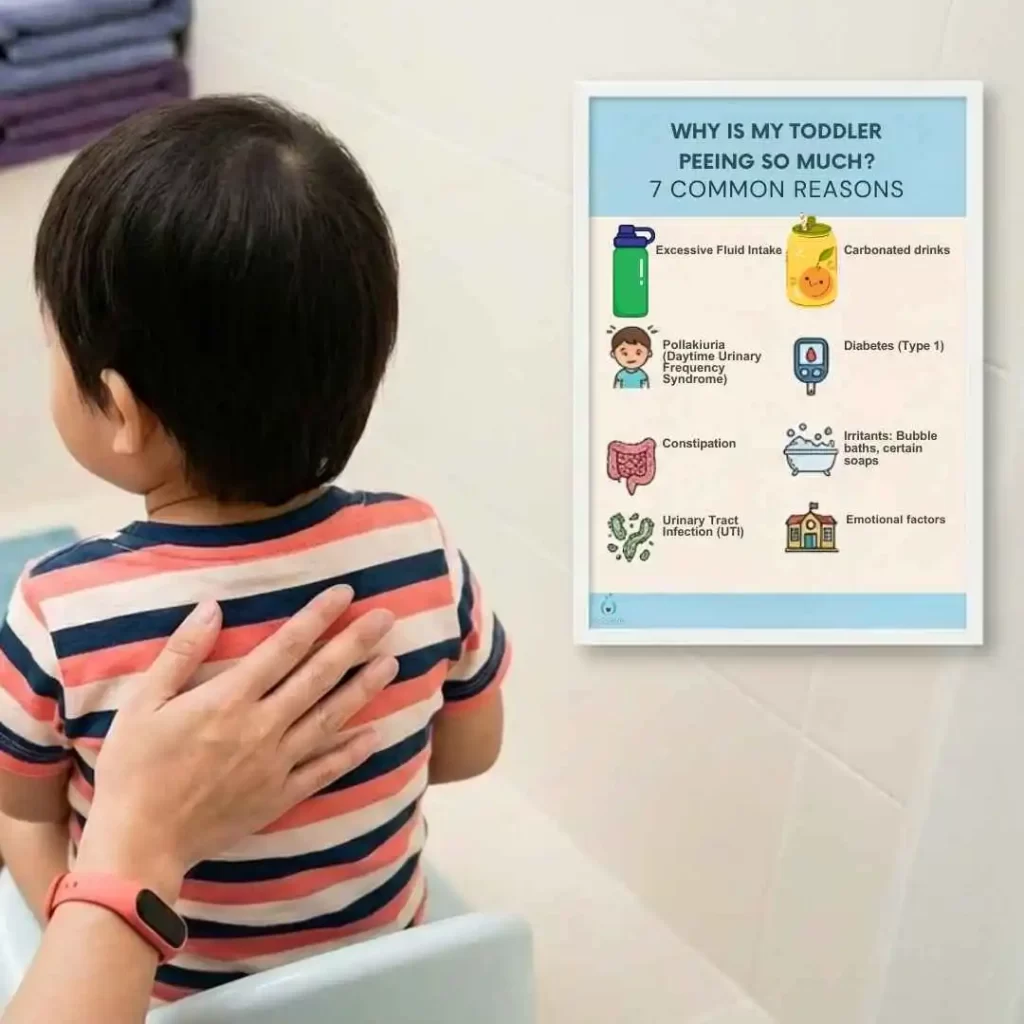
Why is my toddler peeing so much? 7 Common Reasons
Bladder problems and voiding dysfunction are possible causes of frequent urination in children. A child may experience a range of problems in children related to bladder control, including losing urine by accident, which is the main sign of a bladder control problem. Symptoms can include daytime wetting, daytime accidents, frequent daytime urination, a sudden need to urinate, or even infrequent urination, depending on the underlying cause.3
Common Reasons for Frequent Urination
- Excessive Fluid Intake: Simply drinking more water, or consuming beverages with caffeine (like some sodas or chocolate) and sugar, can naturally increase urine production.
- Pollakiuria (Daytime Urinary Frequency Syndrome): This is a harmless condition, often triggered by stress or anxiety in many cases, with no specific trigger ever found, where a previously toilet-trained child suddenly urinates very frequently (up to 40 times a day) but only in small amounts.
Frequent daytime urination is most common in school-aged children (ages 3 to 8). It typically resolves on its own within a few weeks to months.
- Constipation: A full rectum can press against the bladder, reducing its capacity and creating a frequent, urgent need to go, even when the bladder isn’t full. Up to 80% of children who have bladder control problems do so because they are constipated.
- Urinary Tract Infection (UTI): Bacteria can irritate the bladder, causing a frequent and urgent need to pee.
Watch for: Pain or burning while peeing, foul-smelling or cloudy urine, fever, and abdominal pain.
- Diabetes (Type 1): While less common, frequent urination (polyuria) is a hallmark sign of diabetes as the body tries to flush out excess sugar. Diabetes insipidus is a rare medical condition that leads to very large volumes of pale, watery urine due to improper fluid regulation.4
Watch for: Extreme thirst (unquenchable), unexplained weight loss, extreme hunger, and fatigue.
- Irritants: Bubble baths, certain soaps, artificial colors/dyes, carbonated drinks, or acidic foods can irritate the urinary tract, leading to a more frequent urge to urinate.
- Emotional factors: A child may also experience increased urination triggered by emotional factors, such as starting a new daycare or a new routine.
Still unsure what’s causing your child’s frequent urination?
Does Frequent Peeing In Toddlers Run In Families?
Frequent peeing and bedwetting in toddlers and children can be inherited, particularly when it is associated with specific bladder control issues or underlying medical conditions. While many cases are developmental or stress-related, a family history often increases the likelihood of a child experiencing similar symptoms.5
Hereditary and Genetic Factors
- Family History of Bedwetting: This is one of the most common bladder issues that runs in families. If one parent had bedwetting issues as a child, their child has a 33% chance of the same; if both parents did, the chance increases to 70%.
- Overactive Bladder (OAB): There is evidence suggesting a genetic link for overactive bladder and daytime accidents. Children are more likely to experience these symptoms if their parents did as children.
- Rare Genetic Disorders: Some conditions that cause high urine volume are inherited, such as:
- Diabetes Insipidus: Rare inherited mutations can affect how the body regulates fluids.
- Ochoa Syndrome: A rare autosomal recessive disorder that causes severe bladder dysfunction alongside unusual facial expressions.
- Genetic Hypercalciuria: An inherited mineral disorder that is frequently associated with urinary tract problems in children.
Related Articles: Does Hand Foot And Mouth Disease Cause Vomiting?
How Frequent Is Frequent Urination In Toddlers?
Frequent urination, also known as frequent daytime urination, is usually defined as needing to urinate more than eight times per day. This can vary depending on the child’s fluid intake, activity level, and overall health.6
If your toddler suddenly starts needing to go to the bathroom every hour, or if their frequency doubles or triples without an increase in fluid intake, it may be considered frequent urination and could signal an underlying issue. Keeping a log of your child’s urination patterns can help the pediatrician better understand the situation.7
Related Articles: Why Are My Toddler’s Feet Peeling? 9 Causes & When to Worry
How To Stop Frequent Urination In Toddlers?
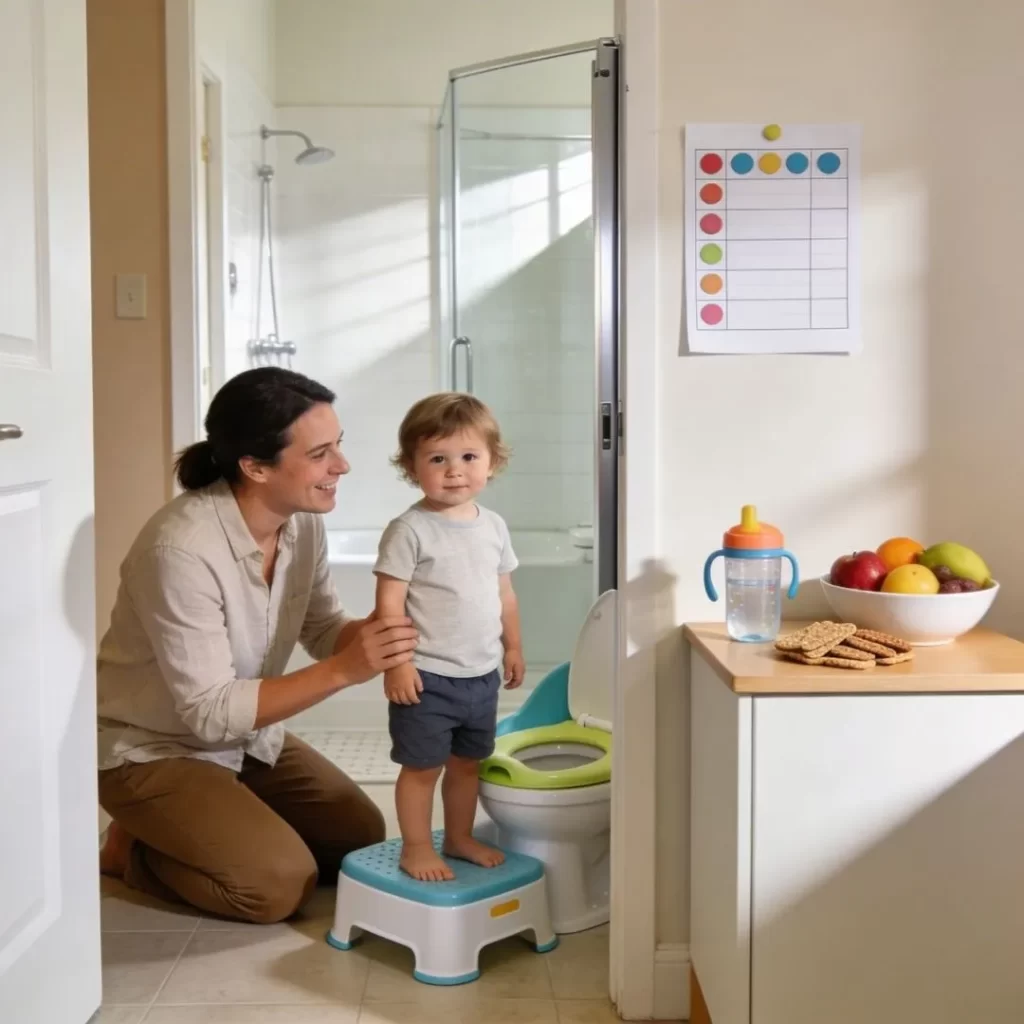
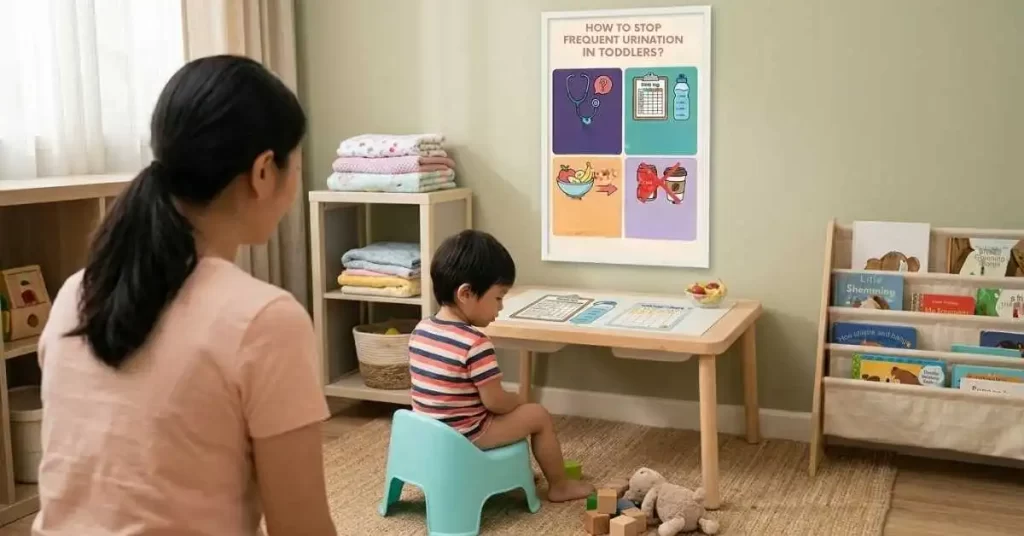
When addressing frequent urination in toddlers, it’s important to identify the underlying cause. Parents can help by monitoring their child’s fluid intake and bathroom habits, encouraging regular bowel movements to prevent constipation (which can press on the bladder and increase urinary frequency), and avoiding bladder irritants like caffeine and certain foods.
In some cases, bladder training exercises or physical therapy may be recommended to improve bladder function.8
Here are some effective strategies:
- Monitor Fluid Intake: While it’s important to keep your toddler well-hydrated, excessive drinking, especially of caffeinated or sugary beverages, can increase urine production. Encourage water as the primary drink and limit juices, sodas, or other bladder irritants.
- Establish Regular Bathroom Breaks: Encourage your child to go to the bathroom at regular intervals, such as every two to three hours during the day, even if they don’t feel an urgent need. This helps train the bladder and prevents holding urine for too long or frequent small voids.9
- Avoid Bladder Irritants: Certain foods and drinks, such as citrus fruits, chocolate, artificial colors, and bubble baths, can irritate the urinary tract. Minimizing exposure to these can reduce urinary urgency and frequency.
- Encourage Proper Bathroom Habits: Teach your toddler to fully empty their bladder each time they go to the bathroom. Sometimes children rush and don’t empty completely, which can lead to frequent urges.
- Treating Constipation: Since constipation can press on the bladder and cause frequent urination, treating constipation through dietary changes, increased fiber intake, or guidance from your child’s doctor is essential. Addressing constipation is often a key first step in resolving bladder issues.
- Bladder Training Exercises and Physical Therapy: For toddlers showing signs of bladder control problems, simple bladder training exercises can help. In some cases, physical therapy, such as pelvic floor exercises or biofeedback therapy, may be recommended to improve bladder and sphincter muscle function.10
- Medication: If behavioral strategies are not effective, medication such as oxybutynin can be used to control urgent, uncontrolled, or frequent urination in children, as advised by your child’s doctor. Regarding oxybutynin, it is typically reserved for diagnosed Overactive Bladder (OAB) and is not used for pollakiuria, which is usually managed through reassurance and behavioral strategies.
- Consulting Specialists: If frequent urination persists despite these interventions, consulting a pediatric urologist is recommended for further evaluation and treatment options.
- Comfort and Reassurance: Emotional stress or anxiety can contribute to frequent urination. Providing a calm, supportive environment and addressing any sources of stress can improve your child’s bladder habits.
If initial strategies are not effective, your child’s doctor may discuss other treatments tailored to your child’s needs. By combining these approaches and maintaining patience, many toddlers experience improvement in frequent urination over time.
Remember to encourage your child positively and avoid punishment for accidents, as this can increase stress and worsen symptoms.
Related Articles:Why Does My Toddler’s Breath Stink? 11 Surprising Causes & Fixes
How To Treat Pollakiuria In Kids?
Pollakiuria is usually self-limiting. It requires no specific medical treatment and typically resolves within a few weeks to months. Management focuses on reassurance, reducing stress, avoiding bladder irritants, and practicing timed voiding to increase the time between urinations.
Key Management Strategies
- Reassurance: Inform the child that nothing is wrong; worrying can increase anxiety and worsen symptoms.
- Behavioral Techniques: Encourage the child to wait slightly longer before urinating, gradually increasing the time between trips.
- Distraction: Engage the child in activities (games, reading) to divert their attention from the urge to urinate.
- Reduce Irritants: Minimize intake of caffeinated beverages and high-salt foods.
- Identify Triggers: Look for stressors such as school, bullying, or changes in home life.
Which Vitamin Stops Frequent Urination?
There isn’t a specific vitamin that directly prevents toddlers from needing to urinate often, but some vitamins and nutrients can help support a healthy urinary system and bladder function.
- Vitamin D: Important for muscle function, including bladder and pelvic floor muscles, which influence bladder control.11
- Vitamin B6 and other B vitamins: Support nerve health and are essential for proper communication between the bladder and the nervous system.
Maintaining a healthy diet can support overall bladder health, but it is not a standalone treatment for frequent urination.
When Should I Be Concerned About My Child Peeing Too Much?
While frequent urination can be normal in toddlers, certain signs and symptoms warrant concern and a consultation with your child’s doctor. Also, if your child has symptoms of a kidney or bladder infection or has a fever without a clear cause, you should see a health care professional within 24 hours.
You should also be concerned if your toddler’s frequent urination is accompanied by:
- Pain or burning during urination may indicate a urinary tract infection (UTI) or other urinary problems.
- Blood in the urine or cloudy, foul-smelling urine could signal kidney problems or another medical problem.
- A sudden increase in frequency to the point your child needs to go every hour or more often, or infrequent urination.
- New accidents in a child who was previously toilet-trained may be a sign of voiding dysfunction or problems related to the child’s bladder.
- Excessive thirst and increased urine volume, which could be signs of diabetes, diabetes insipidus, or issues with antidiuretic hormone.
- Fever, abdominal pain, or discomfort.
- Persistent frequent urination lasting more than a week.
- Signs of emotional stress or anxiety that coincide with changes in bathroom habits.
- Nighttime wetting, especially if there is a family history of bedwetting or urinary problems.
- Sudden and strong urges, urgency, or accidents due to an inability to hold urine.
- Problems with bowel movements and bladder function, which are often linked and known as bladder and bowel dysfunction (BBD).
- Other symptoms such as sleep disturbances, behavioral changes, or signs of underlying medical problems.
In such cases, it is important to seek evaluation by a pediatrician or pediatric urologist. They may perform a physical examination, request a urine sample to check for infection or other abnormalities, and discuss your child’s bathroom habits and fluid intake.
Early diagnosis and treatment are important for your child’s health. It can help effectively manage any underlying bladder or voiding dysfunction, as well as medical conditions.
Conclusion
Frequent urination in toddlers can happen for many reasons, like drinking too much water, stress, or constipation. Most of the time, it’s not serious and gets better on its own. If your child shows other symptoms or it lasts a long time, talk to your pediatrician.
Frequently Asked Questions
Is it normal for a kid to pee every 10 minutes?
Frequent urination every 10 minutes is generally not considered normal for children and may indicate an underlying issue that needs attention.
While toddlers and young children naturally have smaller bladders and may urinate more often than adults, needing to pee this frequently, especially if it happens consistently, could be a sign of conditions such as an overactive bladder, urinary tract infection (UTI), or other bladder control problems.
If frequent urination persists beyond a week or worsens, a pediatric urologist can provide specialized care, including diagnostic testing and tailored treatment plans. Early intervention can help manage symptoms effectively and improve the child’s comfort and quality of life.
Can pollakiuria come and go?
Pollakiuria can return after several months or years. The condition typically occurs only during the day.
What is the difference between polyuria and pollakiuria?
Polyuria is the production of an excessively large total volume of urine (typically liters/day in adults), while pollakiuria is the need to urinate frequently, often in small amounts, without an increase in total daily volume. Polyuria refers to increased urine production, whereas pollakiuria refers to bladder irritation or increased frequency.
Sources:
- Voiding Disorders in Pediatrician’s Practice
- Voiding pattern in healthy children 0 to 3 years old: a longitudinal study
- Pediatric Lower Urinary Tract Dysfunction
- Early Detection of Pediatric Type 1 Diabetes
- Symptoms & Causes of Bladder Control Problems & Bedwetting in Children
- Treatment Experience of 210 Pediatric Patients With Extraordinary Daytime Urinary Frequency: A Prospective Study
- Overactive Bladder in Children
- Treatment modalities for paediatric functional daytime lower urinary tract disorders: an updated review
- Use of timed alarm device for pediatric daytime urinary incontinence
- Evaluating the Benefits of Pelvic Floor Muscles Exercises Combined With Biofeedback Therapy for Improving Functional Urinary Incontinence in Children
- Intakes of Vitamins and Minerals in Relation to Urinary Incontinence, Voiding, and Storage Symptoms in Women: A Cross-Sectional Analysis from the Boston Area Community Health Survey