
Eye twitch in pregnancy is common, especially in the first trimester, but it can occur at any stage. It is usually harmless for expectant mothers often caused by stress, fatigue, nutritional deficiencies, or caffeine intake. Most cases resolve on their own or with rest, hydration, and proper nutrition. However, persistent twitching or additional symptoms may require medical attention. It’s important to monitor symptoms for the sake of both the mother’s and baby’s health, and consult a healthcare provider as part of prenatal care. Learn what triggers eye twitching, how to stop it, and when to worry.
Table of Contents
What Is Eye Twitch In Pregnancy?

Eye twitching during pregnancy, also known as myokymia, is a common and typically benign condition characterized by involuntary eyelid spasms. These spasms usually involve the muscles around the eyelids and can vary in intensity and duration. While often harmless, they can be distracting or uncomfortable for expectant mothers.
- Usually affects one eye at a time, with the lower eyelids commonly affected by these involuntary spasms
- Can sometimes involve both eyelids
- Caused by small, rapid contractions of eyelid muscles controlled by the nervous system
- Medically distinct from more severe conditions like essential blepharospasm, where the eyelid closes completely and involuntarily
Is Eye Twitch A Sign Of Pregnancy?
Eye twitching is not typically considered a reliable or early sign of pregnancy. While some women may notice various physical changes in the early stages of pregnancy, eye twitching is generally related to other factors rather than the pregnancy itself and is not typically considered one of the common pregnancy symptoms.
What Causes Eye Twitch In Pregnancy?
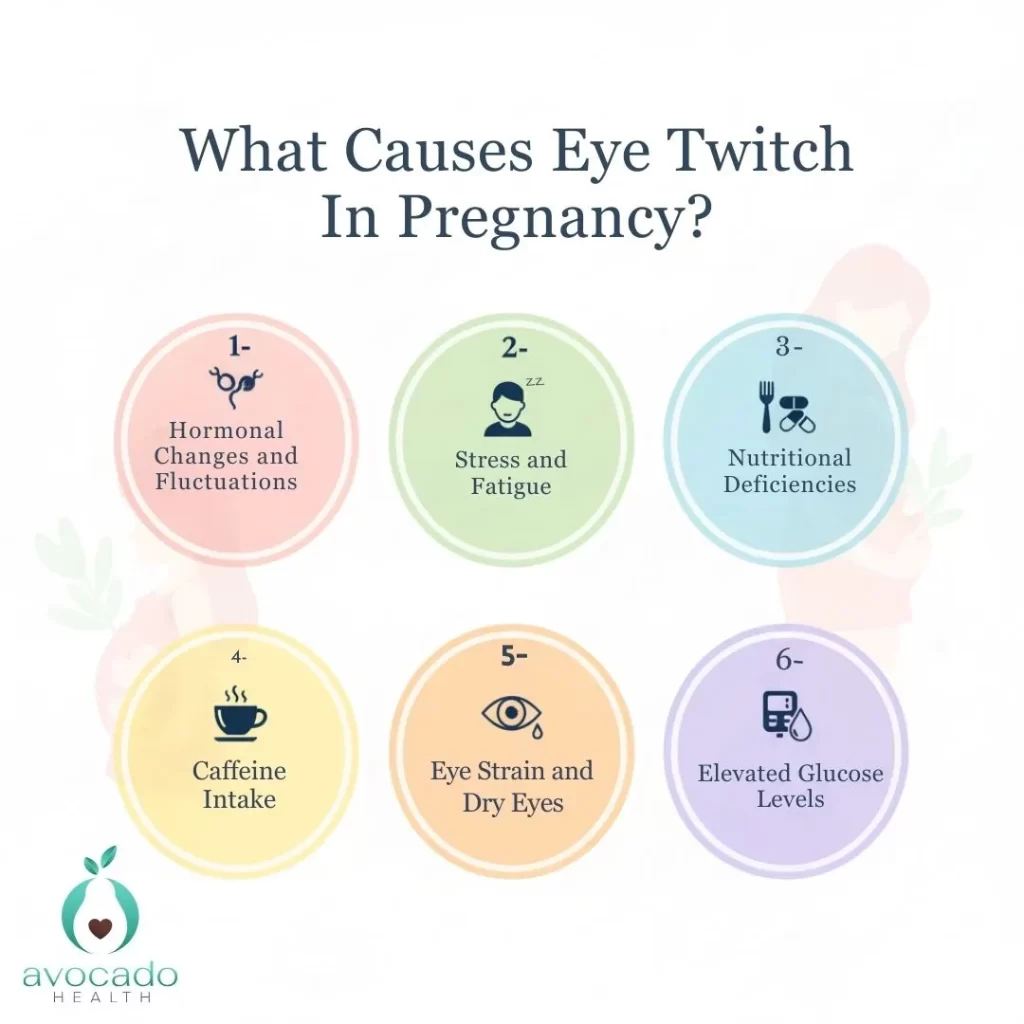
Eye twitching during pregnancy is usually harmless and caused by several factors. Identifying the underlying cause is important for managing symptoms, especially for pregnant women. 1
1- Hormonal Changes and Fluctuations
- Changes in hormone levels during pregnancy can affect the nervous system and muscle control, leading to involuntary movements and muscle spasms around the eyes.
- Higher estrogen levels can increase collagenase activity, leading to structural changes in the cornea.2
2- Stress and Fatigue
- Stress is the most common cause of eye twitching during pregnancy.
- Fatigue from disrupted sleep or the physical demands of carrying a baby is also a frequent trigger.
3- Nutritional Deficiencies
- Vitamin and mineral deficiencies, especially in magnesium, potassium, and calcium, can disrupt muscle contractions and trigger eye twitching.3
- These same deficiencies are also commonly linked to leg cramps during pregnancy, making proper nutrition especially important.
4- Caffeine Intake
- Caffeine can exacerbate muscle spasms, so monitoring consumption is important.
5- Eye Strain and Dry Eyes
- Prolonged screen time or dryness may contribute to pregnancy-related eye twitching.
6- Elevated Glucose Levels
- Elevated glucose levels, such as those seen in gestational diabetes, can also contribute to eye twitching during pregnancy.
When Does Eye Twitching Start In Pregnancy?
Eye twitching can occur at any stage of pregnancy, though many women report experiencing it more frequently during the first trimester. However, eye twitching may also develop later in pregnancy.
The onset and duration of eye twitching vary from person to person. For some expectant mothers, twitching may appear suddenly and last only a few days or weeks, while for others, it may persist intermittently throughout the pregnancy.
What Vitamin Causes Eye Twitches?
Deficiencies in the following vitamins are associated with eye twitching:
- Vitamin B12: Essential for healthy nerve function and the maintenance of the protective myelin sheath; low levels can cause nerve irritation and involuntary eyelid movements.
- Vitamin D: Helps regulate muscle contraction and nerve signals; a deficiency can lead to spasms and is often linked to impaired calcium absorption.
Can Preeclampsia Or High Blood Pressure Cause Eye Twitching?
One of the lesser-known symptoms that may be associated with preeclampsia is eye twitching. Eye twitching can sometimes be a sign of a pregnancy complication, especially when it occurs alongside other symptoms.
Eye twitching in the context of preeclampsia can be linked to elevated blood pressure affecting the nervous system and the tiny blood vessels in and around the eyes. This can lead to visual disturbances including:4
- Blurred vision
- Light sensitivity
- In some cases, involuntary spasms or twitching of the eyelid muscles
Certain vision issues can indicate a more serious condition that needs medical diagnosis and treatment.
How To Stop Eye Twitching During Pregnancy?
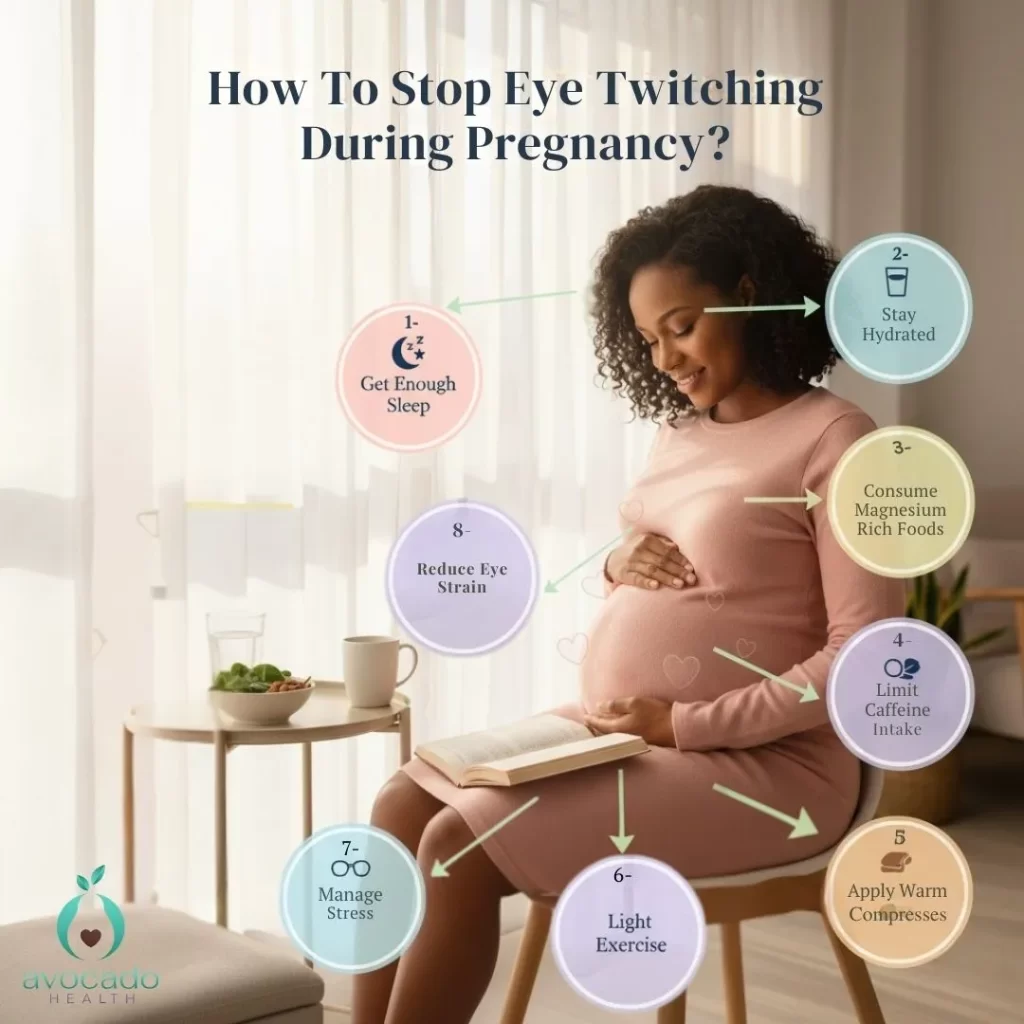
Eye twitching during pregnancy can be bothersome, but there are effective ways to reduce or stop it by addressing its common causes and supporting overall eye and muscle health.
These steps not only help with eye twitching but also contribute to your overall health and well-being during pregnancy. If home remedies do not work, medical treatment may be necessary and should be discussed with a healthcare provider:
1- Get Enough Sleep
- Fatigue is a major trigger for eye twitching. Prioritize adequate rest, improve sleep quality, and maintain a consistent sleep schedule to help calm the nervous system and reduce muscle spasms.
2- Stay Hydrated
- Drinking 8–10 glasses of water daily helps maintain electrolyte balance, which is essential for proper muscle function and preventing spasms.
3- Consume Magnesium Rich Foods
- Incorporate nuts, seeds, leafy greens, bananas, and whole grains into your diet to support muscle control and nerve function.
- Magnesium-rich foods include nuts, seeds, and green leafy vegetables.
- Proper nutrition plays a key role in minimizing involuntary spasms.
4- Limit Caffeine Intake
- Excessive caffeine can overstimulate the nervous system and trigger eye spasms. Reducing or avoiding coffee, tea, and other caffeinated beverages may alleviate twitching.
5- Manage Stress
- Stress activates the nervous system and can worsen eye twitching. Relaxation techniques such as prenatal yoga, meditation, deep breathing exercises, or a warm bath can help reduce stress levels.
6- Light Exercise
- Gentle activities like walking can help relieve stress and reduce eye twitching.
7- Reduce Eye Strain
- Take regular breaks from screens using the 20-20-20 rule—every 20 minutes, look at something 20 feet away for 20 seconds.
- Use an anti-glare screen and lubricating eye drops or preservative-free artificial tears to soothe dry, irritated eyes.
8- Apply Warm Compresses
- A warm bath or a warm compress applied to the affected eye can relax eyelid muscles and reduce twitching.
- You can also use cucumber slices or similar methods to reduce swelling and irritation around the eyes.
When To Worry About Eye Twitch?
While eye twitching is typically harmless and temporary, be alert for the following symptoms, which may signal a more serious issue and warrant medical attention:
- Eyelid spasms that spread to other facial areas
- Blurred Vision or Light Sensitivity
- Could indicate pregnancy complications like high blood pressure or preeclampsia.
- Persistent Twitching
- If eye twitching persists beyond a few weeks, especially if it does not improve with home treatment, consult a healthcare provider or eye doctor.
- Severe Eye Twitching
- Severe eye twitching includes persistent or intense eyelid muscle spasms that last for extended periods, cause significant discomfort, or lead to visual disturbances.
- Vision Changes
- Seeing tiny specks or floaters (vitreous gel) in your sight field.
- Other Symptoms
- Eye redness
- Swelling
- Pain
- Discharge
If eye twitching happens alongside other symptoms or continues for several weeks despite home treatment, consult your doctor for proper diagnosis and management.
Persistent eye twitching unresponsive to lifestyle changes should be evaluated to rule out underlying causes such as gestational diabetes or neurological conditions involving the basal ganglia.
Eye twitching during pregnancy?
Text Avocado Health for 24/7 expert-backed advice on symptoms, nutrition, and next steps tailored to your pregnancy.
Conclusion
Eye twitching may begin at any point in pregnancy, often linked to hormonal fluctuations and lifestyle factors. Monitoring symptoms and adopting healthy habits can usually alleviate the discomfort associated with this common pregnancy symptom.
Frequently Asked Questions
Why is my eye twitching in my third trimester?
In the third trimester, eye twitching is primarily caused by extreme fatigue and sleep deprivation, magnesium or potassium deficiencies due to increased fetal demand, and heightened physical stress on the nervous system.
Does low iron cause eye twitching?
Low iron levels can indirectly cause eye twitching due to the fatigue and muscle weakness that often accompany iron deficiency. Iron is essential for producing hemoglobin, which carries oxygen in the blood to muscles and tissues, including the eyelid muscles.
When iron levels are insufficient, muscles may not receive adequate oxygen, leading to increased fatigue and involuntary muscle spasms such as eye twitching.
Can too much vitamin D cause eye twitching?
Yes, but it’s rare. Excess vitamin D from high-dose supplements can raise calcium levels, which may trigger muscle or eye twitching. This is uncommon and usually doesn’t happen with standard prenatal vitamins.
Eye twitching during pregnancy boy or girl?
There is no scientific evidence to support the idea that eye twitching or any other involuntary muscle spasms are linked to the baby’s gender.