
The first 72 hours of Pregnancy Symptoms are often super subtle, but they are actually caused by a jump in early pregnancy hormones that start to nudge your mood, energy, and even vaginal discharge from the get‑go. Although not everyone will notice a difference at this stage, many women begin to feel like something’s up. Learn which of these little shifts might be real early pregnancy clues, and when it’s just PMS.
Table of Contents
Is It Possible To Have Very Early Pregnancy Symptoms?
Yes, it is possible to have very early pregnancy symptoms, which can begin as soon as a week or two after conception, though they often appear around four to six weeks. Such symptoms can vary individually, and some people may notice them earlier or later than others. In fact, pregnancy symptoms can begin within the first 72 hours after conception.
How to Differentiate Early Pregnancy from PMS?
The symptoms of pregnancy in the first 72 hours can often be confused with PMS symptoms, as both may include mild cramping, breast tenderness, and mood changes. 1
However, the main difference between PMS and early pregnancy symptoms is a missed period, which usually points to pregnancy.

Many early pregnancy signs are similar to premenstrual symptoms, making early diagnosis tricky without a pregnancy test.
What Hormone Causes Early Pregnancy Symptoms?
Early pregnancy symptoms are primarily caused by rapidly rising levels of human chorionic gonadotropin (hCG), along with surges in progesterone, estrogen, and relaxin, which trigger both physical and emotional changes after conception.
These hormonal changes can also affect blood vessel dilation and blood pressure, sometimes leading to symptoms like dizziness or lightheadedness.
First 72 Hours Of Pregnancy Symptoms
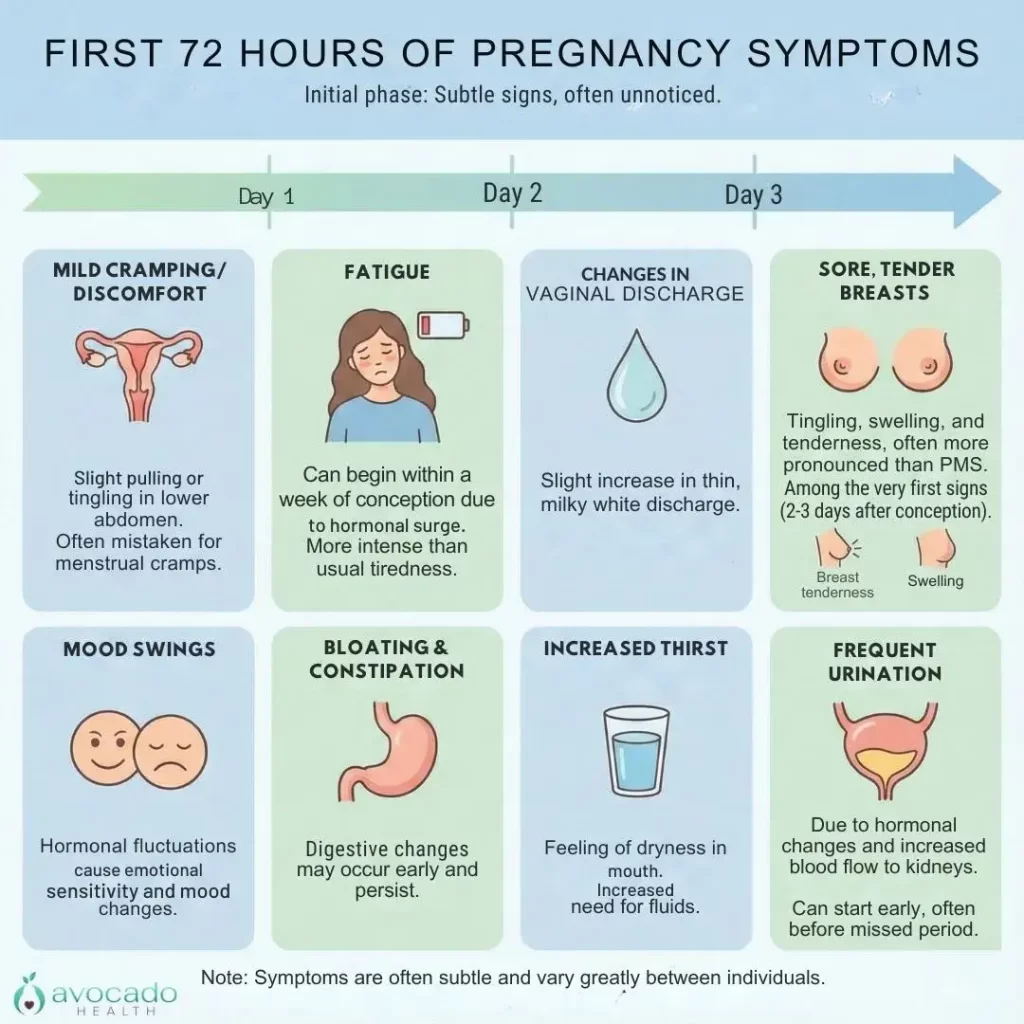
Although this initial phase is incredibly early, and many physical signs are subtle or even absent, understanding what might occur during this time can help prospective mothers recognize very early signs of pregnancy.
Common signs and symptoms during the first 72 hours can include:
- Mild cramping or abdominal discomfort: Some women notice a slight pulling or tingling sensation in the lower abdomen, which may be confused with menstrual cramps.
- Fatigue: Fatigue is common in early pregnancy and can start as soon as one week after conception due to hormonal changes.2
- Changes in vaginal discharge: A slight increase in thin, milky white discharge may occur due to hormonal shifts, helping maintain a healthy vaginal environment.
- Sore or tender breasts: Hormonal changes can lead to sore or tender breasts, with tenderness, swelling, and tingling often occurring as early pregnancy symptoms. Swelling and tenderness are often more intense than PMS-related breast pain.
Sore breasts, swollen breasts, and other breast changes are some of the earliest signs and symptoms of pregnancy, typically appearing within 2 to 3 days after conception.
- Mood swings: Fluctuations in hormones may cause emotional sensitivity or mood changes.
- Bloating and constipation: May also occur and can persist throughout pregnancy.
- Thirsty: Like having cotton mouth.
- Frequent urination: Can also start early in pregnancy due to hormonal changes and increased blood flow to the kidneys, and is one of the early pregnancy symptoms that can be noticed after a period is missed.
Other symptoms can also be present, and such symptoms may vary among pregnant women, with some experiencing a combination of different physical and hormonal changes.
It’s important to note that taking a pregnancy test too early can result in a false negative, where the test incorrectly indicates you are not pregnant even if you are.
What Happens In The First 72 Hours?
After an egg is fertilized, it is known as a zygote and begins a rapid process of cell division while traveling down the fallopian tube toward the uterus. During this very early stage:
- Implantation has not occurred yet. The fertilized egg needs four to five days to reach the uterus, and implantation into the uterine wall usually happens around 7 to 9 days after ovulation.
- The pregnancy hormone hCG is not produced yet. The body only starts producing the hormone human chorionic gonadotropin (hCG) after successful implantation. This is the hormone that home pregnancy tests detect.
As pregnancy progresses, symptoms and physical changes become more noticeable and may intensify as the body adapts to support the developing pregnancy.
How Does A 3 Day Pregnancy Discharge Look Like?
In the very early stages of pregnancy, including within the first 72 hours, some women may notice changes in vaginal discharge.
This discharge is typically thin, milky white, and may be slightly increased compared to usual.
It is caused by hormonal changes, particularly the rise in estrogen and progesterone, which stimulate the cervix to produce more mucus. This discharge helps protect the uterus from infections by maintaining a healthy vaginal environment.
It is important to note that this discharge is usually odorless and not accompanied by itching or irritation.3
Can Pregnancy Cramps Start In 3 Days?
Mild cramps can be an early pregnancy symptom, but they are unlikely to start as early as 3 days after conception. 4
After fertilization, the embryo usually needs about 6–10 days after ovulation to reach the uterus and implant in the uterine lining, and cramps related to this process tend to occur around that time instead.
When implantation happens, some women report light, brief cramping that is milder than menstrual cramps, and a small number also notice light spotting known as implantation bleeding around the same window.
Are You Dry Or Wet In Early Pregnancy?
Most women experience an increase in vaginal discharge during early pregnancy. The increase in discharge can make some women feel wetter than usual, especially in the first few weeks of pregnancy.
However, some women might experience sensations of dryness or irritation. This can be caused by hormonal imbalances, changes in vaginal pH, or increased sensitivity during early pregnancy.
Any discharge that is accompanied by a strong odor, unusual color, itching, or irritation should be evaluated by a healthcare provider, as it could indicate an infection or other condition requiring treatment.
What Are Some Uncommon Signs Of Early Pregnancy?
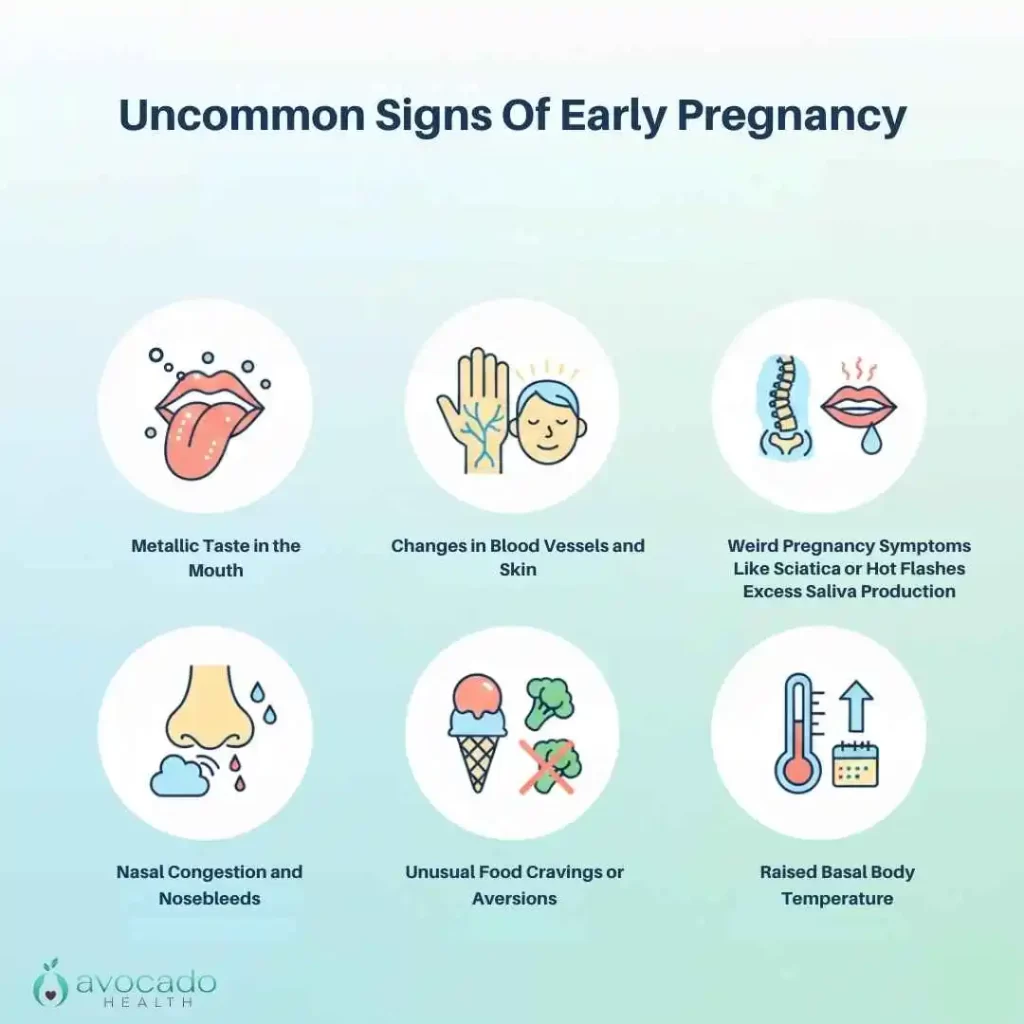
While many women experience common symptoms like missed periods, tender breasts, and morning sickness, there are also some uncommon or less talked about signs that may appear in the early stages of pregnancy. Such symptoms can be highly variable, and what is unusual for one person may be normal for another.
1- Metallic Taste in the Mouth
Some women report a strange metallic taste in their mouth during early pregnancy.
This altered taste sensation, sometimes called dysgeusia, is believed to be caused by hormonal changes, particularly fluctuations in estrogen and progesterone.
This metallic taste can affect appetite and food preferences, often leading to food aversions or cravings.
2- Changes in Blood Vessels and Skin
Hormonal shifts during early pregnancy can cause noticeable changes in blood vessels. Hormonal changes can also affect blood pressure, which may contribute to symptoms like dizziness or lightheadedness.
- Some women may observe increased visibility of veins, especially on the breasts or abdomen, due to increased blood volume and circulation.
- Additionally, skin changes such as a flushed appearance or a “pregnancy glow” may occur, although some may also experience skin sensitivity or acne flare-ups.
3- Weird Pregnancy Symptoms Like Sciatica or Hot Flashes
A few women might experience uncommon symptoms such as:
- Sciatica is a sharp, shooting pain that radiates from the lower back down the legs, caused by the growing uterus putting pressure on nerves.
- Hot flashes or sudden feelings of warmth can also occur, linked to hormonal fluctuations affecting the body’s temperature regulation.
4- Excess Saliva Production
Increased saliva, known as ptyalism or sialorrhea, is another less common early pregnancy symptom. This can be uncomfortable and may accompany nausea or morning sickness.
5- Nasal Congestion and Nosebleeds
Hormonal changes can cause swelling of the mucous membranes in the nose, leading to nasal congestion or even occasional nosebleeds. This symptom, sometimes called “pregnancy rhinitis,” typically appears in the first trimester and can persist throughout pregnancy.
6- Unusual Food Cravings or Aversions
While food cravings are a well-known symptom, some women experience particularly strong or unusual cravings for certain foods or even non-food items (a condition known as pica).
Conversely, aversions to previously enjoyed foods can be intense, sometimes triggered by heightened sense of smell or metallic taste.
7- Raised Basal Body Temperature
Maintaining a raised basal body temperature beyond the typical luteal phase length can be an early sign of pregnancy. This is due to sustained elevated levels of the hormone progesterone, which helps maintain the uterine lining.
8- Mood Changes Beyond Typical PMS
Although mood swings are common in both PMS and early pregnancy, some women notice more intense emotional shifts, including feelings of anxiety, heightened sensitivity, or unexpected bursts of joy or irritability.
Have questions about those first 72 hours or any symptoms that are worrying you? Text Avocado Health anytime to get clear, science‑based expert answers and gentle reassurance, exactly when you need it most.
Conclusion
In the first 72 hours of pregnancy, symptoms can be confusing or easy to miss entirely. Listening to your body, tracking subtle changes, and timing your pregnancy test well can give you more precise answers. If anything feels worrying or unusual, checking in with a healthcare professional is always the safest next step.
Frequently Asked Questions
What else can cause early pregnancy symptoms?
Many conditions and factors can mimic early pregnancy symptoms, and such symptoms can vary greatly from person to person. These include premenstrual syndrome (PMS), stress, anxiety, certain illnesses, and other health factors.
Common symptoms like fatigue, nausea, breast tenderness, and cramping can be caused by PMS, while things like food poisoning, migraines, and over-exercising can cause similar feelings.
In some cases, fertility medications can also cause symptoms that resemble pregnancy.
Can I sense that I’m pregnant?
Yes, you can feel early signs of pregnancy. However, these symptoms can be easily mistaken for premenstrual syndrome (PMS).
The only definitive way to confirm pregnancy is to take a pregnancy test, which can be done about a week after a missed period for the most accurate results.
Where to press to feel early pregnancy?
You can’t press to feel early pregnancy, but around 11 weeks, you may be able to feel your growing uterus by lying down and gently pressing above your pubic bone. The top of your uterus will feel like a firm, rounded mass, similar to a rubber ball.
Why am I cramping 3 days after ovulation?
Cramping after ovulation is a common experience for many women. While it can sometimes indicate early pregnancy, it is often simply a sign of ovulation or an impending menstrual period.
What part of the breast hurts in early pregnancy?
During pregnancy, many women notice their breasts feeling full, experiencing mild discomfort around the nipples, or feeling sharp pain when the area is touched.
Can I feel symptoms of pregnancy after 1 day?
Feeling symptoms of pregnancy just one day after conception is highly unlikely. This is because the fertilized egg has not yet implanted into the uterine lining, which is when the body begins producing the pregnancy hormone human chorionic gonadotropin (hCG) that triggers most early pregnancy symptoms.
Sources:
- Premenstrual symptoms are associated with psychological and physical symptoms in early pregnancy
- Physiological Changes in Pregnant Women Due to Hormonal Changes
- Vaginal discharge during pregnancy and associated adverse maternal and perinatal outcomes
- Time of implantation of the conceptus and loss of pregnancy