
How to alleviate leg cramps during pregnancy? If ‘charley horse’ cramps are yanking you out of sleep, no matter how much you hydrate or stretch, you’re not imagining it. Pregnancy leg cramps are common, especially at night and in the later trimesters, because your legs are carrying more load, and the growing uterus can press on blood vessels and nerves, affecting circulation. Learn why pregnancy leg cramps hit so hard, what actually helps, which “tips” can backfire, and when cramps might signal something more serious.
Table of Contents
Why Do You Get Leg Cramps During Pregnancy?
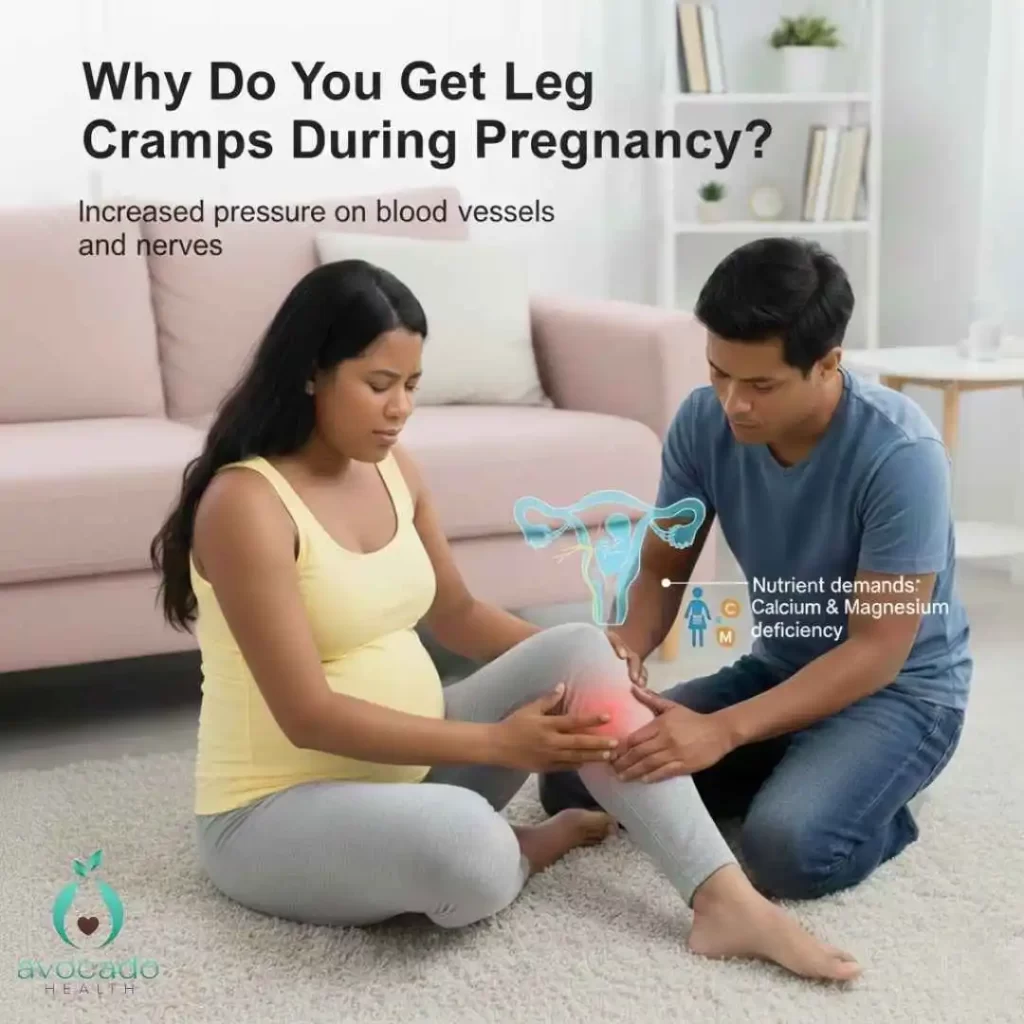
Around 58% of pregnant women report Leg cramps during pregnancy that are primarily caused by a combination of physiological and mechanical changes the body undergoes as it adapts to support the growing baby. 1
- One of the main contributors is the increased pressure exerted by the growing uterus on the blood vessels and nerves in the pelvis and legs.
This pressure can partially obstruct blood flow, leading to reduced circulation in the lower limbs, which in turn causes muscle fatigue and cramping, especially in the calf muscles.
These same changes can also contribute to lower back pain in pregnancy, another common discomfort many women notice as their bump grows.
- Nutrient demands: The growing baby requires more calcium and magnesium, and in some women this increased demand may lower maternal levels, which might contribute to leg cramps.
In Which Month Does Leg Pain Occur During Pregnancy?
Leg pain, including leg cramps, commonly begins to appear during the second trimester of pregnancy and tends to become more frequent and intense as pregnancy progresses into the third trimester.
Many women experience leg cramps primarily at night during these later stages, which can disrupt sleep and cause significant discomfort.
How To Alleviate Leg Cramps During Pregnancy?4 Home Remedies
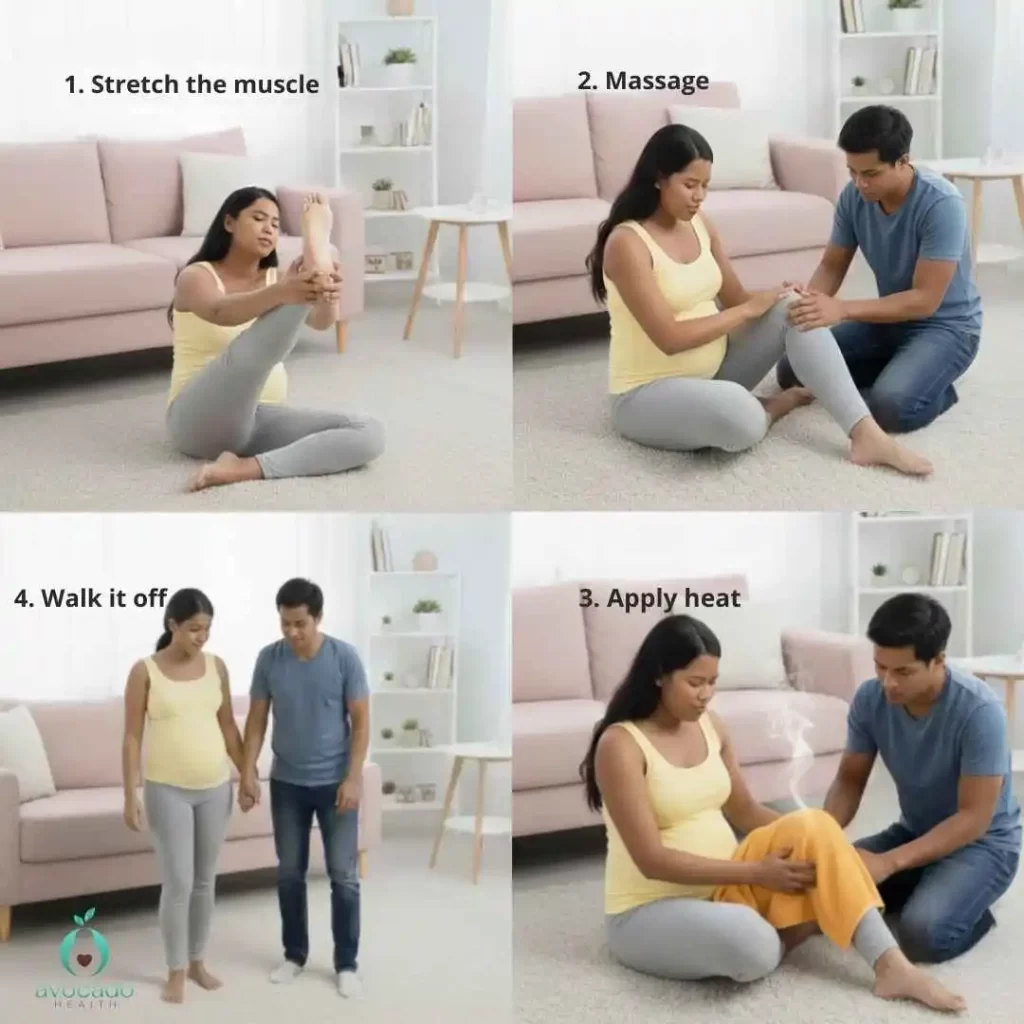
To treat leg cramps during pregnancy, it’s important to take immediate action for relief and comfort. To alleviate a sudden leg cramp during pregnancy, immediately stretch the affected muscle, followed by a gentle massage or heat application.
Home remedies for leg cramps during pregnancy:
When a leg cramp occurs, try these steps for quick relief:
- Stretch the muscle Straighten your leg and flex your foot upward toward your body, pulling your toes towards your shin. This might hurt briefly, but it helps ease the spasm. You can do this while sitting or standing on the affected leg.
- Massage Gently rub the cramped area with your hands or ask a partner for a massage to relax the muscle.
- Apply heat Use a heating pad or warm towel on the muscle to increase blood flow and soothe the area after stretching. A warm bath may also help.
- Walk it off Getting up and walking around for a few minutes can help improve circulation and prevent the cramp from returning.
How To Prevent Leg Cramps During Pregnancy?
To reduce the frequency and severity of leg cramps, consider these preventive measures throughout your pregnancy:
Taking these steps can help prevent cramps and support your comfort as your pregnancy progresses.
- Stretch before sleeping: Gentle calf stretches before bed can help relax your leg muscles and reduce the likelihood of cramps waking you up.
- Exercise regularly Engage in gentle, regular leg exercise like walking, with your healthcare provider’s approval, to improve circulation.
- Eat a balanced diet Ensure you are consuming foods rich in magnesium, potassium, and calcium, such as bananas, spinach, nuts, seeds, dried fruits, and dairy products.
- Wear supportive shoes Choose comfortable shoes with good arch support and avoid high heels.
- Avoid prolonged sitting or standing Change positions frequently and avoid sitting with your legs crossed.
- Consider compression socks Discuss wearing compression stockings during the day with your provider, as they may help with circulation.
- Prenatal vitamins also play a role in maintaining proper magnesium levels, which are essential for muscle function.2
- While some consider calcium supplements to help with leg cramps, there is no conclusive evidence that they prevent leg cramps during pregnancy.
Always consult your healthcare provider before starting any supplements.
What Exercises Help Prevent Leg Cramps In Pregnancy?

Regular, gentle exercises and specific stretches can help prevent leg cramps during pregnancy by improving circulation and muscle tone. It is important to consult a healthcare provider before starting any new exercise program.
Recommended Exercises
- Walking Taking a daily walk, even for 10-15 minutes, can make a noticeable difference in reducing cramps by improving overall blood flow.
- Swimming and Prenatal Yoga These low-impact activities are gentle yet effective ways to stay active, improve circulation, and tone muscles.
- Ankle Pumps While sitting or lying down with feet slightly elevated, point and flex your feet vigorously up and down 30 times.
- Ankle Rotations Rotate each ankle eight times in one direction and then eight times in the other direction. This can be done hourly if you sit for long periods.
- Wiggling Toes Regularly wiggling your toes can help improve blood flow in the lower extremities.
Daily and Bedtime Stretches
- Stretching the calf muscles regularly during the day and especially before bed can help prevent nighttime cramps. 3
- Standing Calf Stretch (Wall Stretch)
- Stand arm’s length from a wall and place your hands on it for support.
- Move one foot behind the other, keeping the back leg straight and the heel flat on the floor.
- Slowly bend your front leg forward, leaning toward the wall until you feel a stretch in your calf muscle.
- Hold for about 30 seconds, keeping your back straight and hips forward. Switch legs and repeat. Doing this three times per leg before bed is recommended.
- Seated Toe Stretches While sitting, spread and wiggle your toes for about 30 seconds.
What Drinks Help With Leg Cramps?
Staying properly hydrated is essential for preventing and alleviating leg cramps during pregnancy. While plain water is the best choice for hydration, certain drinks can also help maintain electrolyte balance and support muscle function.
- Stay hydrated Drink plenty of fluids (8 to 12 cups of water daily) to keep your muscles hydrated.
- Electrolyte-rich drinks: Beverages that contain electrolytes such as potassium, and magnesium can help maintain the balance of minerals that regulate muscle contractions. Natural options include coconut water and homemade fruit-infused water with slices of lemon, orange, or cucumber. 4
- Magnesium supplement drinks: Some pregnant women find relief by consuming drinks fortified with magnesium or taking magnesium supplements as advised by their healthcare provider. Magnesium plays a key role in muscle relaxation and can help reduce muscle cramps.
- Calcium-rich drinks: Dairy products like milk or fortified plant-based alternatives provide calcium, which is important for muscle function and may help prevent pregnancy leg cramps.
- Avoid alcohol, caffeine and sugary drinks: These can contribute to dehydration and worsen leg cramps, so it is best to limit their intake.
Always consult your doctor before taking any supplements to ensure they are appropriate for your specific needs during pregnancy.
How to sleep with leg pain while pregnant?
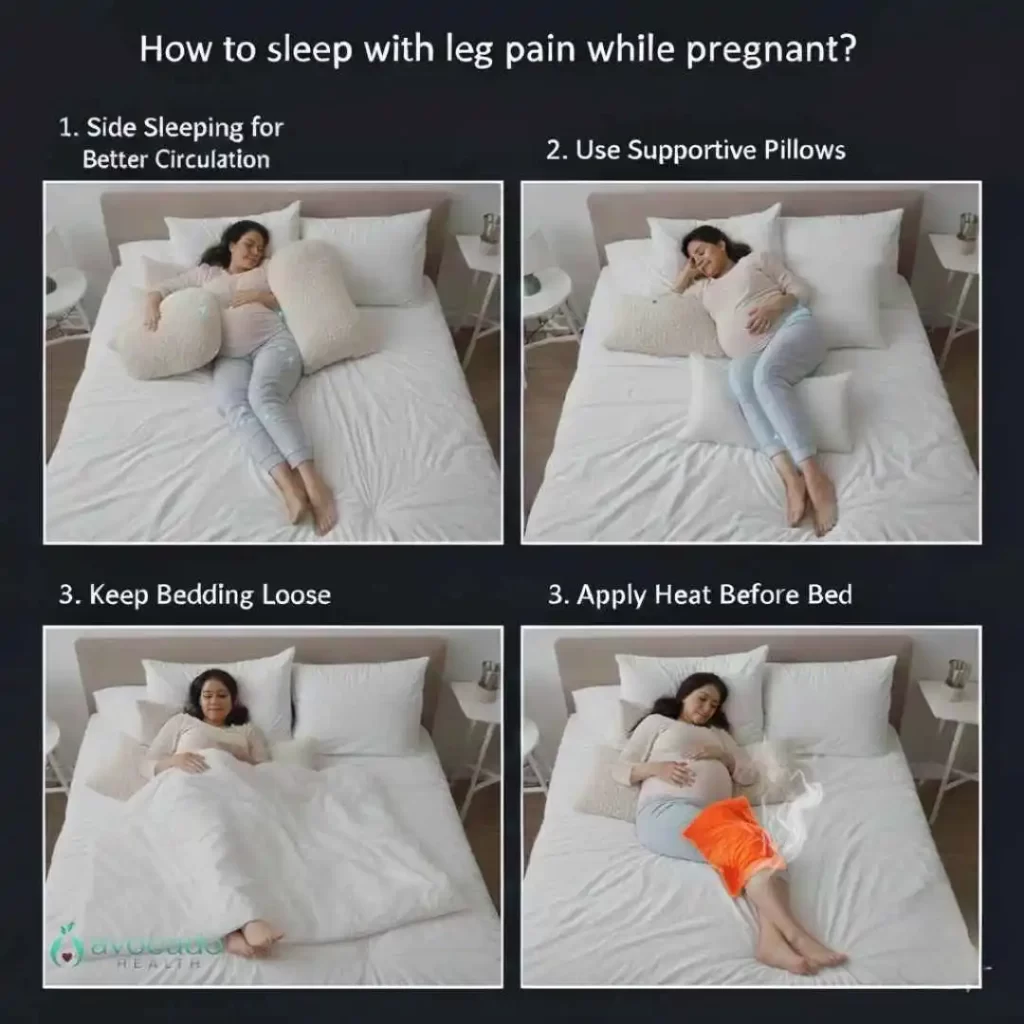
Sleeping comfortably with leg pain during pregnancy can be challenging, but there are several strategies you can try to improve your rest and reduce discomfort:
- Choose the right sleeping position: Sleeping on your left side is often recommended during pregnancy because it improves blood flow between your heart and the placenta.
This position can also help reduce pressure on your blood vessels and decrease leg swelling and pain.
Avoid sleeping on your back, as it can compress major blood vessels and worsen leg cramps.
- Use supportive pillows: Placing a pillow between your knees and under your abdomen can help keep your body aligned and reduce strain on your legs and lower back.
You might also try elevating your legs slightly with a pillow to promote better circulation and reduce swelling.
- Keep your bedding loose: Tight blankets or sheets can restrict movement and contribute to muscle cramps.
Make sure your bedding allows your feet and legs enough room to move freely during sleep.
- Apply heat before bed: Using a warm heating pad or a hot water bottle on your calves before going to sleep can relax your muscles and increase blood flow, potentially preventing cramps during the night.
When To Worry About Leg Cramps In Pregnancy?
While leg cramps are common during pregnancy, especially in the second and third trimesters, they can sometimes signal more serious medical conditions (such as deep vein thrombosis or other underlying medical condition).
It’s crucial to seek medical attention promptly to rule out blood clots (deep vein thrombosis or DVT)—a blood clot can cause pain, swelling, warmth, and redness in the leg, and requires immediate medical attention—if you experience any of the following symptoms:
- Persistent pain that doesn’t improve with stretching or massage.
- If you notice swelling, significant warmth, or redness in just one leg.
- Fever, shortness of breath, or difficulty walking along with leg pain.
Still worried about leg cramps or not sure what’s normal in your pregnancy? Text Avocado Health to get personalized, expert, real‑time 24/7 support.
Conclusion
Leg cramps in pregnancy can feel brutal, but they are usually manageable. Knowing what triggers them, how to stop a cramp in the moment, and which daily habits actually prevent them can make nights easier. If pain is severe, one‑sided, or comes with swelling or breathing changes, checking in with your doctor is essential.
Frequently Asked Questions
Can low iron cause leg cramps in pregnancy?
Low iron levels during pregnancy can contribute to the occurrence of leg cramps. Iron is essential for producing hemoglobin, the protein in red blood cells that carries oxygen to your muscles and other tissues. When iron levels are low, your muscles may receive less oxygen, leading to fatigue and an increased likelihood of cramps.
Leg cramps during pregnancy boy or girl at night?
Many expectant mothers wonder if the occurrence of leg cramps at night during pregnancy could be an indicator of the baby’s gender—boy or girl.
While cultural beliefs and old wives’ tales may suggest that certain symptoms, including leg cramps, can predict the baby’s gender, medical professionals emphasize that these symptoms are related to the body’s adjustments during pregnancy and not to the baby’s sex.