
When do you take a pregnancy test? If you’ve ever found yourself second-guessing every little symptom or counting down the days until you can test, you’re not alone. Figuring out the best moment for that all-important stick can be confusing. Let’s break down exactly when to take a pregnancy test so you get the clearest answer,and a little peace of mind, too.
Table of Contents
How Do Pregnancy Tests Work?

Pregnancy tests detect the hormone human chorionic gonadotropin (hCG), also referred to as the pregnancy hormone, present in your urine or blood.Pregnancy tests are designed to detect pregnancy hormones, with hCG being the primary hormone measured for early pregnancy detection.
This hormone is produced after a fertilized egg attaches to the uterine wall, which typically occurs about 6 to 12 days after fertilization. A urine test or blood test can be used to identify hCG, with a urine test being the most common method for home pregnancy screening.1
When Is The Correct Time To Check A Pregnancy Test?

Determining the right time to take a pregnancy test is crucial for obtaining accurate pregnancy test results. The timing of the menstrual cycle, including ovulation and implantation, plays a key role in when a pregnancy test can reliably detect pregnancy, as these phases affect when hCG becomes detectable.
Most home pregnancy tests are designed to detect hCG in urine and can provide a positive result from the first day of a missed period. Testing at the right time, such as after a missed period or using the first morning urine, helps ensure the most accurate results.
Some at home pregnancy tests, often labeled as “early detection” tests, claim to detect pregnancy a few days before a missed period by identifying lower levels of hCG.2
Testing too early may lead to a false negative result because hormone levels might not be high enough to be detected at that time.
Blood pregnancy tests, performed at a doctor’s office or laboratory, can detect lower levels of hCG and may provide accurate results earlier than urine tests.3
These blood tests require a blood sample and are sometimes used in special circumstances, such as when fertility drugs are being taken or to monitor hormone levels in early pregnancy.
What Is Considered A Positive Pregnancy Test?
A positive pregnancy test result indicates that the test has detected the presence of the pregnancy hormone human chorionic gonadotropin (hCG) in your urine or blood.
Most pregnancy tests display a positive result through visual indicators such as a plus sign, two lines, or the word “pregnant” on digital tests. The appearance of this positive result means that your body produces enough hCG to be detected by the test, confirming pregnancy.
How Reliable Are Pregnancy Tests?
Pregnancy tests are highly reliable and over 99% accurate when used correctly and at the right time, typically after a missed period. The key to accuracy is following the instructions and waiting until the recommended time to test to avoid false negatives.
For most women, waiting until the first day of a missed period to take a pregnancy test will provide the most reliable and accurate result.
How Common Is A False Negative Pregnancy Test?
False negative pregnancy tests are possible, especially if you test too early, but are less common after a missed period. Studies suggest rates of false negatives can range from under 5% on the day of a missed period to over 20% if testing earlier.
What Can Cause A False Positive Pregnancy Test?
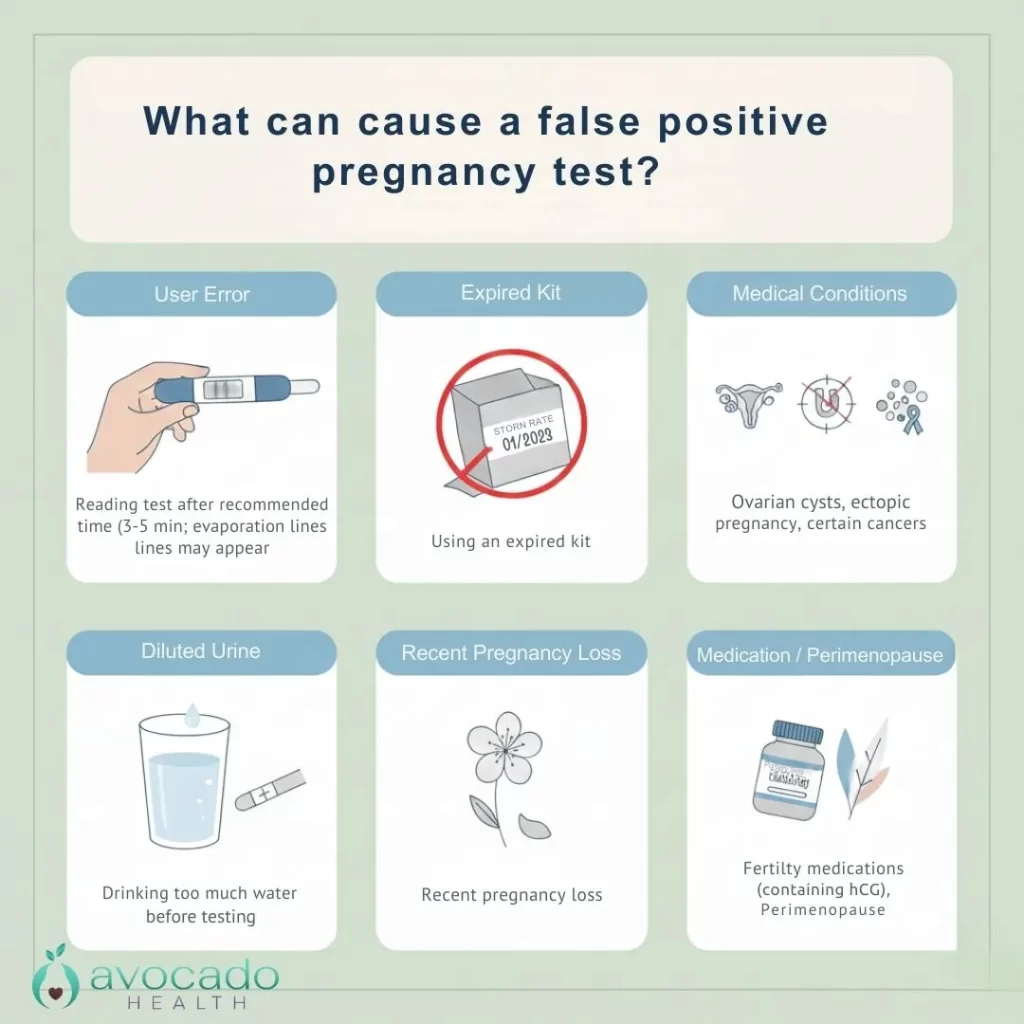
It is important to note that while a positive test result is highly reliable, there are instances of a false positive result. This can occur due to factors such as:
- User error, such as reading the test result after the recommended time (usually more than 3–5 minutes), evaporation lines may appear. These lines can be mistaken for a positive result, even though they are not true indicators of pregnancy.
- Using an expired kit.
- Medical conditions including ovarian cysts, ectopic pregnancy, certain cancers.
- User-related issues, such as diluting urine by drinking too much water before testing.
- Recent pregnancy loss
- Fertility medications that contain hCG can sometimes lead to false positive results.
- Perimenopause.
How Early In Pregnancy Will It Show Up On A Test?
The earliest reliable detection of pregnancy by a urine pregnancy test can be around the time of your expected period.
It is essential to keep in mind that during the initial weeks of pregnancy, hCG levels typically double every 48 to 72 hours.As the pregnancy progresses and there is more hcg in the body, it becomes easier for tests to detect pregnancy.
When Is The Best Time To Take A Pregnancy Test?
To maximize accuracy, it is recommended to take a pregnancy test using the first morning urine, as it contains the highest concentration of hCG.
When Do You Take A Pregnancy Test?
For the most accurate result, you should take a home pregnancy test starting from the first day of your missed period. This is typically around two weeks after ovulation and conception. Pregnancy testing is the process of checking for pregnancy, usually by detecting the hormone hCG in your body.
When to Take the Test

Tips for Best Results
- Use first-morning urine
- Following the instructions correctly on your pregnancy test kit is crucial. Always check the expiration date before use, as expired tests may not function properly and can yield unreliable results.
- Avoid drinking excessive amounts of liquids before testing, as this can dilute the urine and lower hormone concentration.
- Avoid drinking alcohol before testing, as it can interfere with your body’s hormonal balance and overall health.
- Take a second test: If you get a negative result but still suspect you are pregnant or your period is late, wait a few days and take another test.
- Pregnancy tests are widely available at grocery stores, making them accessible for most people.
If you obtain a positive pregnancy test result, it is recommended to consult a healthcare provider or visit a family planning clinic for confirmation and to discuss prenatal care options.
Many clinics and healthcare providers also offer free pregnancy tests if cost is a concern.4
Is C Or T Positive For Pregnancy?
A positive pregnancy test result is indicated by two lines, one in the C (control) and one in the T (test) region.
Positive result
- Two lines: A positive result appears as a line in both the C and T regions.
- Faint test line: Even if the T line is faint, the result is still positive, as long as it’s clearly visible.
Negative result
- One line: Only the C line appears, indicating no detectable hCG was found.
Invalid result
- No lines: If no lines appear at all, the test is invalid.
- Only a T line: If only the T line appears without the C line, the test is invalid and should be repeated.
Have questions or need reassurance about pregnancy at any hour? Text Avocado Health for expert answers and real support anytime you need it, day or night. You’re never alone on your journey!
Conclusion
The best time to use a home pregnancy test is from the first day of your missed period, as testing early may cause false negatives. Modern tests detect the pregnancy hormone hCG in urine, while blood tests are even more sensitive. Following test instructions, using first-morning urine, and avoiding expired kits gives the most reliable results. If results are unclear or unexpected, retest after a few days or consult your healthcare provider.
Frequently Asked Questions
Can a pregnancy test turn positive after an hour?
No, a positive result after an hour is not reliable and should be considered an evaporation line, which can look like a faint positive.
Pregnancy tests are only accurate within the specific time window recommended by the manufacturer, typically 3 to 10 minutes.
Any line that appears after this time is likely an evaporation line, caused by dried urine, and is not a true positive result.
How many weeks pregnant if faint line?
A faint line on a pregnancy test usually means you are in the very early stages of pregnancy, likely about 3 to 4 weeks from your last menstrual period.
This is because the pregnancy hormone, hCG, is at a low level, so the test shows a faint line.
It is best to wait 48 hours and test again, which should result in a darker line if the pregnancy is progressing.
Can stress affect your pregnancy test?
Stress generally does not impact hCG hormone levels, so it does not directly influence the accuracy of pregnancy tests. However, stress can disrupt your menstrual cycle, which may make it more challenging to determine the optimal time to take a pregnancy test.
Does a very early positive pregnancy test mean twins?
While a positive pregnancy test indicates the presence of the pregnancy hormone human chorionic gonadotropin (hCG), it does not by itself confirm a multiple pregnancy.
In the early stages of pregnancy, hCG levels usually increase quickly, often doubling every two to three days. Higher than average hCG levels may be observed in cases of twins or multiples, but this is not a definitive indicator on its own.
Sources:
- Human Chorionic Gonadotropin https://www.ncbi.nlm.nih.gov/books/NBK532950/
- A precise and rapid early pregnancy test https://www.sciencedirect.com/science/article/abs/pii/S0039914022009523
- Comparison of Result Times Between Urine and Whole Blood Point-of-care Pregnancy Testing https://pmc.ncbi.nlm.nih.gov/articles/PMC4944801/
- Self-testing for pregnancy: a systematic review and meta-analysis https://bmjopen.bmj.com/content/12/2/e054120