

Why is tummy time important for infants? It builds the strength and motor skills your baby needs for rolling, crawling, and a healthy head shape, while also supporting early brain and sensory development. Learn why it matters, when to start, how long to do it, and the best tummy time positions.
Table of Contents
What is tummy time for an infant?

Baby tummy time is when you place your baby on their stomach for brief periods while they’re awake and you’re watching closely. It’s not just play; it’s your baby’s first workout, and it is key to supporting your baby’s overall growth and development.
Doctors recommend baby tummy time because babies today spend most of their sleep on their backs to prevent SIDS (Sudden Infant Death Syndrome), which is important for your baby’s health and safety.
While this has saved many lives, it also means babies spend less time on their tummies, which can lead to flat spots on the baby’s head (positional plagiocephaly) or slower motor skill development.
Did you know? Babies who spend too much time in car seats, bouncy chairs, or lying in the crib are at a higher risk of developing flat spots on their heads.
Solution: Baby tummy time balances this by giving babies safe, supervised time to play and grow in the prone position.
When To Start Tummy Time For Infants?

Tummy time can and should be started as early as the first day your baby comes home from the hospital. Most babies can start tummy time sessions a day or two after they are born. Starting tummy time early helps babies become more comfortable with this position over time, making it easier to increase the duration as they grow.
Starting tummy time as soon as possible after birth and gradually increasing the duration helps infants develop strong muscles, improve motor skills, and maintain a healthy head shape, all while providing opportunities for bonding and sensory exploration.
How Long Should You Let A Baby Do Tummy Time?

For young babies, tummy time might only last for a minute or two at a time initially. Each tummy time session should last 3 to 5 minutes when starting. It’s normal for newborns to find this position challenging.
However, consistent, short periods of tummy time throughout the day will gradually build their strength and tolerance.
Understanding how much tummy time your infant needs at different ages can help you plan effective and developmentally appropriate sessions. Here’s a general tummy time chart by age to guide you:
- Newborn to 1 month: Start with 1 to 2 minutes per session, 2 to 3 times a day. Focus on gentle tummy time while your baby is awake and supervised.
- 1 to 2 months: Increase tummy time to 5 minutes per session, 3 to 4 times a day. Your baby will begin to lift their head and look around more during these sessions.
- 2 to 3 months: Aim for 10 to 15 minutes of tummy time daily, broken into multiple short sessions. Babies at this stage start strengthening their arm muscles and may begin pushing up on their forearms.
- 3 to 4 months: Work up to 20 to 30 minutes per day, spread throughout the day. Your infant will likely enjoy tummy time more and may start rolling over.
- 4 to 6 months: Continue with 20 to 30 minutes daily, encouraging your baby to push up, reach for toys, and explore their environment from the tummy position.
Tummy time should not be spent in just one position; encourage your baby to move and interact to prevent them from staying still in one position for too long.
5 Key Reasons: Why Is Tummy Time Important For Infants

Tummy time is more than play; it’s one of the most essential activities for your baby’s growth. In fact, tummy time is a big deal for infant development because it supports critical milestones and overall well-being.
It helps with:
Building Strength for Movement
- When babies lift their heads against gravity, they strengthen neck, shoulder, arm, back, and core muscles.
- This strength is the foundation for rolling, sitting, crawling, standing, and eventually walking. Regular tummy time helps babies build the strength needed to crawl.
- Babies who don’t get enough tummy time may reach these milestones later.
Supporting Brain and Sensory Development
Tummy time connects the brain and body by giving babies new sensory experiences:
- Balance (vestibular system): Head-lifting teaches balance and spatial awareness.
- Body awareness (proprioception): Bearing weight on arms and tummy helps babies learn where their body is in space.
- Touch (tactile system): Feeling different surfaces supports sensory processing.
- Vision: Looking around at eye level improves eye tracking and control.
- Fine motor prep: Pushing up on hands strengthens wrists and palms, laying the groundwork for grasping, feeding, and even future writing.
- Talk: Talking to your baby during tummy time encourages development and helps them feel comforted and engaged.
- Playing: Playing with your baby during tummy time stimulates their sensory and motor skills, making the experience more interactive and beneficial.
- Babies who did daily tummy time with fun toys or interaction scored higher on thinking and learning tests (Bayley-III cognitive scale) than babies who only got regular care. 1
Emotional Development
- Creates moments of bonding
- Encourages social interaction and playful engagement
- Talking to your baby during tummy time helps foster emotional connection and supports their social development
- Builds self-confidence and independence your baby master new skills
Preventing Flat Spots and Stiff Necks
Starting tummy time early:
- Helps prevent flat spots on the baby’s head (positional plagiocephaly) or tight neck muscles (torticollis), which can develop when infants spend too much time lying on their backs.
Tummy time can help relieve torticollis, a condition where an infant’s neck becomes kinked to one side. Proper positioning during play and rest is important to minimize the risk of developing a flat spot.
- Encourages babies to spend time in different positions, promoting a healthy baby’s head shape and overall development. During tummy time, you can place toys just out of your baby’s reach to encourage them to stretch and reach, which helps develop their motor skills.
4 Fun Tummy Time Positions For Infants

Finding the right tummy time position can help make the experience more comfortable and enjoyable for your baby, especially when they are just starting out. Here are some common and effective tummy time positions to try:
On the Floor
Place your baby on a firm, flat surface such as a play mat or blanket on the floor. Make sure to use blankets safely, avoid loose blankets or bedding to reduce the risk of suffocation.
Baby on Your Chest

Lie down on your back and place your baby tummy-down on your chest. This close contact provides comfort and warmth, encourages eye contact, and helps your baby practice lifting their head while feeling secure.
Over Your Lap
Sit comfortably and lay your baby tummy-down over your lap, supporting their chest and tummy with your hands. This position allows gentle rocking or bouncing, which can soothe your baby and make tummy time more fun.
On a Baby Gym or Play Mat
Position your baby under a baby gym with hanging toys within their reach. This encourages reaching, grasping, and visual tracking, adding an interactive element to tummy time.
Tummy Time Exercises For Infants
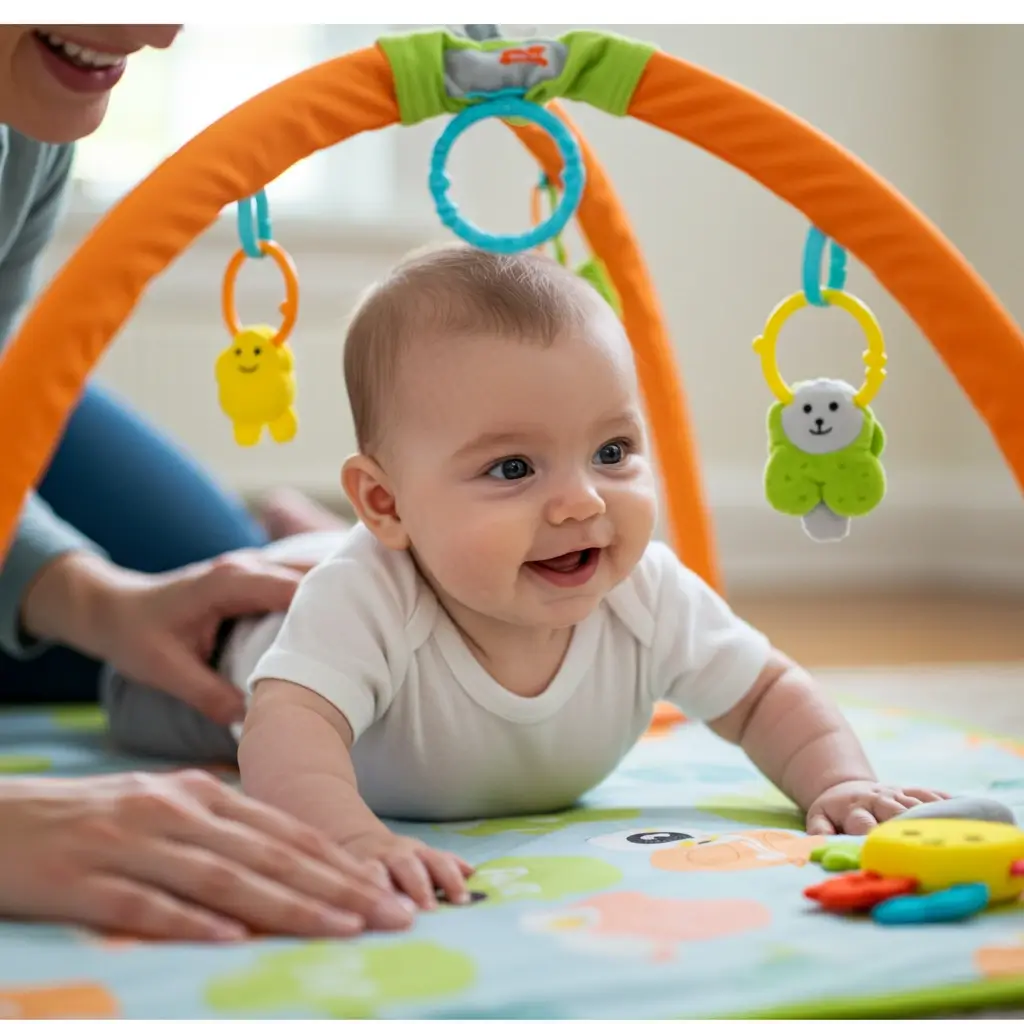
Engaging your baby in tummy time exercises helps build the muscles they need for important developmental milestones. Here are some effective tummy time exercises you can try with your infant:
- Head Lifts: Place your baby on their tummy on a firm surface and encourage them to lift their head by holding a colorful toy or making eye contact. This strengthens neck and upper back muscles.2
- Reaching for Toys: Position toys just within your baby’s reach to motivate them to stretch and reach out. This helps develop arm strength and coordination.
When you use a favorite toy or familiar face, babies lift their heads for up to 80% of the tummy time session, and studies show they cry far less.
- Rolling Practice: Gently guide your baby from tummy to back and back to tummy. This encourages the muscles needed for rolling over.
- Use of Mirrors: Place a baby-safe mirror in front of your baby during tummy time. Seeing their reflection can motivate them to lift their head and engage more.
- Tummy Time with Siblings or Pets: If safe, allow your baby to interact with siblings or pets during tummy time to make it more enjoyable and stimulating.
- After a Diaper Change: Incorporate tummy time right after a diaper change, as this can be a convenient and natural moment to engage your baby in these exercises.
Is It Best To Do Tummy Time Before Or After Feeding?

It is generally recommended to do tummy time after feeding. Here’s why:
- Feeding Positions and Tummy Time:
Using different feed positions, such as alternating sides or holding your baby in various ways during a feed, can help prevent flat head syndrome and support your baby’s development. These positions also make it easier to transition into tummy time, as your baby may be more comfortable and ready for activity.
- Reduced Spit-Up:
After feeding, babies have a full stomach, and lying on their stomachs can put pressure on their digestive system, leading to increased risk of spit-up. Waiting 20-30 minutes after feeding allows the food to settle in.
- Comfort and Contentment:
Babies may be more comfortable and content after a full stomach, making tummy time more enjoyable.
- Improved Digestion:
Tummy time can help stimulate the baby’s digestive system, promoting better digestion and reducing gas.
When Should You Not Do Tummy Time?
You can stop doing “tummy time” once your little one begins to do it independently. Typically, around 5 to 7 months old, babies become skilled at rolling over from back to front and vice versa during play, and they may also start attempting belly crawling.
Why does my baby hate tummy time?
It is quite common for babies to dislike or even cry during their tummy time at first. If your baby does not like being on their tummy, try placing a toy within their reach to make the experience more engaging and enjoyable.
Here are some reasons your baby might resist tummy time:
- Muscle weakness: Newborns have weak neck and shoulder muscles, so lifting and turning their heads during tummy time requires effort they aren’t yet used to.
- Discomfort or frustration: Babies may cry or fuss because they find the position challenging or because it limits their ability to move freely compared to lying on their backs.
- Reflux or digestive issues: For some infants, tummy time shortly after feeding can cause discomfort or spit-up.
- Lack of engagement: Without interesting toys, eye contact, or interaction, tummy time might feel boring or isolating to your baby.
- Difference from sleeping positions: Tummy time is different from sleeping positions. While back sleeping is recommended for safe sleep, tummy time should always be supervised and done while your baby is awake.
Fortunately, there are many strategies to help your baby gradually enjoy tummy time more:
- Start with very short sessions—just a minute or two—and gradually increase the duration as your baby builds strength.
- Use a rolled towel or small pillow under your baby’s chest for extra support to make lifting their head easier.
- Engage your baby with colorful toys, mirrors, or your own face to encourage interaction and distraction.
- Try different tummy time positions, such as laying your baby on your chest or over your lap, to find what feels most comfortable.
- Incorporate tummy time into your daily routine, such as after diaper changes or naps, to establish consistency.
- Every child is different and may respond to tummy time in their own way, so be patient and adjust your approach as needed.
With patience and encouragement, most babies learn to enjoy and even look forward to their tummy time sessions.
What happens if you don’t do tummy time with your baby?
Skipping tummy time can lead to several issues that affect your baby’s development:
- Early motor delays: Neck, shoulder, and arm muscles may become weak, causing delays in key milestones like rolling, sitting, and crawling, known as early motor delays.
- Flat head syndrome: Prolonged pressure on one spot of the baby’s head can cause flat spots (positional plagiocephaly). 3
- Tight neck muscles: Lack of tummy time may result in torticollis, limiting head movement and affecting posture.
- Reduced sensory development: Babies miss out on important opportunities to reach, move, and explore their surroundings from different perspectives.
Giving your baby regular tummy time helps prevent these problems and supports healthy growth and coordination.
Need Extra Support? We’re Here for You 24/7
Not sure if tummy time is working for your baby? With Avocado Health’s 24/7 expert, text-based parent coaching, you’ll get real, practical guidance right when you need it most.
Conclusion
Tummy time is your baby’s first little workout. It helps them build the strength for rolling, crawling, and all the big moves ahead, while also boosting brain and sensory growth. A few short sessions each day on the floor with some toys and your smiling face make it safe, fun, and something your baby can enjoy.
Frequently Asked Question
Do And Don’ts Of Tummy Time?
Always supervise your baby during tummy time. Here are some key safety tips for parents:
Sleep safety: To reduce the risk of sudden infant death syndrome, always place your baby on their back to sleep, not on their tummy.
Make sure to create a safe sleep environment by using a firm sleep surface, keeping soft objects out of the crib, and maintaining a smoke-free, appropriately warm room.
Safe surfaces: Perform tummy time on a firm, flat surface such as a play mat or the floor.
Avoid soft areas: Stay away from sofas, beds, pillows, or cushions where your baby could roll off or risk suffocation.
Close supervision: Always watch your baby closely during tummy time to ensure their safety.
Does Tummy Time Count If Baby Doesn’t Lift Head?
Yes, tummy time still counts even if your baby doesn’t lift their head right away. The important part is that they spend time in the tummy position to gradually build strength and get used to this posture.
During these early sessions, your baby might simply rest their head to one side or briefly attempt to lift it.
This gentle effort helps activate muscles and promotes motor development over time. Consistent tummy time, even without active head lifting, encourages sensory stimulation and body awareness, which are vital for overall growth.
Does burping count as tummy time?
Yes, burping time can actually count as tummy time! When you hold your baby on your shoulder or lean them forward over your lap to burp, they’re using their core muscles and working on neck and head control just like during tummy time.
While dedicated tummy time sessions are essential, any supervised moments your baby spends in this position, including burping, give their muscles a helpful workout and support their development.
Does tummy time tire a baby out?
Yes, tummy time can be pretty tiring for a baby, much like their very first exercise session! As your little one engages muscles that haven’t been used much before, lifting their head and pushing up with their arms. It can be exhausting.
However, the positive side is that this effort often helps your baby rest more peacefully and sleep more soundly afterward, making tummy time beneficial for both activity and relaxation.


