
How long does it take to potty train a toddler? Many factors come into play, including your child’s readiness, personality, and the method you use. If you’ve been wondering if your toddler is on track or why you’re still having to prompt every potty break, you’re not alone. Learn what really affects the timeline and how to guide your toddler to diaper-free days with less stress and more success.
Table of Contents
What Is The Realistic Age To Potty Train A Child?
The average age to start potty training is between 2 and 3 years old, with most children becoming fully trained by age 4.
The American Academy of Pediatrics recommends focusing on your child’s readiness rather than just age when starting potty training. 1
- Age range: Most kids start potty training between 18 months and 3 years.
- Average age: Around 27 months is typical for starting.
- Completion: Most children in the U.S. are fully trained by age 4, but it depends on each child’s development.
Don’t rush: Starting before 18 months can backfire, sometimes delaying the process.
How Long Does It Take To Potty Train A Toddler?
A typical potty training timeline is around 3 to 6 months to achieve daytime dryness, though this can vary widely. Some children may take longer, while others become potty independent more quickly.

As long as parents stay consistent, supportive, and up to date on recommended potty training practices, most children will achieve potty training success and transition out of wearing diapers anymore.
What to Expect
- Quick learners: Some toddlers may become mostly potty trained in just a few days using intensive methods like the 3-day potty training method.
During this method, parents are encouraged to keep their child at home to minimize distractions.
- Girls often finish potty training a few months earlier than boys, usually due to physical and communication differences.
What Is A Realistic Timeline For Potty Training?
| Age | Development Milestone |
|---|---|
| By age 1 | Most babies have stopped having bowel movements during the night. |
| Around age 2 | Some children start staying dry throughout the day, though that’s still considered early. |
| By age 3 | The majority—about nine out of ten—are dry most days, though accidents can still happen when they’re excited, upset, or deeply focused. |
| By age 4 | Most kids are consistently dry during the day, but staying dry at night often takes a bit longer to master. |
How Common Are Accidents During Potty Training?
Potty training isn’t a one-size-fits-all deal. Accidents are normal in the early stages.
Many children experience setbacks, with studies showing that over 80% of children have setbacks, and many have frequent accidents on the first day of training, with some having several accidents.
It’s important to stay positive and patient, as this helps your child learn without stress, and a calm approach is recommended when accidents happen.
How Many Accidents A Day Is Normal For Potty Training?
On the first day without diapers, about one-third of kids have 3 or 4 accidents, and about 12% have up to 7. These accidents usually involve having peed or pooped in their clothes.
It’s messy, it’s exhausting, and it’s also completely normal. Every toddler has those “oops” moments in the early days; it’s just part of the process.
What Is The Best Potty Training Method For Toddlers?

There is no single “best” potty training method, as effectiveness varies by child, but successful strategies emphasize positivity, consistency, and routine.
Parents choose different potty training methods based on what fits their child’s temperament and family lifestyle, including:
Gradual Approach:
Gradual potty training means introducing the potty slowly and letting your child get comfortable over time. This method takes the pressure off and works well for kids who need extra time to develop physically and emotionally.
How it works:
- Start by having your child sit on the potty regularly, even if nothing happens.
- Praise their efforts to build positive associations.
- Gradually increase potty use during the day.
Timeline:
- This method can take months or up to a year but helps reduce frustration and build a positive attitude.
Best for:
- Children who are hesitant or scared of the potty.
- Those who benefit from a low-pressure, child-led approach.
Elimination Communication:
EC is considered an alternative potty-training method, also called natural infant hygiene. It’s a gentle approach some parents use by tuning in to their baby’s natural signals that it’s time to go. 2
It’s all about catching those early cues—like fussiness—and holding your baby over a potty or spot before they have full bladder or bowel control.
Intensive bootcamp-Style Method (3 Day Potty Training):
The 3-day potty training method (also known as the three day method) is an intensive approach designed to potty train toddlers in a short period. Many parents pick a long weekend for focused potty training.3
This approach involves:
- Closely watching for signs that they need to go.
- Prompting potty visits every couple of hours or whenever you spot signs your child might need to go.
- Using the “bare bottom” approach, also known as the “no pants” method, where your child goes without diapers or underwear, is a common potty training strategy.
- Consistency and attention.
The Intensive bootcamp method can jumpstart potty training quickly. It’s best for kids who show clear signs of readiness and can handle the intensity.
However, it is not a guaranteed quick fix, and parents should be prepared for some accidents and the possibility that their child may take weeks or longer to be completely potty trained.
What Items Do You Need For Potty Training?
Using tools can make the potty training process easier and more manageable for you and your toddler. Consider having:
- Small potty or potty chair for home use
- Toilet seat reducer or trainer seat for the regular toilet
- Step stool for reaching the big toilet and sink comfortably
- Training pants or pull-ups for transition periods
- Travel potty for outings
- Potty training books to make the experience more enjoyable and relatable.
- Wet wipes and toilet paper for hygiene
- Easy-to-remove clothing for quick access
- Reward chart, stickers, or small toys to encourage progress
- Waterproof mattress protector for nighttime training
For toddlers, boys, encouraging them to pee sitting down at first can improve success and safety.
Teaching your little one proper hygiene—like wiping the right way and washing hands after using the potty—is an important part of the process.
What Are Four Signs A Child Is Ready For Toilet Training?

Potty training readiness means identifying physical, cognitive, and behavioral signs.
Most kids start giving little hints between 18 and 24 months that they’re ready for potty training. You know, like sneaking off to a secret corner to poop like they’re plotting something.
Here are some signs that your child is ready:
- Is interested in watching others go to the toilet.
- Stays dry for 2 or more hours, showing they can keep their nappies dry for longer periods.
- Tells you with words or gestures when they do a poo or wee in their nappy.
- Asks for a diaper change after soiling, which shows awareness and readiness for toilet training.
How Long Should A Child Sit On The Toilet During Potty Training?
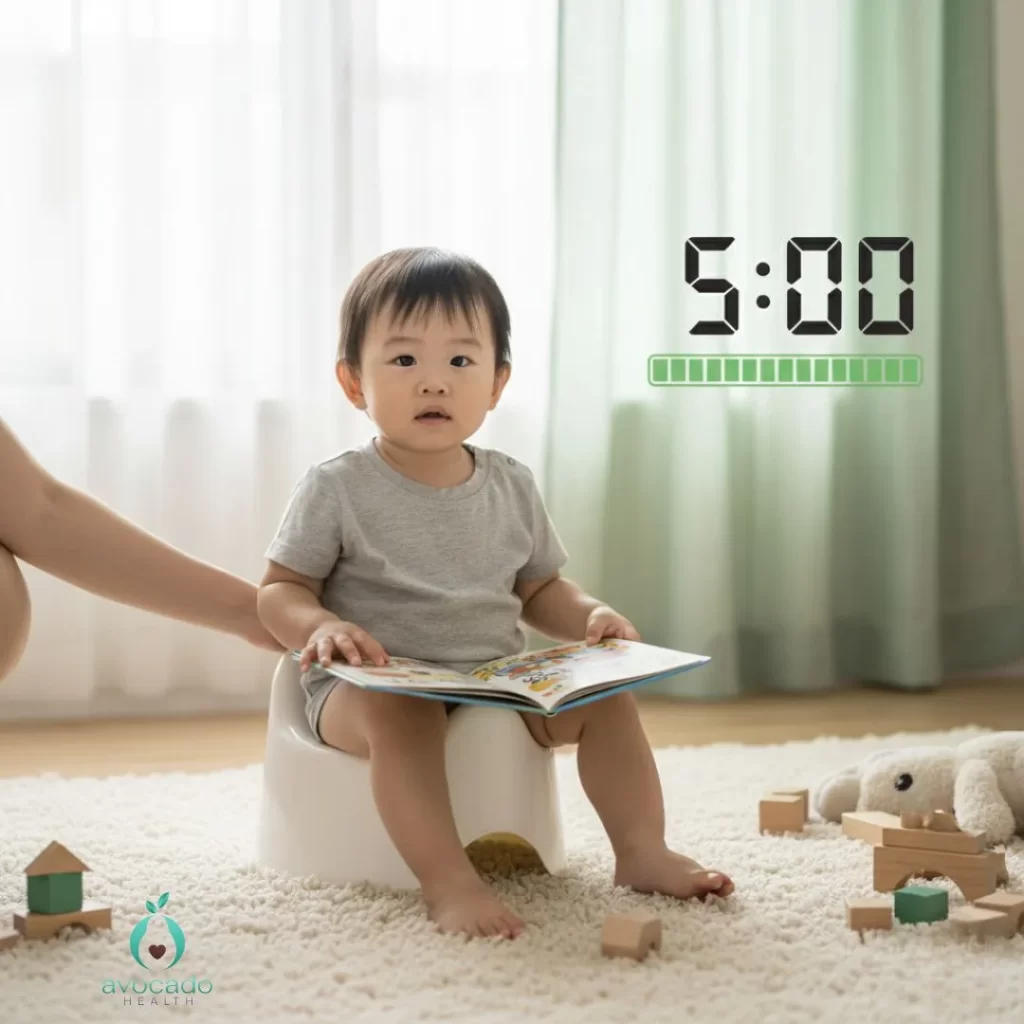
Keep potty time short and sweet about 5 minutes is plenty. If they want to get up before that let them.
Forcing them to sit there forever only makes it stressful. Even if nothing happens celebrate the effort! Sometimes just sitting is a win.
Signs Your Child Is Not Ready For Potty Training
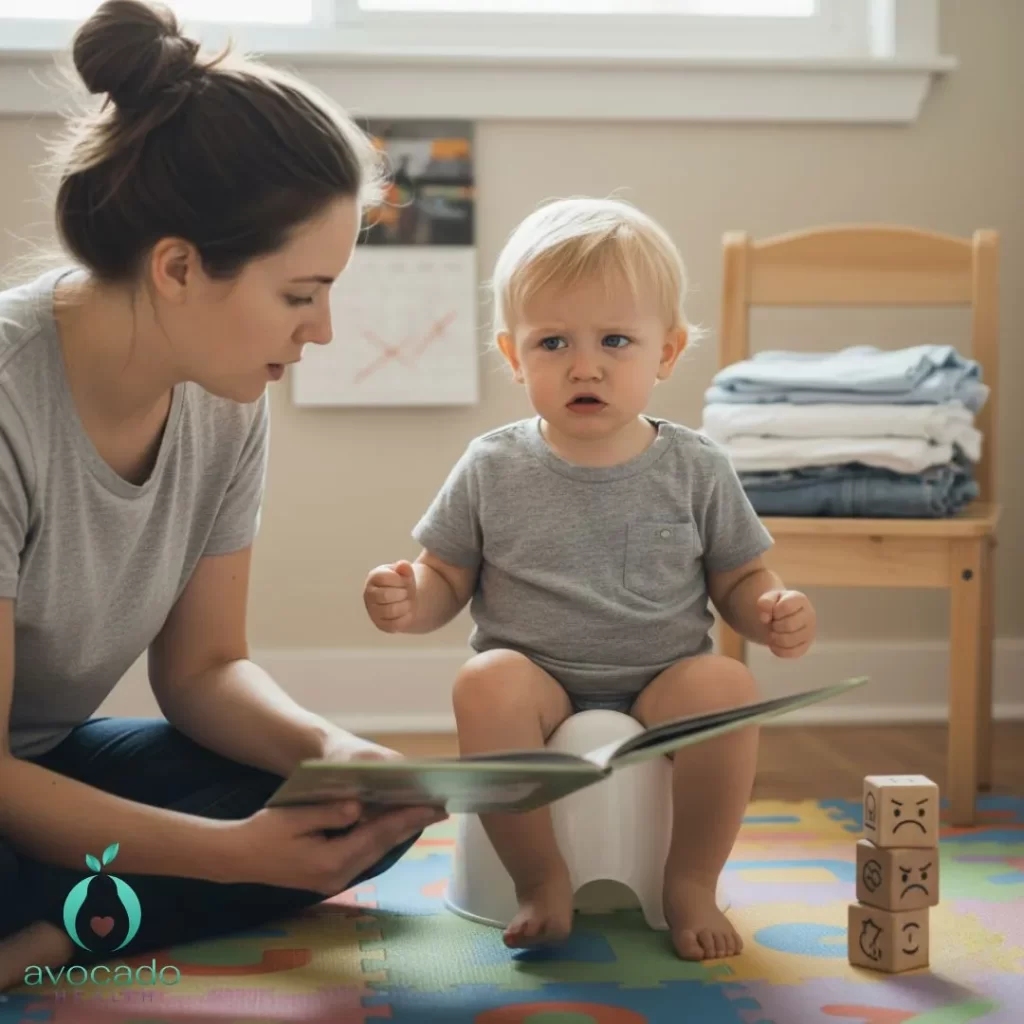
Knowing when not to start is just as important as knowing when to jump in. If you’ve been trying and it feels like you’re both hitting a wall, it might just mean your little one’s not ready yet.
Here are a few telltale signs to watch for:
- Lack of interest: If your child shows absolutely nothing in using the potty or seems indifferent when you bring it up, it may be a sign they are not ready.
- Inability to communicate: If your child cannot yet tell you when they need to pee or poop, either verbally or through gestures, it can be difficult for them to successfully use the potty.
- Inconsistent dryness: Many kids who are not ready will have frequent diaper changes and wet diapers even after long periods, indicating they cannot yet control their bladder.
- Resistance or frustration: If your child resists sitting on the potty or becomes upset when you try to start potty training, it may be better to wait and try again later.
- Physical or developmental delays: Some children may have delays in motor skills or cognitive development that make it harder to learn potty training at the typical age.
- Frequent diaper changes with no awareness: If your child does not seem to notice or care when they have a dirty diaper, this can be a sign they are not yet ready to transition to using the potty.
What Is A Red Flag For Potty Training?
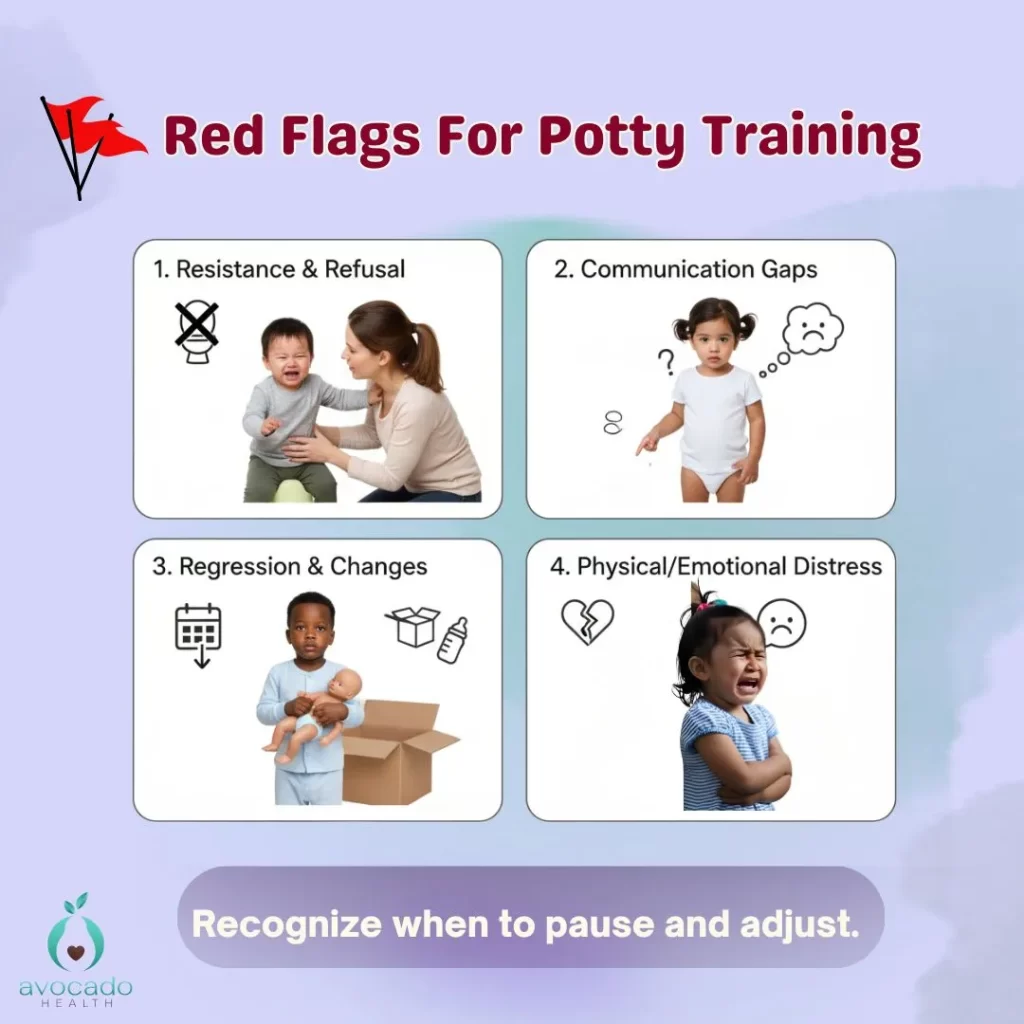
Recognizing red flags during potty training is crucial to avoid frustration for both you and your child. Watch out for these signs:
- Consistent refusal to sit on the potty or strong resistance to potty routines.
- Inability to communicate when they need to go, through words or gestures.
- Frequent accidents without any awareness or discomfort.
- Regression after initial progress, often triggered by stress, illness, or a major change in the child’s life such as moving, welcoming a new sibling, starting school, or experiencing separation anxiety. Significant adjustments in a child’s life can impact potty training and may cause setbacks.
- Physical issues such as constipation, pain during bowel movements, or discomfort during bathroom use.
- Emotional distress related to potty training, like fear or anxiety.
If you notice these red flags, it’s okay to pause and adjust your approach. Give your child time and support to build confidence, and try again when they’re ready.
Do Smart Kids Potty Train Later?
Potty training is a milestone that some gifted kids may reach later than others. While more research is needed, many parents report that their mature children take longer to potty train. This is normal.
It’s also important to remember that some older kids may take longer to potty train, and that’s completely normal. Many ‘big kids’ are still learning or have recently learned to use the toilet, and this is a typical part of their development.
Which Gender Is Easier To Potty Train?
Girls typically mature faster than boys, both physiologically and intellectually.
They generally have quicker language development and may be better able to understand potty lingo, which makes potty training girls easier.
What Would Happen If You Never Potty Trained?
If you don’t potty train a child, they will eventually learn to do so on their own, but delaying it can lead to social issues and potential medical problems.
Kids need to learn how to use the toilet not just for hygiene, but to keep up with their friends and feel confident.4
Plus, putting it off too long can sometimes lead to little health hiccups none of us want to deal with.
Potential negative effects of delaying potty training
- Social and emotional impact:
A child may face social stigma or judgment from peers and adults for not being toilet trained when their classmates are. They may also feel ashamed or embarrassed.
- Medical issues:
Holding in poop and pee for a long time can lead to physical problems.
- Constipation:
This is a common issue associated with late potty training and can lead to accidents and pain. Children who hold in their poops may develop hard stools, making it even more difficult and uncomfortable to go, which can create a cycle of avoidance and further constipation.
- Bladder and bowel problems:
Chronic constipation can stretch the rectum, which can put pressure on the bladder and cause it to become irritable and empty unexpectedly.
- Strained parent-child relationship:
Forcing a child who is not ready can lead to power struggles and make the process a battle for both the child and parent.
Should You Use Pull-Ups During Potty Training?
Many experts suggest switching to underwear during potty training because wet underwear is much less comfortable than a soggy pull-up.
This discomfort can motivate your toddler to use the potty more often. After all, who wants to walk around feeling like they just had an unexpected swim?
Underwear helps toddlers notice when they are wet. Pull-ups often hide this feeling, which can make potty training less clear for them. Using underwear makes the process easier to understand.
How To Get Your Toddler To Tell You They Have To Pee?

Helping your toddler communicate their need to pee is about teaching them body awareness, using clear words, and setting routines. Here’s what works:
Teach body awareness and communication
- Use simple words like “pee,” “poop,” and “potty.” Help your child say when they need to go.
- Describe feelings with phrases like “My tummy feels full” or “I have to hold it.”
- Talk about your own bathroom needs and point out signs, like “I see you’re holding your tummy.”
- Use training pants with fading pictures to connect wetness with the feeling of needing to go.
Create consistent routines and expectations
- Take your child to the potty regularly—after waking, meals, naps, and before bedtime.
- Let them go bottomless at home so they notice when they need to pee.
- Stay calm when accidents happen. Help clean up without rushing or punishing.
Encourage self-initiation
- Encourage your child gently but give them space to decide.
- Use a potty timer to encourage regular bathroom visits without pressure.
- Let your child pick their underwear or decorate their potty chair to give them ownership.
Is 4 Too Late To Potty Train?
No, four is not too late for potty training. Many experts agree this is a fine age to start. Some kids just aren’t developmentally ready until around four, and when they are, potty training often goes smoother because they understand better and have more control.
The average duration of the potty training process takes about six weeks, although full training may take years.
Why four is okay:
- Better understanding: At four, kids get cause and effect, which helps with consistency.
- Stronger muscles: Older kids usually have better bladder and bowel control, so fewer accidents.
- Later is normal: These days, many kids start or finish potty training closer to three or four.
- Every kid is different: Temperament and readiness vary, so don’t stress the timeline.
Potty training can be a lot. If you ever feel stuck or unsure, Avocado Health’s expert, text-based parent coaching is just a message away to help you find what truly works for your child.
Conclusion
Potty training takes time and a lot of love. Every child learns at their own pace, so focus on progress, not perfection. Stay calm, keep encouraging through the accidents. You’ve got this, and your toddler will get there too!
Frequently Asked Questions
What to do instead of forcing potty training?
1- Wait until the child is ready: Look for signs of readiness, such as interest in the toilet, telling you when they have gone in their diaper, or asking to wear underwear.
2- Be a positive role model: Introduce the potty in a low-pressure, positive way.
3- Don’t make it a big deal: Avoid frustration or making it a “massive deal”.
4- Ensure a healthy diet: A diet rich in fiber can prevent constipation and make potty training easier.
What happens if you stop potty training?
It’s not a permanent setback:Most children will eventually become potty trained on their own, especially if they see others using the toilet.
Don’t worry about it:It’s common for families to experience setbacks. Sometimes the best approach is to stop and try again in a few months.
Does the 3 day potty training method work?
Many parents find success with this method because it creates a clear routine, which can make potty training faster. However, every child is unique and some may need more time to become fully potty trained.
While the method can jumpstart potty training, accidents during and after the three days are common.
What are the 3 P’s of potty training?
The 3 P’s of potty training that sum up the whole journey are:
1- Patience: Allowing your child to learn at their own pace without frustration.
2- Persistence: Consistently encouraging and following through with potty routines.
3- Positivity: Using praise and encouragement to motivate your child.
These three principles help make potty training a smoother, less stressful process for both parent and child.
Sources:
- Toilet training children: when to start and how to train https://pmc.ncbi.nlm.nih.gov/articles/PMC3307553/
- Elimination signals’ in healthy, NON toilet trained children aged 0–4 years: A systematic review https://www.sciencedirect.com/science/article/abs/pii/S1477513120300565
- Toilet training of healthy young toddlers: a randomized trial between a daytime wetting alarm and timed potty training https://pubmed.ncbi.nlm.nih.gov/18454042/
- Toilet Training https://www.sciencedirect.com/topics/medicine-and-dentistry/toilet-training