
How to get toddler to stop sucking thumb can feel impossible, especially when it’s something they do mindlessly. You remind them, and they stop for a bit, but then it’s there again at bedtime. Understanding why your little one does it, how to gently break the thumb-sucking habit, and when it’s time to consult a doctor can make all the difference.
Table of Contents
What Is The Prevalence Of Thumb Sucking In Children?
Thumb sucking is common in toddlers. Studies show that between one-third and one-half of children aged 2 to 4 regularly suck their thumbs. This varies by location, with some studies reporting up to 50% of infants developing a non-nutritive sucking habit. 1
The habit tends to decrease as kids get older. For example, one U.S. study found that 73% of children between ages 2 and 5 had non-nutritive sucking habits, dropping to about 48% by age 4 and 12.1% by age 7.
There are also differences between countries, likely linked to geography and socioeconomic factors.
Why Do Some Children Suck Their Thumbs?

It is important to recognize that thumbsucking is primarily a natural reflex and self-soothing behavior that most infants and young children develop regardless of their genetic background.
The habit typically begins as a comforting action soon after birth. It serves as a way for children to manage emotions and feel secure.
The psychology of thumbsucking in children is primarily based on:
- Self-soothing: Thumb sucking helps babies and toddlers regulate their emotions and cope with separation anxiety, stress, boredom, or unfamiliar situations by mimicking the comfort of being in the womb or nursing.
- Emotional security: It provides a sense of comfort and protection, especially during moments of change or high anxiety, such as the arrival of a new sibling or moving to a new home.
- Sleep aid: Many children use thumb sucking as a way to calm themselves down to fall asleep.
- Childhood regression: For some children, thumb sucking can be a form of age regression, a temporary and normal response to stress or frustration.
How Toddler Temperament Affects Thumb Sucking?
Children with a more anxious or sensitive temperament may use thumb-sucking to cope with boredom, stress, or tiredness, making the habit more persistent or more likely to return during stressful periods, while less sensitive children may outgrow the habit more easily.
At What Age Does Thumbsucking Start?
Thumb sucking can start in the womb as early as 15 weeks of pregnancy or in the first few months of a baby’s life. It is a common and natural behavior.

About 90 percent of newborns will show some form of hand sucking just two hours after birth.
- Before birth: Babies can begin sucking their thumbs as early as 15 weeks of gestation, as seen in ultrasound scans.
- Newborns: Many babies start sucking their thumbs soon after they discover their hands to comfort themselves.
- Later: Some children may not start until they are older, around 18 months, or even later.
When Do Children Stop Thumbsucking?

Most children stop sucking their thumbs on their own between the ages of 2 and 4; however, the habit can persist until age 6. It is recommended that they stop before their permanent teeth erupt (around age 5 or 6).
Is Thumbsucking Stimming?
Thumbsucking is often a form of stimming, a way toddlers self-soothe and manage their feelings and sensory input. For many little ones, sucking their thumb brings comfort during stressful, anxious, or boring moments.
Is Thumbsucking Genetic?
There’s no scientific proof that thumbsucking is inherited through genes. Still, certain genetic and family factors may increase the likelihood that a child will develop this habit.
Some studies show that children with family members who have a history of prolonged thumb sucking or similar soothing habits may be more likely to develop the same habit.
Environmental factors within the family, such as parental responses to stress or comfort-seeking behaviors modeled by siblings or parents, can also play a big role. For example, if a child sees a sibling using a pacifier or thumb sucking as a calming mechanism, they may mimic this behavior.
Overall, while genetics may have some influence, thumb sucking is largely a learned behavior that can be addressed with the right strategies and support.
What Are The Long Term Effects Of Thumbsucking?
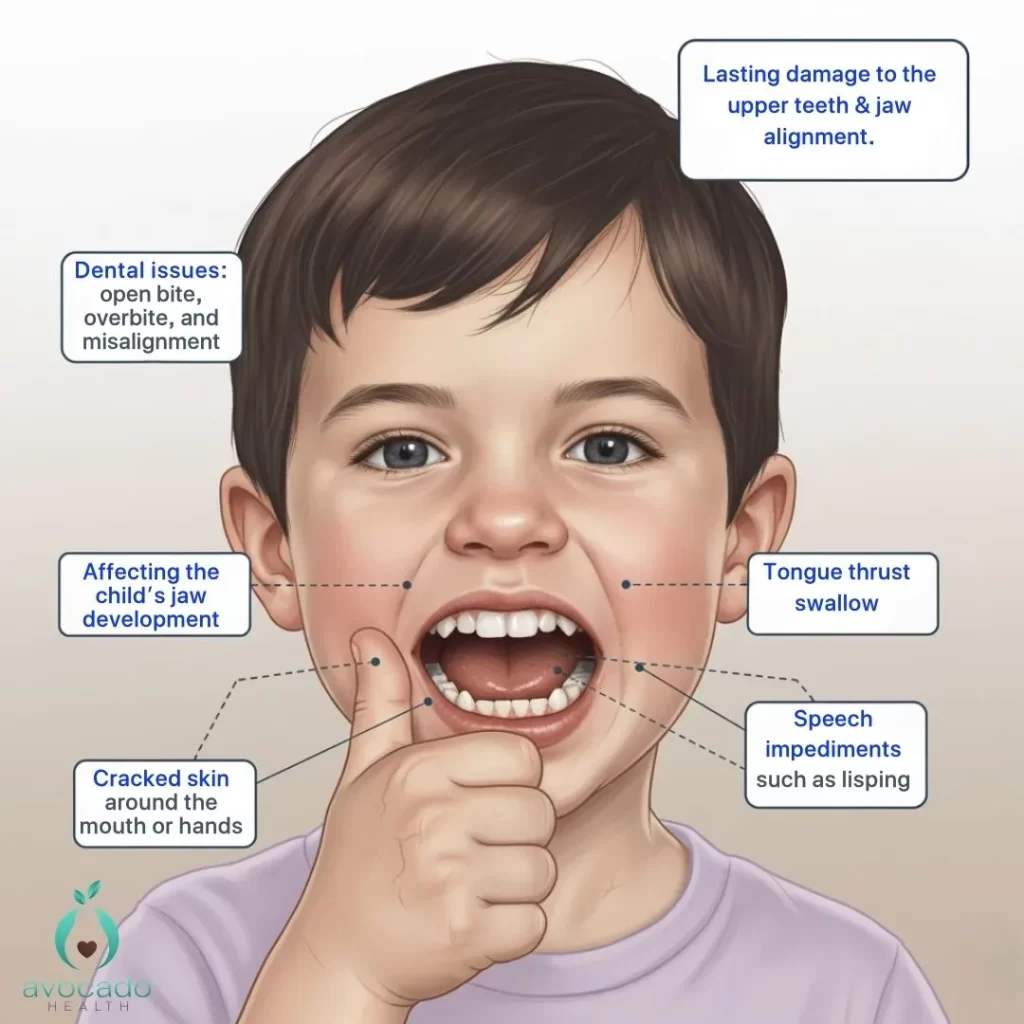
Prolonged thumb sucking can cause dental issues because the constant pressure from the thumb can push the upper teeth forward and affect the proper alignment of the front teeth. The pressure from thumb sucking can block the front teeth from erupting fully.
The risk of dental problems depends on the frequency, duration, and intensity of sucking.
Over time, this habit can lead to several problems, such as:
- Dental issues, such as open bite, overbite, and misalignment of the child’s teeth. 2
- Thumb suckers may develop a tongue thrust swallow, where the tongue pushes against the teeth during swallowing, which can further contribute to misaligned teeth and speech impediments such as lisping.
- Affecting the child’s jaw development, thumb sucking can also lead to an increased risk of dental problems, such as cracked skin around the mouth or hands.
- Children who continue thumb sucking beyond age 5 may experience more severe complications, making early intervention crucial. At this point, the child’s permanent teeth are beginning to come in, and continued thumb sucking can cause lasting damage to the upper teeth and jaw alignment. 3
When To Intervene To Break Toddler Thumb Sucking?

Generally, most children stop sucking their thumbs between the ages of 2 and 4 on their own. However, intervention may be necessary if the habit persists beyond this age or if you begin to notice signs of dental problems.4
However, as kids grow and enter school age, stopping the habit becomes more important to protect their dental health and social development. Most concerns about thumb sucking arise once a child’s permanent teeth begin to come in.
Knowing when to intervene in your toddler’s thumb sucking habit is crucial for preventing potential dental and developmental issues while also respecting your child’s natural coping mechanisms.
How Long Does It Take To Break a Thumb Sucking?
Weaning your kid off thumb sucking can vary a lot depending on your child’s age, personality, and the approach you and your caregiver team take.
For some toddlers, the habit may fade away naturally within a few weeks or months, especially if they are gently encouraged and provided with alternatives.
For others, particularly those who have relied on thumb sucking as a primary source of comfort, it may take several months or even longer to fully stop.
Parents, moms and dads alike, play a crucial role in this process by offering support, understanding, and encouragement.
The involvement of both parents can reinforce the message and help the child feel supported rather than punished.
How To Get Toddler To Stop Sucking Thumb or Finger Sucking?

As your child grows, it’s important to help your child and gently guide them away from thumb or finger sucking to protect their developing teeth and jaw. Here are some effective strategies:
Talk and Build Awareness
- Explain to your child why it’s important to stop thumb or finger sucking.
- Help them notice when they’re doing it and encourage them to pause.
- Stay calm and supportive—avoid punishment or shaming. Reading books about thumb sucking can help children relate to characters and understand their situation.
Offer Comfort Alternatives
- Distract your child by giving them something else to hold. Gently redirect their attention with a toy, a book, a blanket, or a cuddle to keep their hands busy.
- Identify when they usually suck their thumb (like stress, nap time or at night) and offer soothing alternatives instead.
Try Habit Reversal Treatment Of Thumbsucking
Habit Reversal Training helps your child become aware of when they start sucking their thumb. When it happens, encourage them to do something different with their hands—like clenching a fist, holding a toy, or squeezing a stress ball. These actions replace the habit and reduce the comfort they get from thumb sucking.
Use Gentle Deterrents
- Consider applying a thumb-sucking deterrent, such as a bitter-tasting nail polish, to your child’s thumbnail for children over the age of 3, especially in extreme cases. Younger children’s taste buds are still developing, so they may become accustomed to the taste or experience digestive upset.
- Bandages or gloves: Cover the thumb with a bandage, mitten, or sock to serve as a constant reminder. You can make it more engaging by letting the child pick colorful bandages.
- Thumb guard or finger guard : A commercial thumb guard is a silicon tube that fits over the thumb and is attached to the wrist with a clip, making it difficult to remove.
- Hand stopper: This device attaches to the elbow and prevents the arm from bending enough to bring the thumb to the mouth.
- Always explain what you’re doing and involve your child in the process to avoid stress or fear.
Encourage With Positive Reinforcement
- Praise your child each time they avoid thumb sucking.
- Use a sticker chart or small rewards to celebrate progress. Creating a reward chart can motivate children to stop thumb sucking by tracking days without the habit.
- Focus on small wins to build confidence and motivation.
- Celebrate small victories and progress along the way, making the process of breaking the habit a positive and rewarding experience to build your child’s confidence and motivation.
- Be patient and understanding as your child works to break the thumb sucking habit. Avoid applying too much pressure and focus on creating a positive, supportive environment.
By combining gentle reminders, encouragement, and awareness, you can help your child break the thumb sucking habit gradually and confidently.
When Should I Take My Toddler To The Dentist Because Of Thumb Sucking?

Consider seeking help from a pediatric dentist, or a pediatrician in the following:
- Persists beyond age 4 or 5. Most children naturally outgrow the habit on their own between ages 2 and 4, and it generally does not cause permanent problems if stopped by age 5, when permanent teeth start to come in.
- Is very intense or aggressive. The intensity (e.g., a “popping” sound when the thumb is removed) is more likely to cause dental problems than passive sucking.
- Causes physical problems. Look for signs such as chapped skin, calluses, or infections on the thumb.
- Causes noticeable changes in dental alignment. This can include front teeth protruding (overbite), an open bite (a gap between the top and bottom teeth when the mouth is closed), or changes in the shape of the jaw or palate.
- Leads to speech problems. Misaligned teeth and jaw can affect speech development, potentially causing a lisp or difficulty pronouncing certain sounds.
- Causes social or emotional issues. If your child is being teased by peers or the habit interferes with their social interactions, a therapist can offer strategies to help.
- Is difficult to stop despite your gentle efforts and positive reinforcement techniques.
Struggling To Help Your Little One Stop Thumb Sucking?
Text Avocado Health today for personalized, 24/7 expert text-based parent coaching tailored to your child’s unique needs. Together, we’ll make the process calm, positive, and stress-free.
Conclusion
Toddler thumb sucking is completely normal. It helps little ones feel calm and secure. Most children stop on their own by age 4, but if it continues longer, it can affect their teeth and jaw. With patience, gentle reminders, and positive encouragement, you can help your child break the habit in a calm and loving way while supporting healthy growth.
Frequently Asked Questions
Is thumbsucking a milestone?
Not necessarily. While thumb sucking can look cute, it’s a habit that needs close attention. If a child continues to suck their thumb too often or too forcefully, it may lead to dental misalignment or, in uncommon cases, affect jaw development.
Is putting hands in the mouth a milestone?
Yes, it is one of the earliest developmental milestones, which indicates that the baby is growing well. It helps form an early body image (body awareness and mapping) in the baby’s brain. It is one of the first steps in establishing voluntary muscle control.
Why is my 2-month-old eating her fingers?
Eating fingers is a normal part of development for a 2-month-old. It usually happens for one of three reasons: exploring their world, signaling hunger, or self-soothing. Pay attention to other signs, such as when they last ate or if they seem tired or overstimulated, to figure out why they’re doing it at any given time.
Why does my toddler keep putting his fingers down his throat?
It’s pretty common for toddlers to gag on their fingers. They often discover this gag reflex by accident while eating or just exploring their mouths with their fingers. Usually, this behavior fades away on its own since gagging and vomiting are quite unpleasant experiences for them.
Is thumb sucking a sign of autism?
No, thumb sucking by itself isn’t a sign of autism. However, for some kids with autism spectrum disorder (ASD), thumb sucking or other oral behaviors can be a type of stimming (self-soothing behavior). These behaviors might last longer in autistic children than in others.
Sources:
- Association between Non-nutritive sucking habits and Anterior open bite: A systematic review and meta-analysis https://pubmed.ncbi.nlm.nih.gov/40619361/
- Longitudinal study of habits leading to malocclusion development in childhood https://pubmed.ncbi.nlm.nih.gov/25091288/
- Effects of non-nutritive sucking habits on malocclusions: a systematic review https://pubmed.ncbi.nlm.nih.gov/38548628/
- Interventions for the cessation of non-nutritive sucking habits in children https://pubmed.ncbi.nlm.nih.gov/25825863/