
How to stop toddler from grinding teeth is a question you may ask when that squeaky sound wakes you up and you realize it’s your little one grinding their teeth. It can happen during sleep or even while they’re playing. Though it sounds alarming, there’s usually a reason behind it. Here’s what’s really going on, and how you can help your toddler finally find some relief.
Table of Contents
What Is The Difference Between Teeth Grinding And Bruxism?
Clenching or grinding of the teeth (bruxism) is actually really common. It can happen both during the day and at night. Some like to separate the two, while others group them together—it’s simply your little one moving their jaw while their teeth are pressed together.

For most toddlers, the grinding occurs while they’re asleep (that squeaky nighttime sound you can’t unhear!), although some do it during the day as well.
What Is The Prevalence Of Bruxism In Children?
The prevalence of teeth grinding (bruxism) in toddlers in the USA is estimated to be between 14% and 17% overall, but rates can be higher depending on the study and how often grinding occurs.1
Prevalence in toddlers and young children
- Overall estimates: 3 out of 10 (approximately 30%) children possibly grinding before age 5.
- Weekly frequency: Studies show that 36.8% of preschoolers grind their teeth one or more times per week. 2
- Frequent grinders: Around 6.7% of preschoolers are reported to grind their teeth four or more times per week.
- Around one third of children with bruxism will still have it when they are adults.
What Are the Different Types of Bruxism?
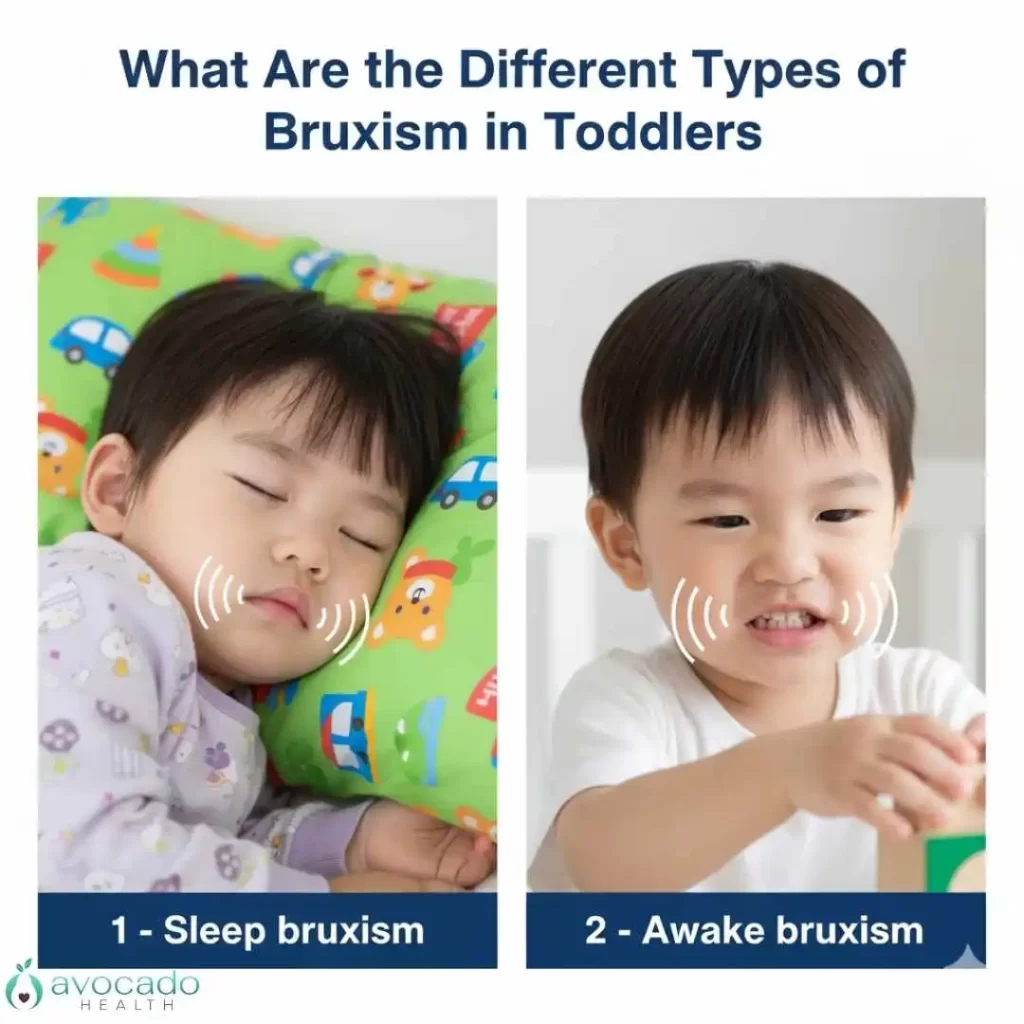
There are two types of bruxism in toddlers:
Sleep bruxism
- This type occurs when a toddler grinds or clenches their teeth during sleep, often during deeper stages of sleep.
- It can be difficult for parents to notice unless they hear the grinding noises or a dentist identifies signs of wear on the teeth.
- It may be linked to sleep-related movement disorders.
Awake bruxism
- This occurs when a child grinds their teeth while they are awake.
- It can happen when a toddler is focused on a task or feeling anxious.
- It may be more easily identifiable than sleep bruxism.
At What Age Do Toddlers Start Grinding Teeth?
Toddlers can start grinding their teeth as early as 6 months old, when their first teeth emerge, as their toddler’s teeth begin to develop, and often continue through the toddler years. Most children stop this habit on their own, typically before their permanent teeth appear around age 6.
Teeth grinding is common in infants, toddlers, and young children. While most outgrow the habit during childhood or by early teens, a smaller percentage may continue into their teenage years or even adulthood.
Why Is My Toddler Grinding Teeth?
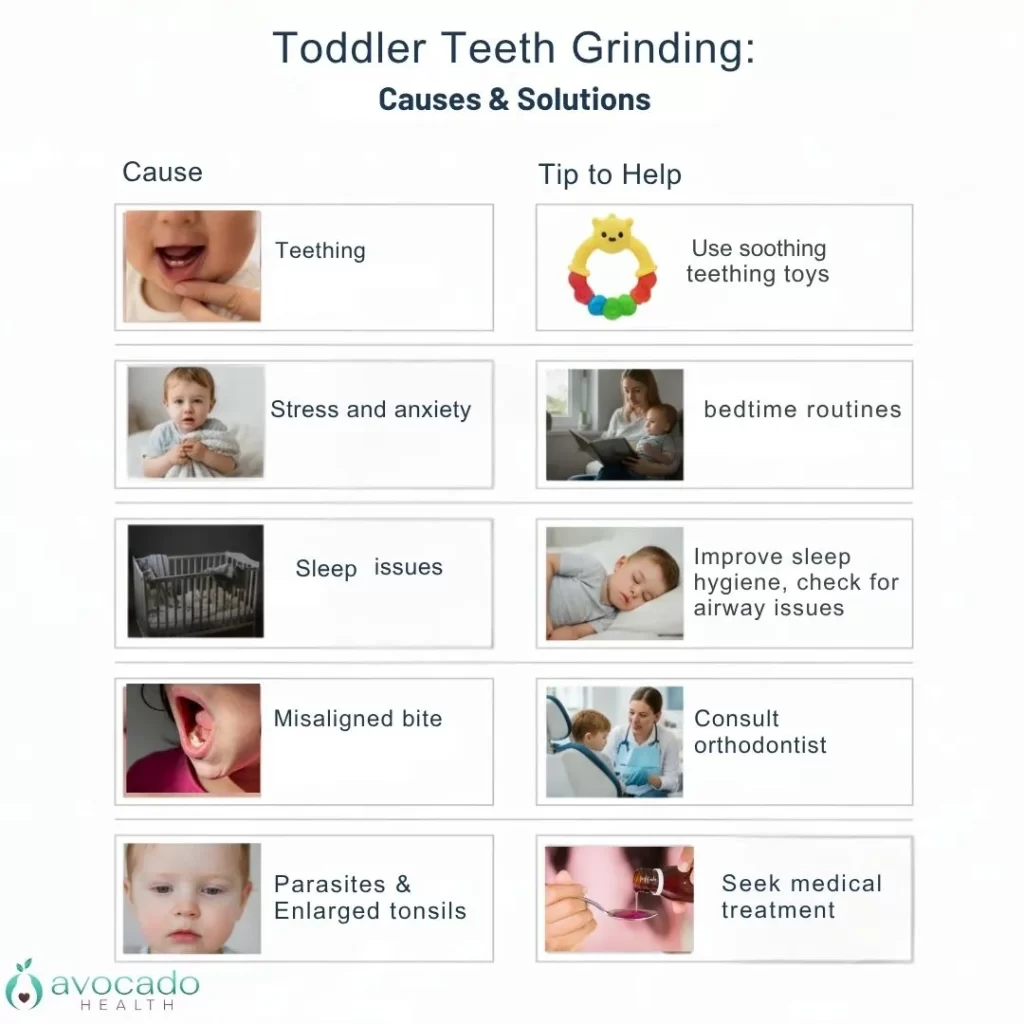
Toddlers grind their teeth for all sorts of reasons, but most kids grow out of it as they get older. It’s best to consult a dentist to rule out any issues and discuss potential solutions.3
Common causes
- Stress and anxiety: Changes in routine, a new sibling, or separation anxiety can all cause a toddler to grind their teeth.
- Some kids with bed wetting, behavioral outbursts, uncontrolled emotional situations
- Teething : Grinding can be a way for toddlers to relieve the pain of new teeth coming in or to get used to how their bite feels as teeth emerge.
- Misaligned bite: If a child’s teeth don’t fit together properly, they may grind to find a comfortable position. Lots of kids grind when they are growing and their occlusion is naturally changing.
- Sleep issues: Teeth grinding is often linked to sleep disturbances like snoring, disordered breathing, or nightmares.
- Worms and parasites—especially intestinal ones like pinworms (Enterobius vermicularis) can sometimes be linked to teeth grinding in toddlers. Recent studies suggest that parasitic infections may increase the risk of grinding, possibly due to toxins released by the parasites affecting sleep or comfort.
- Enlarged tonsils can cause teeth bruxism in toddlers. Scientific studies and expert sources note that enlarged tonsils and adenoids can obstruct a child’s airway during sleep, leading to breathing difficulties.4
The airway obstruction often triggers the child to grind their teeth as a reflex to open the airway or adjust their jaw position for better airflow.
- Medical or developmental conditions: In some cases, bruxism is a medical condition that can impact children and may be associated with conditions like ADHD, allergies, or cerebral palsy, or it may be a side effect of certain medications.
- Curiosity or boredom: Toddlers may simply find the sound or sensation of grinding interesting, especially when bored or focused on an activity.
While adults often grind their teeth due to stress or anxiety, toddlers are more likely to do so because of teething or exploring new sensations.
There is a strong connection between bruxism and factors such as the mother’s occupation, family medical history, stressful life events, parasomnias like drooling and sleepwalking, temporomandibular disorders (TMD), hyperactivity, depression, as well as fears.
Related Articles: How To Get Toddler To Stop Sucking Thumb?
Is It Normal For A Toddler To Grind Teeth?
Yes, it is normal for a toddler to grind their teeth, which is very common and often outgrown by age 6 or 7. 5
While it’s usually not a cause for alarm, it’s a good idea to discuss it with a pediatrician or dentist to rule out other issues or to monitor it for any potential problems like tooth wear or pain.
Many children grind their teeth without any negative consequences because most children lack the jaw length and the muscle structure to cause significant damage to their teeth.
How Can I Tell If Grinding Is Harming My Child’s Teeth?

While occasional teeth grinding (bruxism) is common and usually harmless in toddlers, you should schedule an appointment with a pediatrician or pediatric dentist if you notice signs such as:
Visible and physical signs
- Worn or flattened teeth: The grinding motion can cause wear and tear on the top surface of the teeth, making them look flat or dull.
- Chipped teeth: Grinding can put enough force on teeth to cause small chips or hairline fractures.
- Increased sensitivity: Worn tooth enamel from grinding can expose the sensitive inner layers of the teeth, causing discomfort with hot or cold foods.
- Damage to cheeks: Check the inside of their mouth for irritation or sores from biting their cheeks.
- Gum irritation or damage: Check the gums for signs of redness, swelling, or irritation, which may indicate bruxism is affecting overall oral health.
- Tooth misalignment: Grinding can sometimes result in or worsen tooth misalignment, which may require orthodontic evaluation. 6
Behavioral and pain-related signs
- Audible grinding: Listen for scraping or grinding noises you may hear, especially at night.
- Jaw pain or soreness: Your child may complain of a sore jaw, especially in the morning.
- Headaches or earaches: Persistent headaches, often in the temples, or earaches can result from jaw clenching.
- Sleep disruption: Grinding can interfere with sleep, leading to frequent waking or a feeling of not being rested.
- Bruxism may also cause damage to the temporomandibular joint (TMJ). This is the joint on each side of the mouth that attaches the lower jawbone to the skull.7
If bruxism goes untreated, it may lead to jaw muscle and joint problems. These are known as TMJ problems or temporomandibular joint disorder (TMD).
How To Stop Toddler From Grinding Teeth?
To stop a toddler from grinding their teeth, focus on preventative measures to reduce the risk of teeth grinding and related dental issues. Early intervention is key to preventing more serious dental problems.
Address stress and anxiety
Toddlers and preschoolers need about 11–13 hours of sleep each night to stay healthy. Here are some simple ways to make bedtime easier and help eliminate teeth grinding: 8
- Keep a consistent routine: spend 10–30 minutes winding down together with a warm bath, soft music, or a bedtime story.
- Create a calm and cozy sleep space that feels safe and quiet.
- Use bedtime to connect: skip screens and enjoy gentle conversation or cuddles.
- Encourage independent sleep: help your child learn to fall asleep without feeding or rocking.
- Talk to your child: If you suspect stress might be behind your child’s teeth grinding, try to spot and ease any sources of anxiety, like school worries or changes at home.
- Massage: Give gentle massages to your child’s face, neck, and shoulders to help relax jaw muscles.
- Relaxation exercises: Deep breathing and other relaxation techniques can also be helpful in reducing stress-related grinding.
- Encourage activity: Daily exercise can help reduce hyperactivity that may be contributing to teeth grinding.
While some children outgrow teeth grinding without complications, other children may develop jaw pain or dental issues and need further intervention.
Adjust diet and hydration
- Stay hydrated: Ensure your child drinks plenty of water, as dehydration can contribute to teeth grinding.
- Limit caffeine and sugar: Reduce or eliminate caffeinated drinks and sugary snacks, as they can increase restlessness and disrupt sleep.
- Offer softer foods: Avoid hard or chewy foods like raw carrots or jerky, which make the jaw work harder. Opt for softer foods that are easy to chew.
Maintain good oral hygiene and consult a dentist
- Brush and floss: Continue to encourage good oral hygiene, including brushing twice a day.
- See a dentist: If you suspect your child is grinding their teeth, the best thing you can do is bring them in for a dental exam.
- Discuss mouthguards: A dentist may recommend a night guard to protect the teeth, especially for older children who have lost most of their baby teeth.
- Consider orthodontic treatment: If misaligned teeth are the cause, a dentist may recommend corrective orthodontics.
- Monitor for cavities: Regular dental checkups should include monitoring for cavities, as preventing dental decay is an important part of overall oral health.
Worried About Your Toddler’s Teeth Grinding?
You don’t have to figure it out alone. With AvocadoHealth, you can get expert, text-based, personalized parent coaching anytime, right when you need it most.
Conclusion
Teeth grinding is common. Most little ones outgrow it by the time their permanent teeth begin to emerge. The key is to notice any changes in your toddler’s sleep, stress, or dental health—and support them with calm routines, good hydration, and regular dental checkups.
Frequently Asked Questions
Is teeth grinding a symptom of ADHD?
Hyperactivity and Impulse Control: Core symptoms of ADHD include hyperactivity and a difficulty in controlling impulses. These symptoms don’t just manifest as large motor movements or behavioral actions but can also translate into smaller, repetitive movements like teeth grinding.
Is teeth grinding a form of autism?
Teeth grinding is not necessarily a sign of other conditions but can be associated with some. While bruxism is sometimes observed in individuals with autism spectrum disorder and may be linked to sensory processing issues, it is not exclusive to autism. It does not necessarily indicate the presence of ASD.
What vitamin deficiency causes teeth grinding?
Magnesium deficiency — Without enough magnesium, you may have muscle spasms or increased stress, contributing to bruxism symptoms. Magnesium also improves sleep, and insufficient sleep could cause you to grind your teeth. Vitamin B5 deficiency — In some cases, a lack of vitamin B5 could contribute to teeth grinding.
What illness causes teeth grinding?
Other disorders – Teeth grinding can also occur due to certain physical and mental health disorders and diseases, such as attention-deficit/hyperactivity disorder (ADHD), Parkinson’s disease, epilepsy, dementia, gastroesophageal reflux disorder (GERD), and sleep-related disorders such as sleep apnea and night terrors.
Sources:
- Prevalence of sleep bruxism in children: A systematic review https://pmc.ncbi.nlm.nih.gov/articles/PMC4347411/#:~:text=All%20guardians%20answered%20a%20questionnaire,1.49%2C%20P%20=%200.14).
- Children who grind their teeth are more likely to have problems in school, be withdrawn from others https://aasm.org/children-who-grind-their-teeth-are-more-likely-to-have-problems-in-school-be-withdrawn-from-others/#:~:text=The%20rate%20of%20bruxism%20is%20highest%20in,with%20others%20*%20Pre%2Dschool%20adjustment%20was%20worse
- Teeth grinding (bruxism) https://www.nhs.uk/symptoms/teeth-grinding/#:~:text=face%2C%20neck%20and%20shoulder%20pain,too%20much%20or%20taking%20drugs.
- Sleep Bruxism in Children: Etiology, Diagnosis, and Treatment—A Literature Review https://pmc.ncbi.nlm.nih.gov/articles/PMC8471284/#:~:text=This%20disorder%20is%20becoming%20an,children%20should%20also%20be%20developed.
- Sleep Bruxism in Children: A Narrative Review https://www.researchgate.net/publication/374044347_Sleep_Bruxism_in_Children_A_Narrative_Review#:~:text=In%20clinical%20practice%2C%20the%20diagnosis,specific%20treatment%20at%20this%20time.
- Is there association between dental malocclusion and bruxism? A systematic review and meta‐analysis https://www.researchgate.net/publication/340431294_Is_there_association_between_dental_malocclusion_and_bruxism_A_systematic_review_and_meta-analysis#:~:text=Recent%20studies%20have%20shown%20that,%5D%5B15%5D.%20…&text=without%20splint%20(p-,…,%5B41%5D%20.%20…&text=associated%20with%20parafunction.-,…,opinions%20remain%20divided.%20.
- A study of the temporomandibular joint during bruxism https://pmc.ncbi.nlm.nih.gov/articles/PMC5490738/#:~:text=Abstract,severe%20damage%20of%20this%20tissue.
- How Much Sleep Is Enough https://www.nhlbi.nih.gov/health/sleep-deprivation/how-much-sleep#:~:text=Age%2C%20Newborns%204%20to%2012%20months%2C%20Children,day%2C%207%20to%208%20hours%20a%20day%2C